


Investigators Scrutinize Altitude and Visual Acuity in D.C. Helicopter Crash
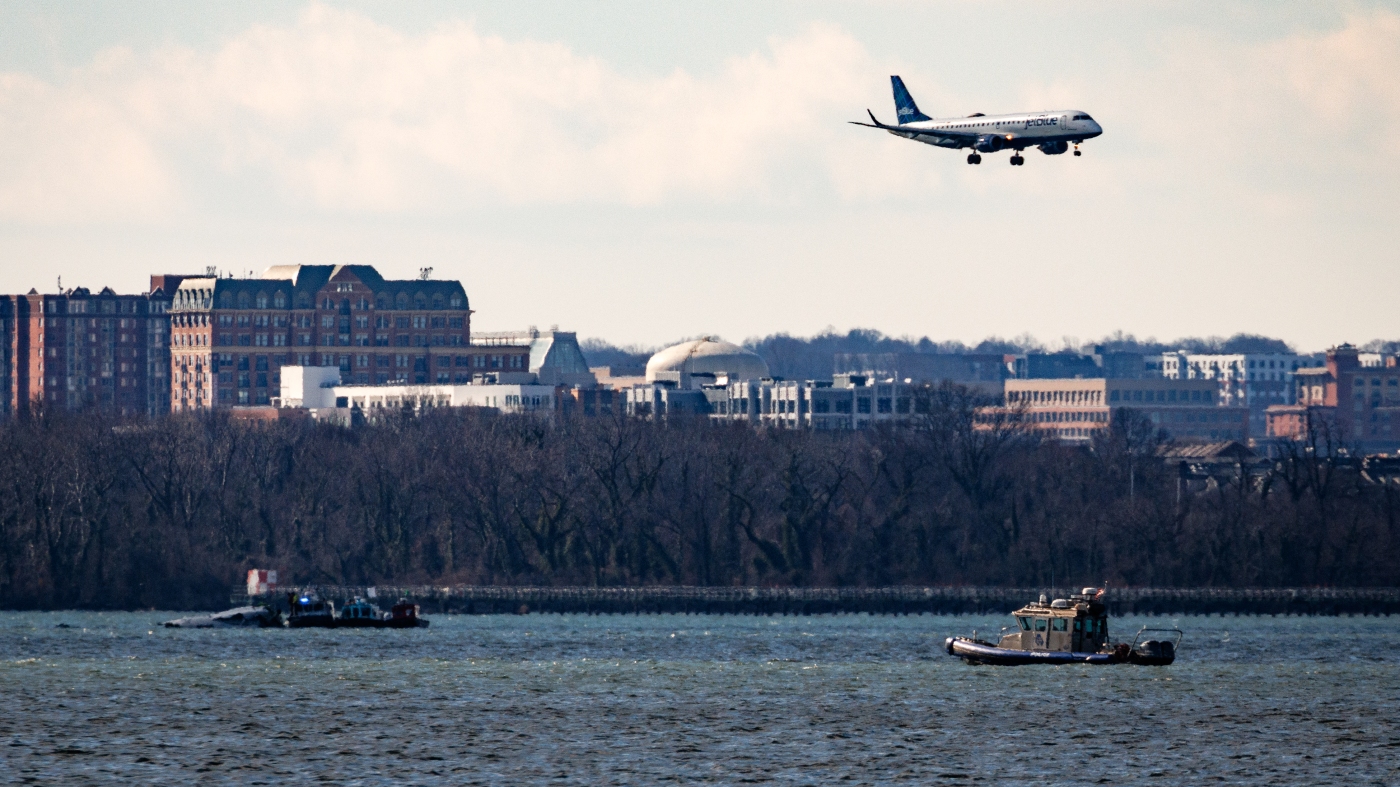
Aerial views captured the scene with security vessels surrounding the half-sunken remains of American Airlines Flight 5342 in Washington, D.C.'s Potomac River on a recent Saturday.
Following a midweek disaster involving an Army helicopter and a civilian airliner near the Ronald Reagan Washington National Airport, safety investigators announced that they continue to collect critical information to ascertain the crash's cause.
Authorities are examining if impaired visibility might have affected the Army Black Hawk helicopter's pilots while maneuvering under dimly lit conditions, also exploring the possibility of an unauthorized route deviation.
Preliminary findings suggest the Black Hawk's altitude may have surpassed permissible limits, as noted by representatives of the National Transportation Safety Board (NTSB) during a Saturday update.
While public flight data gives credence to media claims of a potential regulatory breach—with helicopters required to fly under 200 feet on that specific route—investigators have yet to corroborate these reports.
The night-time collision forced all passengers into the frigid Potomac River waters, tragically resulting in 67 fatalities—the deadliest incident of its kind in the U.S. in two decades.
Training and Equipment Investigation
J. Todd Inman, a NTSB official, confirmed the helicopter was engaged in a training operation, typically relying on night vision technology under such circumstances. Investigators are verifying the use of night vision goggles by the crew at the incident time, which might be pivotal in understanding the mishap.
"Currently, we cannot ascertain if the night vision gear was actively in use," Inman stated.
Initial data places the Black Hawk's flight at an altitude of 325 feet during the crash, with aviation regulations mandating a maximum of 200 feet along the Potomac route. American Airlines Flight 5342 last communicated an elevation of approximately 300 feet.
Data Analysis and Future Steps
Analysis is ongoing for information retrieved from the two recording devices aboard the passenger jet, including the Black Hawk's intact cockpit voice recorder, commonly referred to as the black box. Findings from these devices are likely to play a crucial role in deducing the crash reasons.
The NTSB hopes these insights will illuminate the tragic sequence of events. Two days subsequent to the D.C.-area crash, a separate aviation disaster unfolded near a Philadelphia shopping district, resulting in seven deaths, underscoring the critical need for comprehensive aviation safety measures.
Leave a Reply