


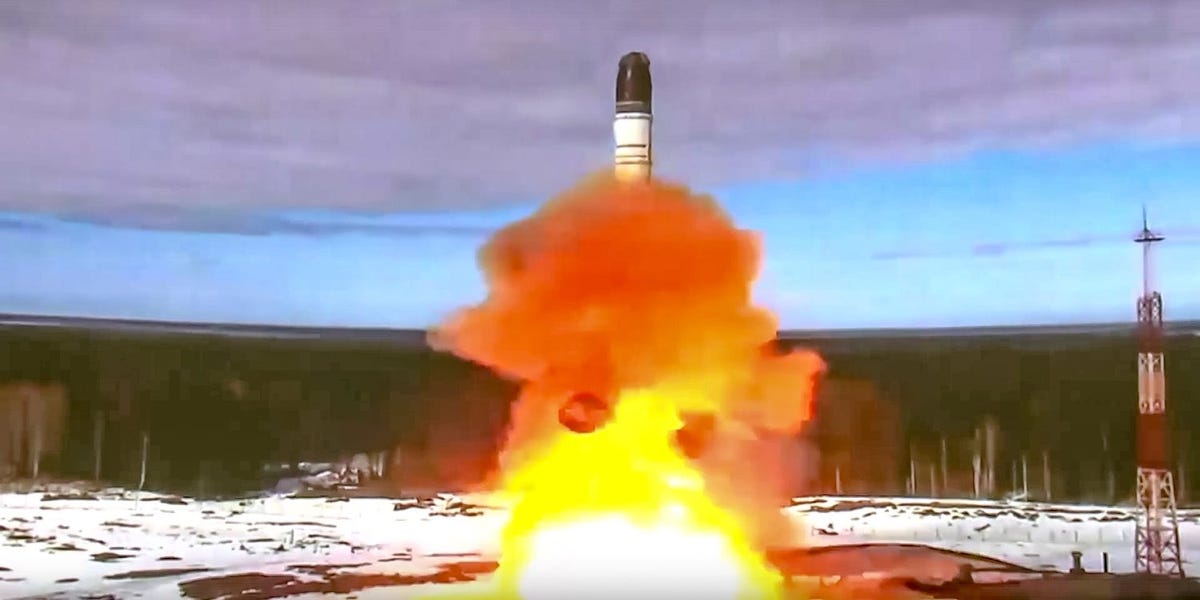
Challenges in Russia's ICBM Program Due to Lost Ukrainian Expertise
Russia is encountering a series of issues with its latest intercontinental ballistic missile, the Sarmat. This predicament is exacerbated by the isolation from Ukrainian know-how it previously relied on, due to ongoing conflicts.
Timothy Wright, a specialist in missile technologies from the International Institute of Strategic Studies, remarked that Ukraine historically housed many of the manufacturing facilities and trained personnel for ICBMs.
The Value of Ukrainian Expertise
Following Ukraine's independence after the Soviet Union's disbandment in 1991, its defense sector remained closely linked with Russia. Ukraine boasts significant capabilities in nuclear and missile technology, along with essential manufacturing processes. Even as Russia began reducing its dependency, it had not fully severed important connections by the time it launched an offensive against Ukraine in 2014, creating potential obstacles in developmental ventures.
In the years since the Soviet breakup, Russia successfully crafted efficient solid-fueled ICBMs. However, the choice to employ liquid-fueled technology for Sarmat was conspicuous because Russia hadn’t engaged with such designs in over three decades, as Wright noted. Moreover, the expertise surrounding liquid-fueled land-based ICBMs had dwindled as the experts either retired or passed away.
Unexpected Choices and Their Consequences
The transition to liquid-fueled systems, which the Ukrainians traditionally handled, now presents significant roadblocks, largely due to the absence of recent Russian involvement in similar projects. Pivdenmash, the firm responsible for the Sarmat's precursor, the R-36 (dubbed
Leave a Reply