


Hegseth Requires Historic Tiebreaker Vote for Cabinet Role
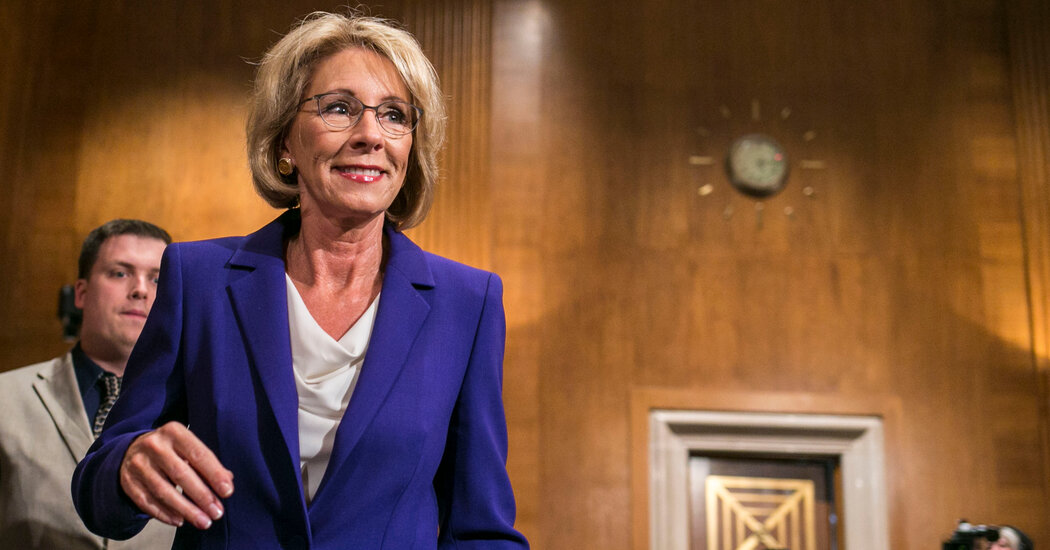
In 2017, Betsy DeVos barely managed to secure her position as President Trump’s education secretary, narrowly winning her confirmation.
Just under a decade ago, another nominee under the Trump administration's wing survived a rough confirmation process, needing the vice president's vote to advance.
Betsy DeVos, known for her significant financial contributions to the Republican party and lack of prior experience in public education, was this candidate.
On February 7, 2017, two GOP senators, Susan Collins from Maine and Lisa Murkowski from Alaska, opposed Trump's nominee, casting votes against DeVos. In the absence of a third dissenting Republican, DeVos garnered confirmation through a slender 51-to-50 vote.
Vice President Mike Pence played a crucial role by casting the deciding vote, marking the first instance where a vice president had to step in to resolve a cabinet nomination tie.
Recently, Pete Hegseth joined this rare category of nominees requiring a tiebreaker by the vice president. He secured his position as the defense secretary after Vice President JD Vance's decisive vote. Senators Murkowski and Collins, coupled with Kentucky's Republican Senator Mitch McConnell, opposed his confirmation.
The Democrats argued strongly against Hegseth’s appointment. Citing allegations of inappropriate conduct, erratic behavior, public intoxication, and mismanagement of finances in two veterans' nonprofit organizations, they claimed he was unfit for managing the sizeable workforce of active duty military personnel and the Pentagon’s massive $850 billion budget.
Leave a Reply