


Will New Federal Buildings Reflect Ancient Roman Style? Not Exactly.
In one of his initial moves, President Donald Trump has once again spotlighted federal architecture, a subject he addressed during his first term.
Trump has directed the General Services Administration to promote strategies that prioritize regional, traditional, and classical architectural styles. This is intended to enhance public areas and elevate the aesthetic quality of public buildings across the nation, reflecting American civic values.
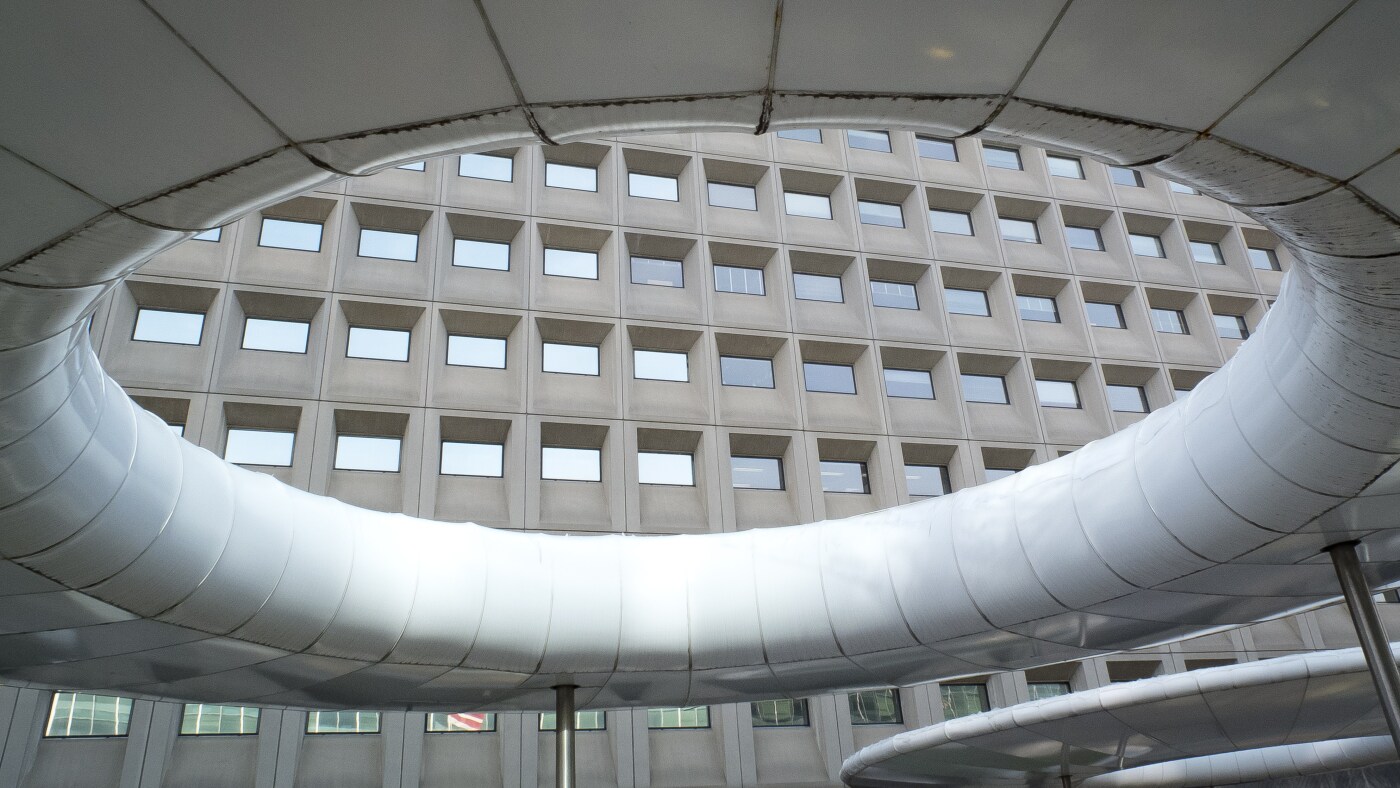
Through an executive order, he advocated for neoclassical architecture to become the standard design for federal structures across the U.S., particularly in capital cities like Washington, D.C. This move is a departure from the mid-20th century's prevalent brutalist architecture.
The American Institute of Architects quickly responded, criticizing the executive order for prioritizing the aesthetic preferences of a few over the diverse needs of the communities these buildings serve.
Justin Shubow, head of the National Civic Art Society, praised Trump's initiative, noting the potential focus on classical architecture during this administration.
The memorandum accompanying the order is somewhat milder in tone than its controversial 2020 predecessor. However, it effectively halts the approval of new federal buildings under the previous guidelines, pending new leadership at the GSA.
The outcome may affect notable federal landmarks, such as the FBI's J. Edgar Hoover Building in D.C., which is known for its severe brutalist design and is overdue for renovation.
Trump has emphasized that any future FBI headquarters should remain in Washington, embodying a classical aesthetic fitting for the city's iconic Pennsylvania Avenue.
Shubow argues that classical architecture is compatible with modern building technologies and can offer enhanced sustainability, lasting for centuries as exemplified by enduring structures like the U.S. Capitol.
In the past, modernist styles, especially brutalism, were popularized for federal sites during the 1960s, following guidance intended to avoid a singular, mandated architectural style.
Architects favored the simplicity of brutalism to efficiently expand office space during periods of rapid governmental growth.
While the recent executive directive may emphasize traditionalism, it acknowledges a range of historic styles spanning across regional and cultural boundaries, from Pueblo Revival to Mediterranean, rather than prescribing uniformity.
Leave a Reply