


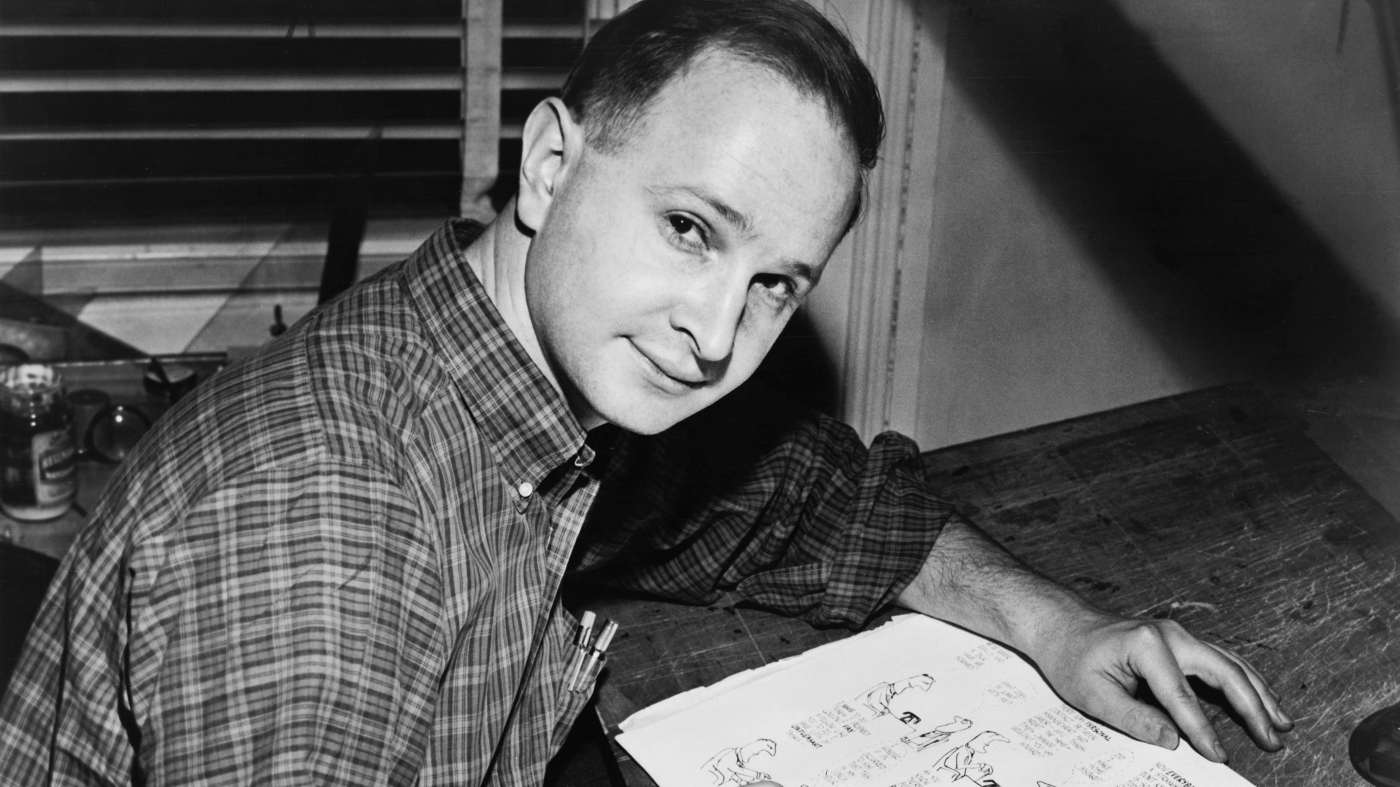
Celebrating Jules Feiffer: Renowned Cartoonist and Playwright Passes at 95
Jules Feiffer, a notable figure in art and literature known for his whimsical yet significant illustrations in "The Phantom Tollbooth," has passed away at the age of 95, succumbing to congestive heart failure at his home in Richfield Springs, New York.
Feiffer's art was a departure from traditional precision, with lines that seemed to momentarily guide themselves, creating unexpected paths and captivating audiences with their originality. This fearless exploration went beyond his drawings, permeating his entire life's work across multiple artistic genres.
During his lifetime, Feiffer's contributions were not overlooked. Though his Pulitzer Prize for editorial cartooning came later in his career, in 1986, his trailblazing style earned recognition through multiple accolades, such as the George Polk Memorial Award, Newspaper Guild Page One Award, Overseas Press Club Award, and induction into the American Academy of Arts and Letters in 1995.
A Legacy of Influential Work
Feiffer's influence was felt extensively in the cultural zeitgeist, resonating with a generation that cherished his characters like Munro and Huey as more than mere cartoons. His signature method marked the evolution of graphic arts, literature, theater, and film with a personal, often irreverent flair.
Feiffer's journey as an artist began from humble origins. Born in the Bronx in 1929, his early fascination with drawing earned him recognition as early as five years old. Pivoting from this early success, his determination led him to comic legend Will Eisner, where his persistence secured him early roles in comics. Eventually, his storytelling prowess emerged fully-fledged when he began crafting stories for an iconic comic series while serving in the U.S. Army Signal Corps after the draft in 1951.
Diverse Creative Ventures
Feiffer's talent was not encoded in static mediums. Transitioning into playwriting in the 1960s, his sharp wit adapted seamlessly to theatrical narratives, prompted in part by personal and cultural events. His debut full-length play, emerging from national tragedy, garnered an Obie award despite a lackluster Broadway introduction. His screenplay for the 1971 film directed by Mike Nichols further cemented his versatility.
While his legacy in literature for adults advanced with critically acclaimed works like his noir-inspired graphic novel "Kill My Mother," Feiffer maintained a special place in children's literature with beloved titles like 1961's "The Phantom Tollbooth." His return to children’s books as both author and illustrator reinvigorated his passion for the genre in later years.
A Continuing Influence
Even late in life, Feiffer never ceased to innovate or surprise. Marrying writer J Z Holden at 87, he exemplified change and reinvention up to his final days. His work, bridging humor with social commentary, has left an indelible mark on American culture.
Jules Feiffer's legacy is one of unpredictable creativity, an artist who continually pushed the boundaries of expected mediums, inspiring countless others to venture beyond the predictable confines of their own artistry.
Feiffer's legacy continues to resonate, ensuring his impact on the arts remains vibrant. His death marks the end of an era for creative expression across multiple platforms.
Leave a Reply