


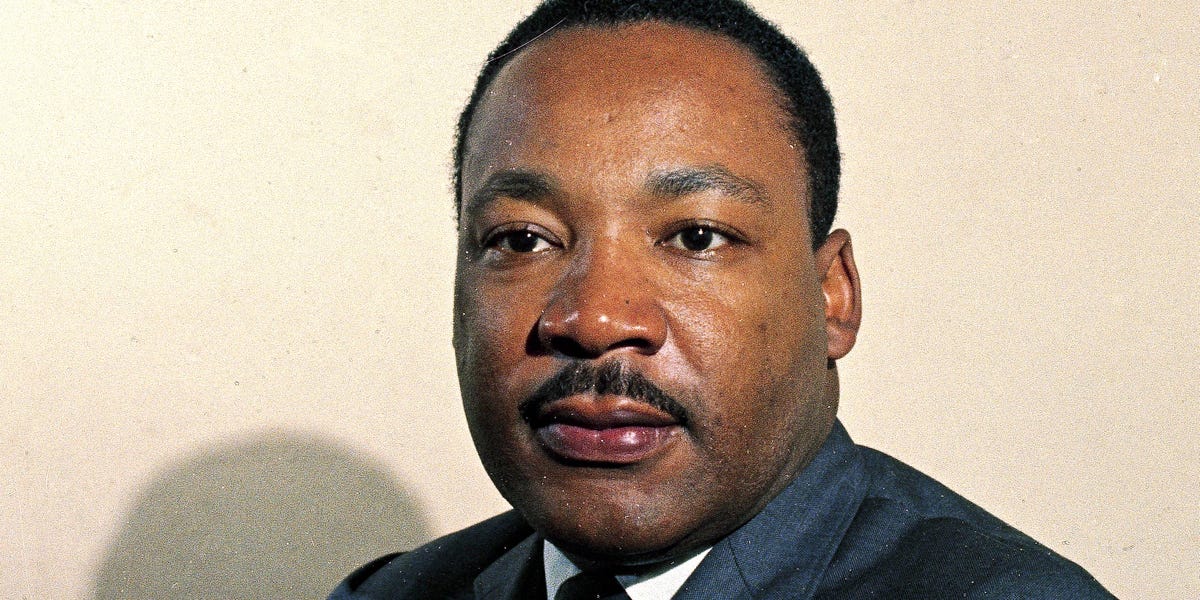
32 Lesser Known Facts About Martin Luther King Jr.
Reverend Dr. Martin Luther King Jr. remains a towering figure in American history for his pivotal role in the civil-rights movement. While many recognize his leadership in the iconic 1963 March on Washington, there are numerous other intriguing facets of his life that aren't widely known.
A Unique American Holiday
Remarkably, outside of George Washington, Martin Luther King Jr. is the only American whose birthday is nationally commemorated as a holiday. His holiday gained official federal recognition in 1986, becoming a day of remembrance across schools, banks, and federal institutions. However, it wasn't until 2000 that all 50 states agreed to observe this day, with South Carolina being the last to comply.
A Song in His Honor
Following Dr. King's tragic assassination in 1968, prominent individuals sought ways to preserve his legacy. During the late 1970s, President Jimmy Carter showed his support for a national holiday honoring Dr. King, although Congress initially blocked the proposal. To help sway public opinion, musician Stevie Wonder composed and performed "Happy Birthday" dedicated to King. He and Coretta Scott King embarked on a nationwide tour, seeking backing for the holiday, culminating in delivering a petition signed by six million people to Congress.
An Orator from Youth
Dr. King's gift for public speaking emerged during his youth. As a teenager, he triumphed in a Georgia oratory contest, tackling the subject "The Negro and the Constitution." His prowess provided a foundation for his future as one of America's most compelling speakers.
The Origins of His Name
Initially named Michael King Jr. after his father, Rev. Michael King Sr., his name was changed in 1934. King Sr. was inspired after a trip to Germany, embracing the works of religious reformer Martin Luther.
Early Encounters with Injustice
Experiences of racial discrimination left a deep impression on King from a young age. In his autobiography, he shares a childhood story where a white friend ended their playtime suddenly, igniting his lifelong commitment to combat racial injustice.
A Precocious Student
Too young for first grade at age five, King was removed by his teacher. Yet, he would later excel academically, skipping ninth and twelfth grades, which allowed him to enter college at only 15.
Early Career Steps
King held his first job delivering newspapers at The Atlanta Journal at the young age of 13. His dedication earned him a promotion to assistant manager, reflecting his strong work ethic.
Evolving Faith
While Dr. King would become renowned for his religious leadership, his teenage years were marked by religious doubt. He openly questioned traditional teachings, once shocking peers by disputing the idea of Jesus's bodily resurrection.
Calling to Ministry in Higher Education
It wasn't until college, after engaging with Dr. George D. Kelsey, that King felt drawn to ministry. He saw it as a powerful avenue for advancing social justice.
Academic Achievements
King's educational journey was marked by distinction. He graduated as valedictorian from Crozer Theological Seminary and went on to earn his Ph.D. in systematic theology from Boston University in 1955.
An Influencer and Influenced
Heavily influenced by essayist Henry David Thoreau, particularly the essay 'Civil Disobedience,' King adopted the philosophy of not interacting with oppressive systems. This significantly shaped his strategic approach to activism.
Meeting Coretta
King's initial romance with Coretta Scott bloomed from a simple telephone conversation set up by a mutual friend while he was pursuing graduate studies. Coretta, aspiring to a career in opera, was also enchanted by him.
Boston: A Second Home
During and after his university years, Boston became a city of significant importance to King, often referred to as his "second home." He visited the city numerous times throughout his life.
An Unconventional Honeymoon
Following their wedding in Alabama, Martin and Coretta faced segregation as no hotels accepted Black guests. Instead, they spent their honeymoon night in a friend's mortuary.
Unexpected Leadership
The Montgomery Bus Boycott propelled a relatively unknown King into the spotlight. Although initially hesitant to lead, he was soon chosen to guide the movement, drafting a speech in just an hour, cementing his role as a leader.
Prolific Writer
Dr. King authored six books, including influential works like 'Stride Toward Freedom' and 'Why We Can't Wait,' which capture the essence and evolution of the civil-right movement.
Champion Speaker
Despite his tragic end at age 39, King was incredibly prolific in public speaking. Delivering approximately 450 speeches annually, his powerful orations, including the renowned "I Have a Dream" address, resonated far and wide.
Prophetic Words
Many view Dr. King's final public speech as eerily prophetic. Delivered in Memphis, he spoke of reaching the 'Promised Land,' suggesting an almost foreseen demise.
Accolades and Attempts on Life
King's vocal opposition to the Vietnam War won acclaim, posthumously earning him a Grammy for best spoken word. However, his life was nearly cut short once before his assassination when he was stabbed in 1958.
A Jail Sentence That Echoed
Arrested for participating in a sit-in, King's imprisonment significantly impacted the 1960 election. His plight garnered sympathy, prompting John F. Kennedy to offer support, which many believe helped sway the African American vote.
Beyond Civil Rights
King's activism extended into economic justice realms by the 1960s. His calls for an annual income and opposition to the Vietnam War demonstrated his evolving focus on broader social equity.
The 'Dream' Was Improv
The most famous part of King's "I Have a Dream" speech was spontaneous. Deviating from the prepared text during the 1963 March on Washington, this impromptu addition became emblematic of his visionary aspirations.
Global Influence
As the head of the Southern Christian Leadership Conference, King’s advocacy took him worldwide. His journeys included symbolic travels to Ghana, England, and India, where he connected with influential leaders and communities alike.
A Nobel Laureate
Awarded the Nobel Peace Prize in 1964 at just 35, King is still the youngest male recipient. His award recognized his steadfast commitment to nonviolent resistance and progress towards dismantling discriminatory practices.
Leave a Reply