


Remote Discovery of a Hidden Mayan Metropolis
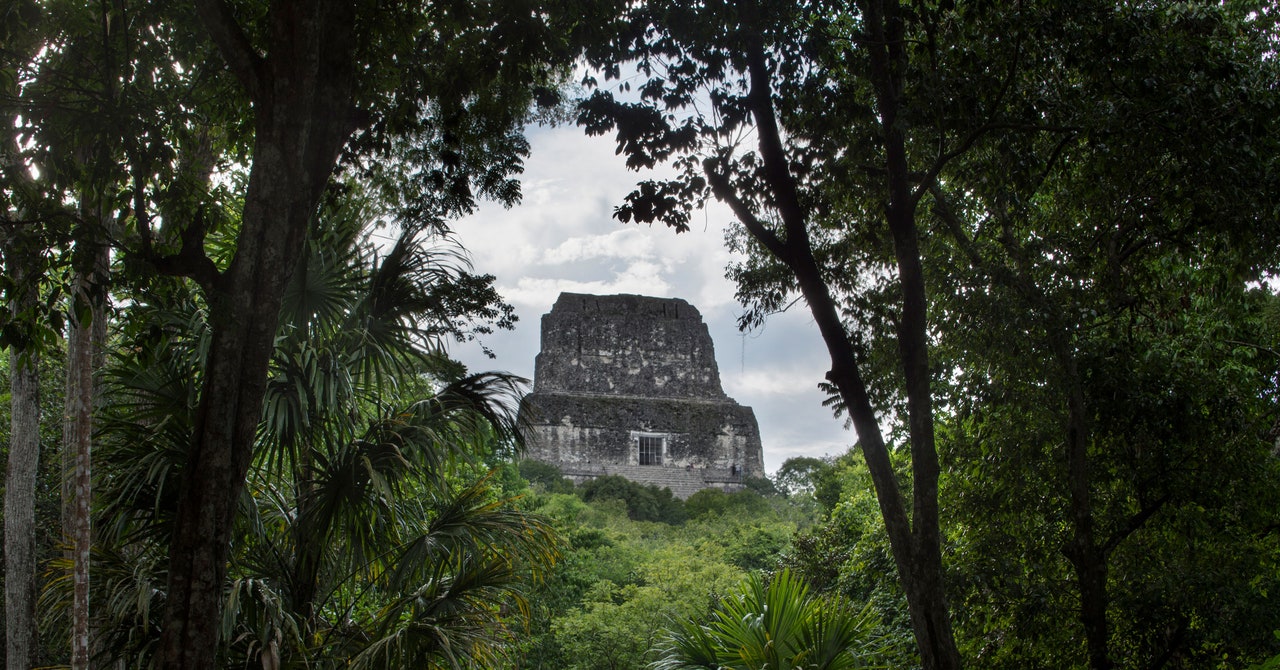
For centuries, an ancient city lay concealed within the dense forests of southern Mexico. Surprisingly, it was unearthed by a doctoral student at a great distance from the site. Here's how this remarkable discovery unfolded.
Unveiling a Lost Civilization
Named after a nearby body of water, this ancient site displays the hallmarks of a classic Mayan hub: plazas encased within its boundaries, towering pyramids, a court designated for the ball game, a water reservoir, and an urban structure hinting at origins well before 150 AD. This was revealed by recent studies disseminated in a scientific journal.
The Role of Cutting-Edge Technology
Luke Auld-Thomas, a doctoral candidate at Tulane University, made this groundbreaking discovery with the aid of laser-based technology. Archaeology traditionally relied on direct observation from the ground. Still, the introduction of light detection techniques has transformed the discipline, enabling broad-scale surveys to uncover sites buried beneath dense foliage or modern development.
A Modern Spin on Historical Discovery
Let's reflect on 1848, when Modesto Méndez, then governor of Petén, Guatemala, aided by artist and chronicler Ambrosio Tut, re-explored Tikal, a grand archaeological site. Despite limited knowledge of the sophisticated Mayan civilization, which mastered celestial calculations and developed advanced writing and numerical systems, the duo embarked on an arduous journey. Aided only by rudimentary tools and guided by local tales, they hacked through the underbrush to find a vibrant yet hidden city, with once-majestic structures cloaked by jungle growth.
Fast forward to 2024, and technology, not a machete, proved essential. Auld-Thomas, armed with digital tools, serendipitously uncovered the site initially mapped for environmental research by ecologists interested in forest carbon distribution.
Interdisciplinary Cooperation
Unintentionally, the ecologists’ survey using sophisticated lidar technology, primarily aimed at cataloging tree biomass, revealed an overlooked archaeological treasure. Initially ignored due to its purpose, the data later showcased an unexpected archaeological importance. Auld-Thomas, curious about potential finds from such data, stumbled upon this significant Mayan city just a short walk from a main road.
Ecologists typically focus above the ground, but archaeologists turn the lens downward, removing vegetation in digital scans to expose the terrain. The invaluable information was enhanced by algorithms finely tuned over a decade, revealing remarkably preserved architectural elements previously unseen.
Considerations for the Maya Civilization
It’s a broadly accepted view among archaeologists that shifts in climate significantly impacted the collapse of the Maya in the Classic Lowlands. This wasn't a cultural disappearance, but rather a political downfall, while Mayan traditions endure, thriving in language and practices today.
Intriguingly, densely populated metropolises like Valeriana were more susceptible to climate's whims. A crowded landscape reduced mobility options during adverse times, challenging adaptive capabilities.
The Balance of Preservation and Progress
Debates on how to manage cultural heritage amid development arise. In Mexico, these treasures belong to the public, entrusted to INAH for preservation. More detailed archaeological data facilitates informed discussions about development priorities.
Acknowledging each nation's cultural management strategies and aligning with local regulations is crucial for foreign researchers.
Future Prospects
Although Auld-Thomas’ present focus leans towards remote sensing, he's enthusiastic about unearthing more insights with INAH and actual field visits to Valeriana.
This venture underscores the untapped potential of forgotten or underutilized datasets, encouraging a global archaeological shift towards embracing readily available data.
Technological Advancements and Accessibility
Rapid sensor evolution is enhancing lidar resolution and expanding its survey capacity. The narrative of remote analysis without field exploration is becoming ever more plausible.
Open access to digital data fosters scientific growth by enabling varied analyses. Public availability of lidar information, as seen in Mexico, has already catalyzed groundbreaking discoveries.
What once seemed impossible, like spotting archaeological sites amid dense vegetation, is now changing thanks to lidar, unlocking the archaeological potential that awaits exploration.
Leave a Reply