


Revolutionary Aircraft Design: The Future of Aviation Unveiled
As the aviation sector demands more fuel-efficient solutions, aircraft manufacturers are in a high-stakes race to develop the next-generation jet.
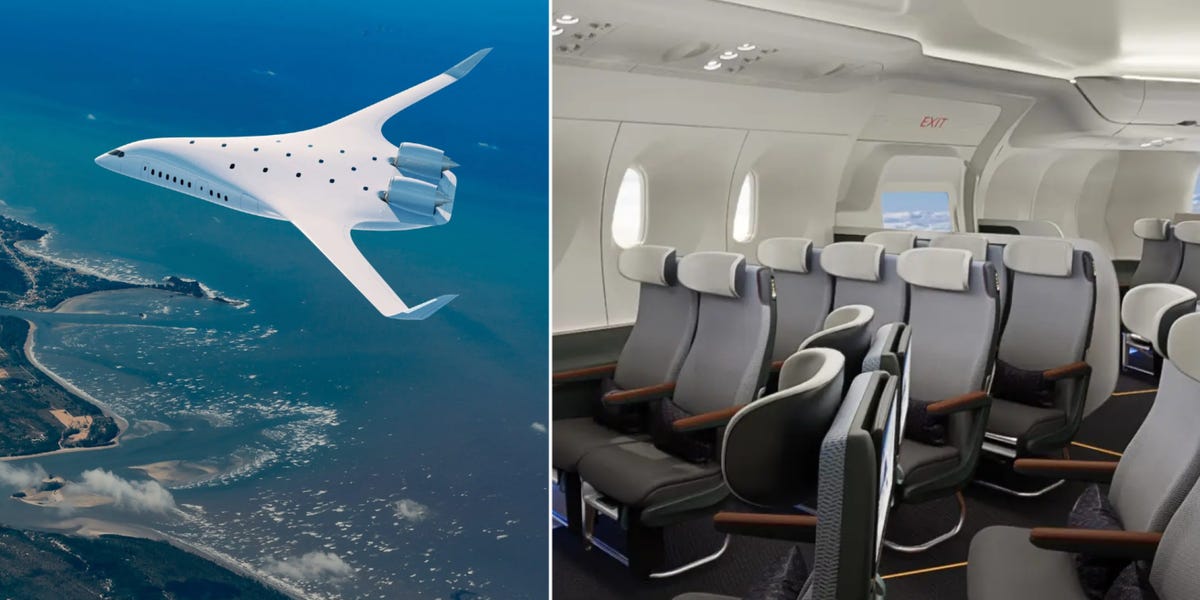
Prominent among the emerging designs is the 'blended-wing', a paradigm shift from the conventional fuselage and wing schema that has been the standard in commercial aviation.
Several innovative companies are aiming to introduce these cutting-edge aircraft by the 2030s, notably startups JetZero and Natilus, alongside seasoned manufacturer Airbus. Although Boeing has conducted research in this area, it has no current plans to produce such an aircraft.
JetZero and Natilus have ambitious goals to disrupt the duopoly of Airbus and Boeing with their groundbreaking designs, although each targets different market segments.
Natilus is focusing on developing the Horizon, a 200-seat jet aimed at addressing future capacity demands. In contrast, JetZero is working on the Pathfinder, a larger 250-passenger aircraft intended to replace outdated Boeing 767 models.
Airbus seeks to maintain its dominant position with its own 200-passenger 'ZEROe' concept, leveraging its extensive experience from the successful A320 series.
The Blended-Wing: A Monolithic Structure
These aircraft essentially transform the entire vehicle into one vast wing, minimizing drag and maximizing efficiency. This innovative approach has been praised for its potential environmental benefits.
Efficiency Hinges on Weight Reduction
Aleksey Matyushev, CEO of Natilus, argues that focusing on the airframe for emission reductions is superior to relying solely on sustainable aviation fuel, which may not meet future demand.
By utilizing a lighter airframe and optimizing engine design, these aircraft promise significant efficiency improvements. JetZero anticipates its Pathfinder will use half the fuel of current models.
Placement of Engines: A Shift in Design
Unlike conventional jets, these designs situate engines at the aircraft's rear, purportedly reducing operational noise.
JetZero plans to use engines adapted from existing aircraft, while Natilus is exploring partnerships to create a specialized engine fit for the new design.
Reimagining Passenger Space
The broader cabin designs offer new possibilities, such as enhanced passenger boarding processes and increased baggage capacity.
However, the unique cabin layout, with potentially long rows and two levels, may present challenges in terms of passenger comfort and accessibility to windows.
Airport Compatibility and Infrastructure
For these new aircraft to be viable, they must integrate seamlessly with existing airport facilities, reducing the need for costly infrastructural changes.
JetZero’s Pathfinder, for instance, is designed to fit within gates used by Airbus A330s, while the Horizon aims to utilize current narrowbody spaces.
Demonstrators Present, Prototypes Await
Though full-scale commercial models are still conceptual, smaller prototypes are being created to test key design elements and operational feasibility.
Challenging the Titan Manufacturers
Airbus and Boeing have dominated the market, but ongoing logistical challenges may provide an opportunity for new competitors like JetZero and Natilus.
The startups are aiming to meet an anticipated demand for numerous narrowbody aircraft, filling a void that established manufacturers may not fully satisfy.
Hurdles on the Horizon
The transition to blended-wing models is ambitious, with significant hurdles in certification, structural integrity, and passenger acceptance of novel designs.
Developers also face the complexities of engineering environmentally friendly hydrogen engines while ensuring comprehensive pilot training and safety procedures.
Military Precedents for Blended-Wing Designs
Although blended-wing aircraft for commercial use are novel, similar designs have been operational within military sectors for years, providing valuable insights into their feasibility and reliability.
Leave a Reply