


Russia Exploits Western Vulnerability with Cable Disruptions
According to experts, recent incidents involving the sabotage of undersea internet cables highlight a strategic exploitation by Russia of Western weaknesses.
In several reports over the past few months, aging maritime vessels have allegedly disrupted undersea communications in the Baltic Sea by dragging anchors over sensitive cables, causing significant outages.
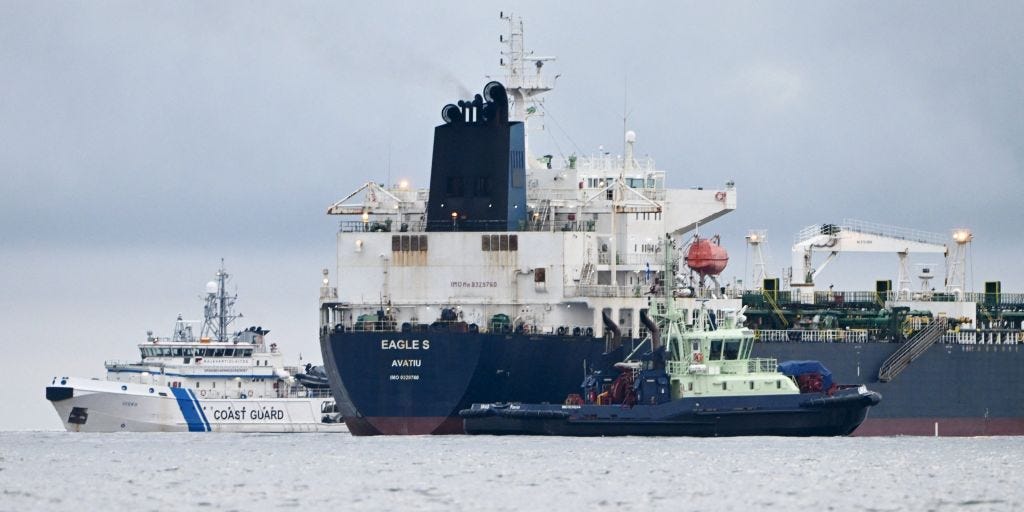
A notable disruption occurred on Christmas Day, with the tanker Eagle S causing damage to the Estlink 2 power line between Finland and Estonia, as well as to important telecommunications cables.
European authorities believe these vessels are deliberately targeting the infrastructure crucial for transmitting data and electricity.
Officials posit that these incidents reflect a broader Russian agenda to harm infrastructure, facilitated by a network of ships—referred to as a "shadow fleet"—that obscures direct links to Russia and evades oil embargoes.
These operations are starkly low-tech, involving the use of old tankers dragging heavy anchors along the seabed with the intent of catching and severing cables.
An official from Finland remarked that the crew of Eagle S seemed poised to sabotage additional cables before authorities intervened.
Global Implications
In another instance, the Chinese vessel Yi Peng 3 faced accusations last November for damaging yet another Baltic cable.
Similarly, the NewnewPolar Bear, a vessel under the Chinese flag, reportedly harmed communication and gas lines in the Baltic in late 2023 under an anchoring mishap that China called unintentional.
In early January, Taiwanese authorities alleged that a Chinese-owned tanker severed essential cables along its northern coastline, attributing the breakage to Chinese actions.
Experts suggest that these events are tactical maneuvers in a "grey zone" warfare strategy, used by both Russia and China to undermine their adversaries without crossing the threshold into open conflict.
James Foggo, a retired admiral from the US Navy, stressed in an interview on the urgent need for enhanced protection measures to defend critical undersea infrastructures worldwide.
The Complex Web of Ship Ownership
While the tactic of employing merchant ships for such covert operations carries inherent risks, it also provides strategic ambiguity for the perpetrators.
Henri van Soest of RAND Europe notes the ambiguity in the fleet's operations, highlighting the obscured identities and involvements of these vessels, making accountability challenging.
For example, the Eagle S operates under a UAE registration, is managed by a Mumbai-based firm, and flies the Cook Islands flag—all factors increasing the complexity of tracing an authentic Russian connection.
Despite allegations by analysts about Russian direction, the Kremlin consistently denies any ties to the Eagle S and similar cases in the Baltic region.
Strategic and Psychological Tactics
Van Soest also draws attention to the shadow fleet's extensive size, estimated to involve over 1,400 ships, complicating monitoring efforts.
The psychological impact further amplifies the fleet's strategic utility, as any ship could potentially engage in sabotage, implying that a larger scale attack could be swiftly ordered.
Yet, this sabotage model holds potential drawbacks for Russia.
Should the shadow fleet's activities become too aggressive, Western navies might be compelled to respond by limiting their movements, which could reduce their effectiveness in bypassing sanctions.
Moreover, as pointed out by Erin Murphy from the Center for Strategic and International Studies, the method is inherently imprecise; dragging anchors might not always successfully cut cables, raising operational risks.
Countermeasures and Challenges
Despite these challenges, suitable responses from Western countries remain limited, largely due to the sheer scale and complexity of the issues involved.
Sweden has pledged three naval vessels to aid NATO patrols in safeguarding maritime cables within the Baltic.
Additionally, late in the previous year, divers were mobilized to trial new technologies aimed at fortifying cable defenses.
Europe has also contemplated imposing stricter sanctions on ships within the shadow fleet and enhancing naval vigilance to deter further sabotage.
Murphy remarked on the vastness of the oceans as a formidable hurdle, noting that even increased patrols can only accomplish so much.
Research fellow Sidharth Kaushal furthers the skepticism, doubting that sanctions would effectively thwart the shadow fleet.
Kaushal also indicated that some implicated vessels, like the Yi Peng 3, might not be part of the alleged shadow fleet, complicating response strategies.
Some have suggested that nations could target docks suspected of receiving shadow fleet vessels, conducting searches or denying access.
Nonetheless, Murphy cautioned that such approaches may only offer temporary solutions, as creative circumvention tactics are often found.
Leave a Reply