


How Conspiracy Theories and Fear Are Shaping South Korea's Political Turmoil
Influential right-leaning YouTube personalities greatly contributed to the election success of President Yoon Suk Yeol. Following his unsuccessful attempt to enforce martial law, these figures have stood by him as strong supporters.
On the ground in Seoul
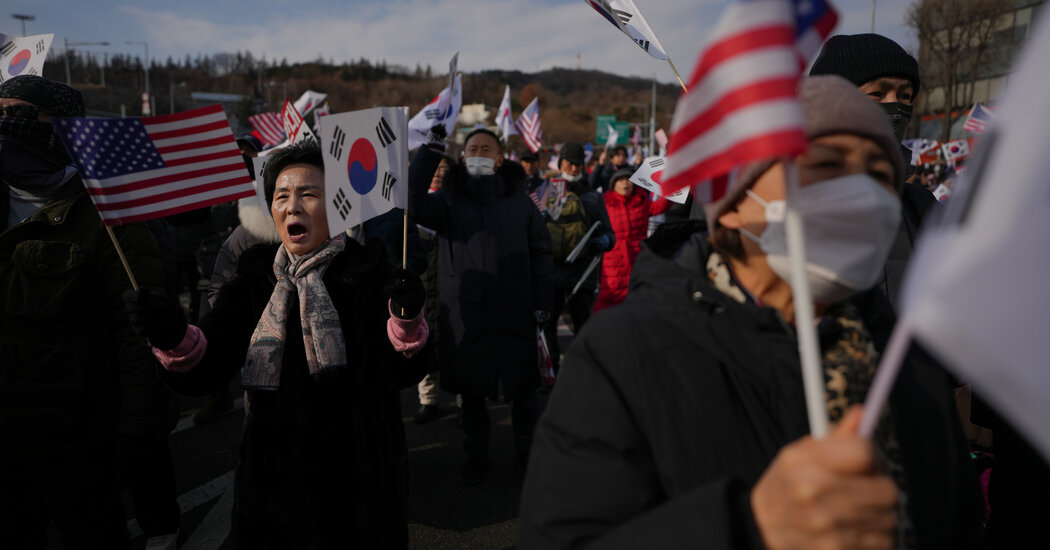
For the last several days, 72-year-old Kim Kwon-seop has been regularly joining masses of people gathering near the residence of the formerly impeached South Korean leader, Yoon Suk Yeol. Their goal is to prevent his detainment on charges of inciting rebellion related to events that unfolded in the past month.
From their perspective, it is the opposition that perpetrated insurrection. They believe the opposition exploited its dominant position in the Assembly to continually obstruct Yoon’s political objectives. According to them, the opposition’s parliamentary control is illegitimate due to alleged electoral manipulation. To these supporters, defending Yoon is equivalent to safeguarding their country from what they perceive as individuals aligned with North Korea, infiltrating societal structures ranging from judicial systems to education and media.
While many South Koreans dismiss these beliefs as merely extremist rhetoric amplified by social media and conservative YouTube channels, such theories have intensified the agitation surrounding Yoon’s predicament. This has mobilized fervent followers like Kim to flood the streets, advocating passionately for the president’s reinstatement.
Mr. Kim has expressed a profound commitment, remarking, 'Every time I step out for these demonstrations, I remind my wife that it might be our last farewell, as I’m prepared to risk my life for something greater.' He emphasized that his actions are not just about Yoon's defense but are a battle to secure a future for ensuing generations in South Korea.
Analogous to Donald J. Trump’s 'Make America Great Again' supporters, Yoon’s backers form the so-called 'national-flag movement.' This mostly older demographic frequently attends church and brings energy to the rallies with nationalistic music and flags. They vocalize their support for the nation's alliance with the United States and express deep-seated fears that left-leaning politicians could jeopardize their nation by aligning too closely with China and North Korea.
Leave a Reply