


Dairy Farmers Battle Financial Pressures Amid Changing Consumer Trends
Throughout the festive season, people across the US indulge in hefty grocery purchases, particularly for baking supplies. Data from the USDA reveals a 16% increase in butter consumption during last November and December compared to the earlier part of 2023. The typical American's butter intake last year hit 6.5 pounds, continuing a trend of rising consumption.
The cost of basic ingredients like flour, sugar, and milk has seen a consistent rise over the past half-decade, alongside the broader grocery price surge. For example, eggs have surged an astronomical 160% since 2019, partly due to supply disruptions from avian flu outbreaks. Similarly, butter has soared by 29%, reflecting broader grocery inflation.
Though retail prices climb, those harvesting the milk foundational to many baking favorites don't always see these benefits.
Fulfilling Yet Financially Straining
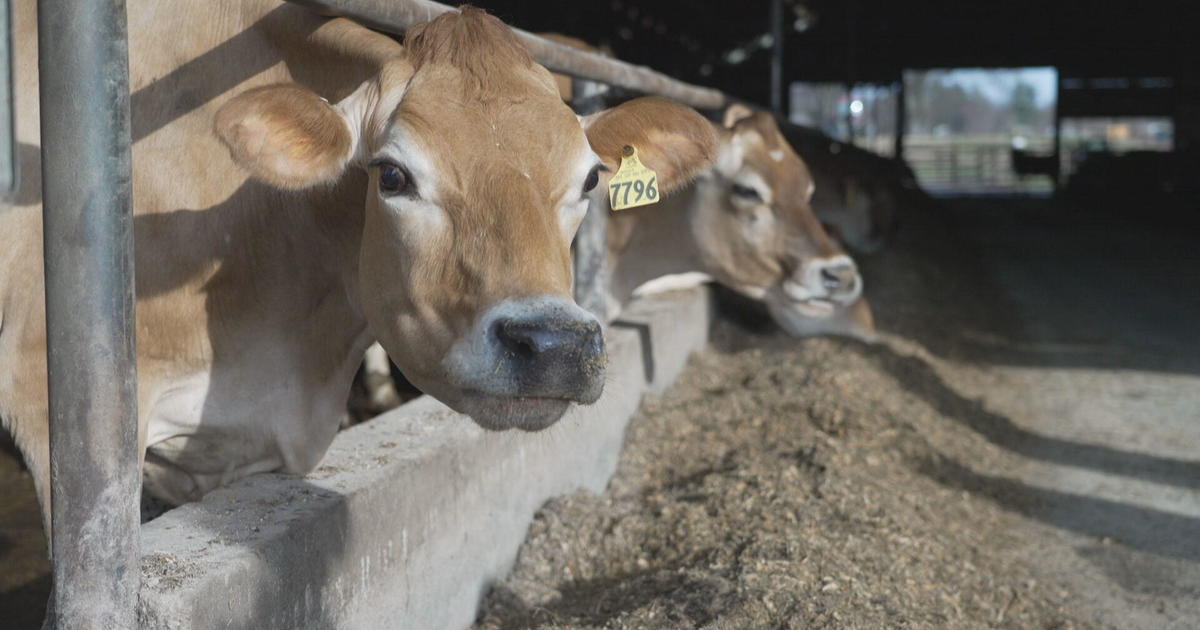
Nate Chittenden, managing nearly a thousand cows at Dutch Hollow in New York's Hudson Valley, devotes his time to constant herd care. His Jersey cows, prized for their rich milk output used in butter, cheese, and ice cream, need unremitting attention for health and high yield.
As part of the Cabot Creamery cooperative, Chittenden shares resources with other family-run farms. Nonetheless, the work remains rigorous.
Chittenden explains, 'Working here daily, you truly value the responsibility toward animals and land, knowing you're supporting the community through food production. It enriches your soul, but not necessarily your wallet.'
Milk Pricing Dynamics
Milk usually changes hands at a government-regulated rate when farmers sell to processors that turn the product into milk, butter, cheese, etc. Farmers earn about 15 cents per retail dollar, a figure intended to ensure fairness via government-set pricing.
Michael Swanson from Wells Fargo Agricultural Food Institute remarks, 'When you spend a dollar, about 85 cents don't return to the farm.' This 85% encompasses processing, wholesaling, marketing, and other activities.
Due to milk's short shelf life, quick action is vital—whether consuming, selling, or otherwise disposing. Swanson notes this principle underlies the uniform pricing strategy.
Farmers cannot independently raise prices if their costs rise, feeling the pinch from rising feed and labor expenses.
Chittenden concludes, 'We face an uphill battle annually, teetering on the brink with one potential error enough to devastate our finances.'
Potential for Improved Conditions
Swanson acknowledges a perhaps improving scenario for some dairy operations, as consumer milk prices have plateaued, albeit above 2019 baselines. Key cost areas like animal feed have also lightened, though these benefits are only now reaching farmers.
"This year, dairy producers have already seen revenues rise by 10% compared to 2023," Swanson notes. Labor costs always climb, but many in the sector could see a positive turn by 2025. 'Currently, they are in a stronger position compared to last year,' Swanson states.
Yet, small family operations like Chittenden's face daily tests of resilience and commitment to push ahead.
Chittenden shares, 'Regardless of today's challenges, returning home and thinking about how tomorrow can be better keeps us going. I don't need accolades for this work, but understanding from others about what it takes is crucial.'
Leave a Reply