


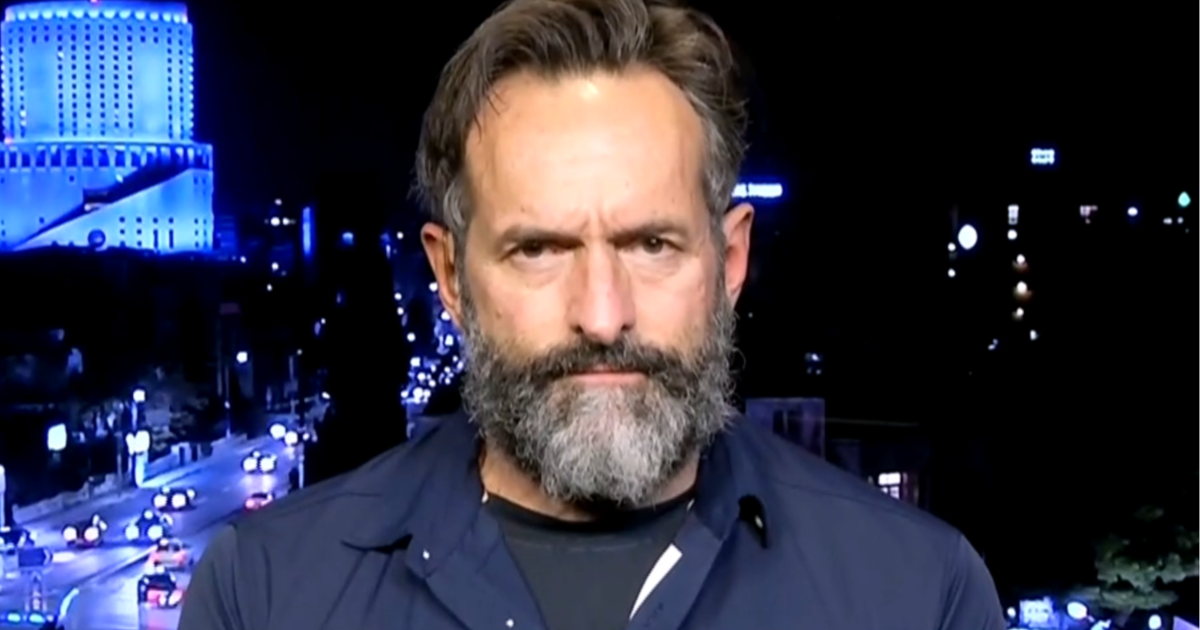
Transcript: Discussion with Roger Carstens on 'Face the Nation,' December 22, 2024
MARGARET BRENNAN: We're joined today by Roger Carstens, the Special Presidential Envoy for Hostage Affairs, who is currently in Amman, Jordan. Roger, you recently ventured to Damascus for the first time since the collapse of the Assad government. Can you explain the significance of this in-person visit?
ROGER CARSTENS: Thank you for the invitation, Margaret. My presence here involved considerable risk, but was crucial for our mission. We've been present since the early December, right after Damascus saw a change in control. Initially, we positioned ourselves in Beirut, before moving to Amman. Our main objective involved networking with local officials, international allies, non-governmental organizations, and media personnel. This allows us to better investigate the possible locations where Austin Tice might have been kept over the past decade. Direct interactions often yield insights unattainable from digital communications.
The Hunt for Austin Tice
MARGARET BRENNAN: You've noted there are numerous secret detention centers in Syria, over 40 by some counts. Have all these been investigated, and do you believe Austin Tice was imprisoned there?
ROGER CARSTENS: Discovering untouched prisons wouldn’t surprise me. Many have already been examined by both civilians and our dedicated teams searching not just for Austin, but others like Majd Kamalmaz. New findings regarding undiscovered prisons wouldn’t be unexpected. What's striking is the sheer volume of them; one might assume a regime would have a single outspoken prison for its adversaries, not numerous clandestine ones. Our commitment, however, remains unwavering—to ensure thorough investigations, so Debra Tice can be assured our search was exhaustive. We maintain hope in finding Austin, as both recent remarks from the President and I believe he is still waiting to be found.
Engagement with Interim Authorities
MARGARET BRENNAN: You've mentioned 'interim authorities.' The leader of HTS, known as Mohammad al-Jolani, was labeled pragmatic in discussions, despite a history linked to terrorism. Do you trust their cooperation?
ROGER CARSTENS: While policy decisions aren't my domain, I've observed their assistance as constructive. Our interactions, lasting roughly ten days, have proven beneficial. Particularly, they assisted in a significant joint search linked to Austin. Despite their past actions, today's cooperation is positive regarding the ongoing search.
MARGARET BRENNAN: The joint search today, did you expect to find evidence of Austin's presence there?
ROGER CARSTENS: Over the years, various facilities have been earmarked as potential sites where Austin might have been held. Among our prioritized sites, today's location was deemed most promising. Given Syria remains somewhat of a mystery in gathering concrete info about Austin, narrowing down evidence takes time. This site stood out during our visit, evidence collection and evaluation will determine its significance.
Assessing Evidence and Search Challenges
MARGARET BRENNAN: Syrian intelligence were known for meticulous prisoner documentation. Are any such records available and have you accessed them?
ROGER CARSTENS: We've discovered various files during the search. They're in the process of translation and analysis. Such documents sometimes include traces like DNA or fingerprints. We’re thoroughly examining them to find any connection to Austin or Majd.
MARGARET BRENNAN: During these searches, were special forces involved?
ROGER CARSTENS: Though I won’t detail all involved personnel, FBI agents were certainly present. The hostage recovery fusion cell leads the effort, and our SPEHA office complements it diplomatically. With FBI expertise, we meticulously assessed gathered information.
MARGARET BRENNAN: Austin Tice's mother appealed to Israel to cease prison bombings. Has this impacted your search?
ROGER CARSTENS: Based on the knowledge I possess, bombardments haven't hindered our efforts significantly. Being on ground enables a deeper understanding compared to remote communications, but the strikes haven’t appeared to disrupt our searches substantially.
Reflections on Past Efforts
MARGARET BRENNAN: In your 2020 visit with Kash Patel under President Trump’s directive, Assad authorities never acknowledged holding Austin Tice. Do you think they were deceitful?
ROGER CARSTENS: When we previously negotiated with them, they posed exorbitant requests without conceding anything, including Austin's status. They only alluded to discussions contingent on meeting their demands. We now have reasons to believe that at one point, they did detain Austin.
MARGARET BRENNAN: The family of Dr. Majd Kamalmaz suspects his demise. Should they still hold hope from your findings?
ROGER CARSTENS: In their position, I'd persist in seeking definitive proof. My duty is to tirelessly strive for truth and resolution. I’ve reassured his family of our continued dedication in pursuing Majd’s case, hoping someday to provide closure by bringing him home.
MARGARET BRENNAN: Thank you, Roger Carstens, for sharing your insights and efforts.
ROGER CARSTENS: Thank you for having me, Margaret.
Leave a Reply