


Sudan's Largest Refugee Camp, Already Suffering from Famine, Faces Shelling
Ongoing Assaults Complicate Famine Struggles in Sudan Refugee Camp
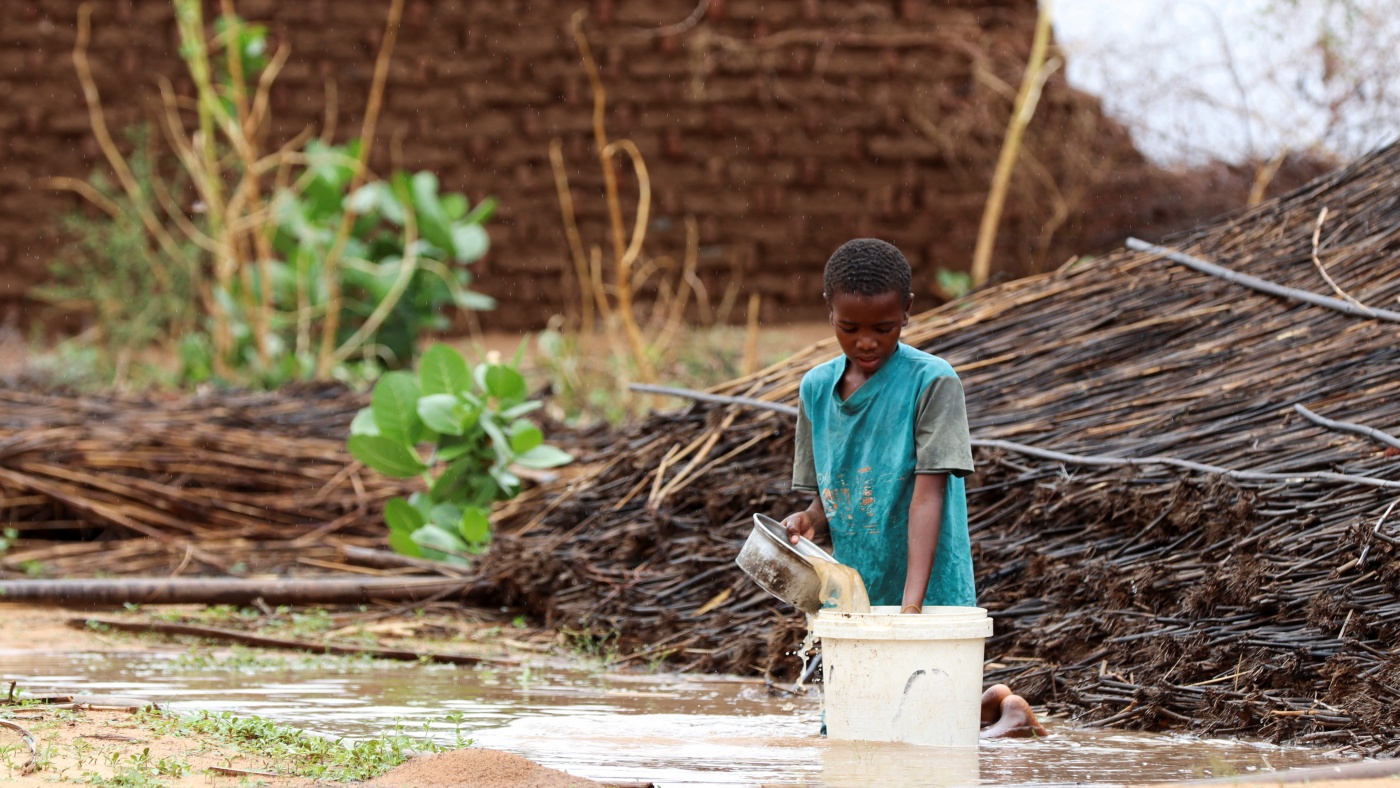
In the Zamzam camp located in Darfur, Sudan, a disadvantaged child fetches water on August 1. That month, famine was officially identified within the camp.
LAGOS, Nigeria — Sudan's most populous refugee camp, home to at least half a million people, many of whom are stricken by famine, is under frequent artillery attacks. Over 80 fatalities and nearly 400 injuries have been reported in the Zamzam camp in Darfur's besieged western precincts, according to regional outlets.
Refugees within the camp and humanitarian organizations, including Doctors Without Borders (MSF), have attributed continual attacks to the Rapid Support Forces (RSF), a Sudanese paramilitary faction mired in a civil conflict with Sudan's military since April 2023.
The blockade has incited a fresh humanitarian disaster, obstructing minimal aid supplies from reaching Zamzam, overwhelming its scant healthcare facilities. This signifies a pivotal and alarming shift in a zone rife with violence and atrocities, with substantial evidence from human rights bodies of ethnic cleansings by RSF in Darfur.
Although global focus remains on conflicts in the Middle East and Ukraine, Sudan's year-and-a-half strife has resulted in approximately 150,000 deaths, sparking one of the worst displacement crises, impacting one-fifth of the population pre-conflict. The RSF faces allegations of ethnic cleansing and both the RSF and Sudan's military are accused of war crimes. In December, U.S. Secretary of State Antony Blinken condemned both forces for inflicting severe destruction on civilians since the outbreak of hostilities.
Sudan is concurrently experiencing historically severe famine, with the U.N. reporting 26 million people at crisis levels of hunger. The Zamzam camp stands alone globally in confirmed famine conditions.
U.N. Secretary-General António Guterres urged an “immediate ceasefire” in Sudan on Friday, though peace efforts have stumbled thus far. In a U.N. Security Council meeting, Sudan’s accusations against the UAE, which the latter denies, were noted.
Only a Pair of International Aid Agencies Remain in Zamzam
Previously holding 120,000 residents, Zamzam's populace has burgeoned to at least half a million, possibly a million, as stated by Relief International. Most casualties within the camp are linked to shelling, as noted by aid groups and attack investigators.
MSF reported that patients and healthcare providers are evacuating, seeking safety. "The bombardment exacerbates starvation," the organization stated.
MSF and Relief International are the lone international entities still consistently present in the camp.
"Complex trauma necessitating surgery is beyond our capacity," noted Melanie Kempster, director of global health and nutrition at Relief International, highlighting that grave cases remain untreated.
"We are forced to direct these cases to El Fasher's sole working hospital," she added. "The perilous journey involves maneuvering through conflict zones near the camp’s entrance and main access road."
A Relief International driver lost his life during an attempt to reach the hospital earlier this year.
The RSF disclaims attacking the camp, which would be a war crime. However, RSF affiliates rationalize nearby engagements as conflicts with armed factions allied with Sudan's military.
Recent community distress surfaced following a verified local media report showing devastation in Zamzam due to attacks, voices crying out the camp is a sanctuary for civilians, not militarized groups.
Zamzam Camp Faces Escalated Hardships Amidst Current Aggression
Established two decades ago during the Darfur conflict where Arab militias, with Sudanese government backing, attacked, the Zamzam camp sheltered those displaced. Between 2003 and 2005, over 200,000 individuals, mainly Darfur civilians, perished.
The RSF, emerging from the Janjaweed militia responsible for historical atrocities, now controls almost all of Darfur, accused of recent extensive abuses paralleling past violence.
Over the years, the camp transformed into a quasi-city, accommodating permanent structures such as homes and educational facilities for long-term inhabitants.
Yet, the humanitarian state has worsened due to the ongoing war, recognized as famine in August. Thousands endure starvation, with children dying almost daily, per aid organizations. Starving residents resort to consuming peanut shells and animal fodder.
The recent shelling intensifies urgency; doctors in Zamzam and El Fasher report being overwhelmed but remain anonymous due to RSF retaliation fears.
"We barely have essential supplies like iodine," said a doctor on-site.
Another healthcare worker depicted the scenario as "catastrophic," appealing for global intervention to ameliorate the crisis.
Escape Attempts from Surrounding Areas Often Result in Entrapment
Recently, a physician seeking refuge from the bombardment in Zamzam to El Fasher, the last significant Darfur city outside RSF dominion, faced a perilous journey. El Fasher, encircled by RSF forces, suffers regular assaults, notably a drone strike attributed to RSF.
The protracted siege prompted many to risk traversing conflict zones on foot to reach safer regions over 40 miles distant, although RSF blockades hinder most escape routes.
Nathaniel Raymond, of Yale University's Humanitarian Research Lab, calls the entrapment a "kill box," compelling those fleeing to choose between perilous routes or famine risk.
Satellite imagery reveals impromptu shelters beneath trees and by roadsides as people evade conflict zones, enduring formidable physical debilitation. Raymond observes severe malnutrition in both adults and children, signaling grave health risks.
Allegations of UAE Involvement with RSF Surface
Emerging evidence underscores the RSF's offensive, spotlighting foreign interests alleged to exacerbate warfare, including Russia and Iran. Despite a U.N. arms embargo, weapons flow persists.
Particularly accused is the UAE. Yale's investigation unearthed artillery launch points near Zamzam tied to the UAE, propagating support accusations.
White House personnel reiterated the UAE's non-participation in arming the RSF amidst ongoing allegations.
Leave a Reply