


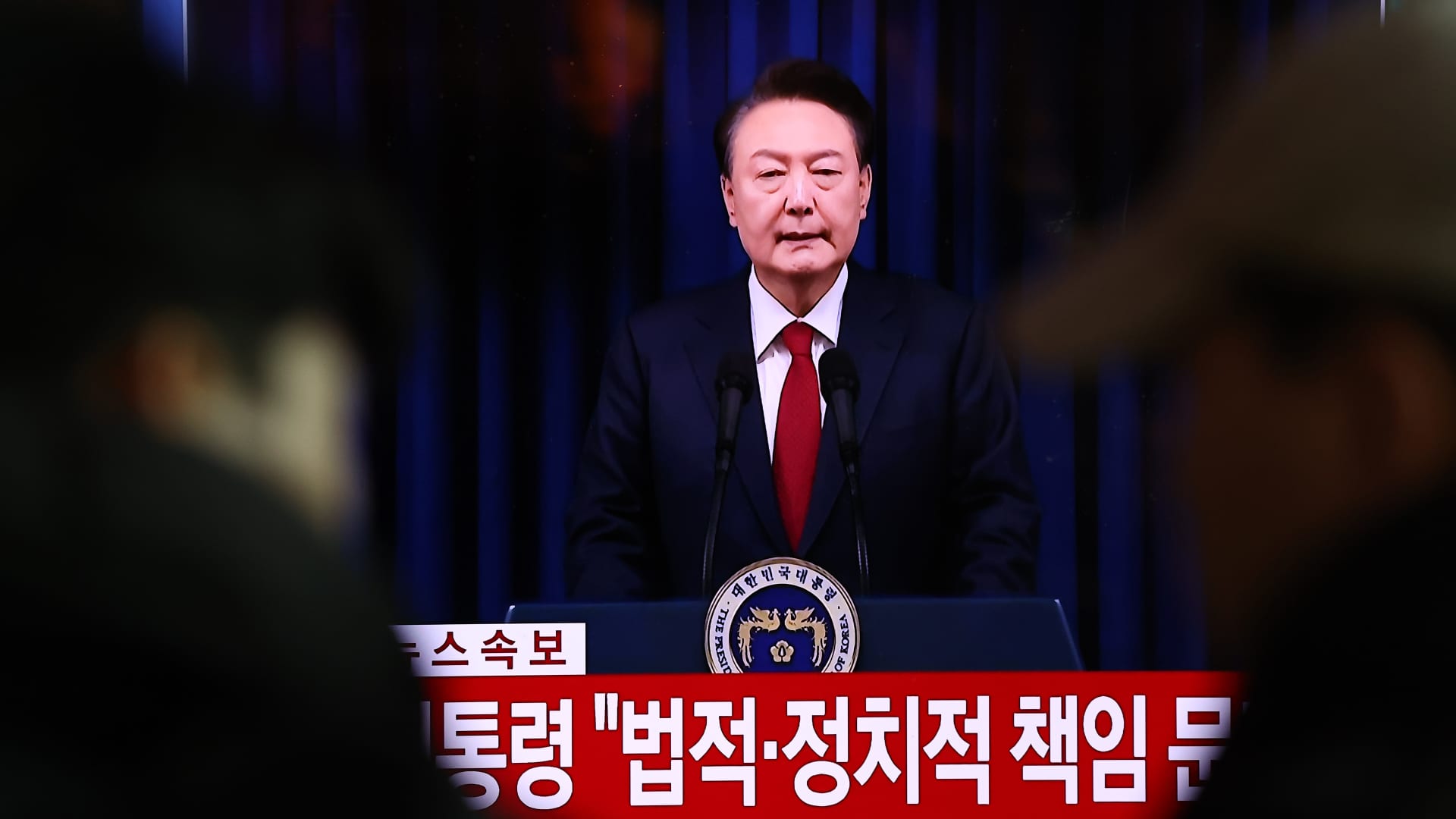
Impeachment of South Korean President Yoon Follows Martial Law Controversy
President Yoon Suk Yeol of South Korea was ousted from office after a decisive parliamentary vote on Saturday, following his brief and unsuccessful attempt to establish martial law earlier in December.
With the possibility of vacating the presidency, a national election is mandated within a 60-day period after the dismissal or step down of the leader.
A previous impeachment motion on December 7 failed to garner the necessary 200 votes from the 300-member National Assembly, as many members of Yoon’s People Power Party chose to abstain from voting. Yet, the situation shifted dramatically when PPP leader Han Dong-hoon expressed support for Yoon's impeachment, urging for an ethical review of his leadership.
Brief Martial Law Declaration Sparks Backlash
The impeachment was propelled by opposition figures after Yoon enacted martial law momentarily on December 3, a move reminiscent of the nation's 1979 military coup. This act was justified by Yoon as necessary to defend the constitutional freedoms against alleged pro-North Korea elements threatening the nation's liberty and well-being. The declaration, however, was rescinded within six hours, raising alarms about potential future impositions.
Yoon's administration has been marred by various controversies, many involving his wife, Kim Keon Hee. Since taking office in 2022, his popularity has plummeted, particularly after the martial law incident, amid persistent demands from opposition voices and citizens for his resignation. Furthermore, he has been barred from leaving the country.
Historical Context of Impeachment in South Korea
Yoon is not the first to face such political adversity; precedents include Roh Moo-hyun and Park Geun-hye, who were respectively removed from position as a result of impeachment proceedings in 2004 and 2016.
Continued Resistance from Yoon
In a nationally broadcast speech on Thursday, Yoon defiantly vowed to adhere to his principles and confront the challenges head-on, stating, "I will fight until the very end." He further questioned the characterization of martial law as insurrection by the opposition parties.
Economic Ramifications and Recovery Prospects
Initially, the political upheaval rattled financial markets and stirred uncertainty regarding the democratic resilience of South Korea, the fourth-largest economy in Asia. However, John Woods, the chief investment officer at Lombard Odier, indicated that investors have begun to look past the political instability, refocusing on domestic earnings potential.
"There's a foreseeable conclusion to this crisis, anticipated in the coming months," Woods commented. "The political volatility poses a significant consideration. However, the overarching value of South Korea in technological advancements, including AI, remains pivotal." Tech-driven sectors, notably in semiconductors and artificial intelligence, are vital to South Korea’s market, with a projected 2.5% economic expansion this year according to the International Monetary Fund.
Leave a Reply