


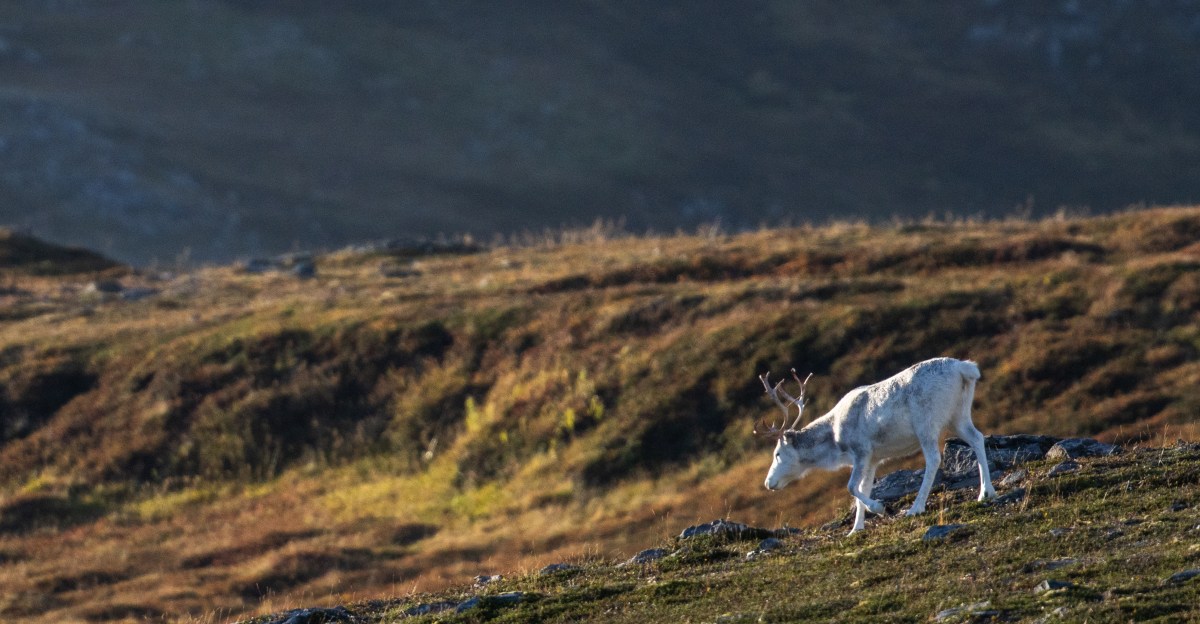
Arctic Tundra's Role in Climate Change Has Reversed
Once a crucial ally in climate regulation, the Arctic tundra is now contributing to climate deterioration.
Historically, the icy Arctic tundra has served to siphon carbon dioxide out of our atmosphere, acting as a vital stabilizer for global climate systems. With the current trend of escalated global warming, this ecosystem is now releasing more greenhouse gases than it captures. This dramatic shift could exacerbate climate warming and underscores that climate change can be punctuated by swift, unexpected phases.
Recent findings in the annual Arctic Report Card from the National Oceanic and Atmospheric Administration (NOAA) reveal that this region is heating up at a rate fourfold that of the broader planet. The ramifications extend from altering landscapes, including soils and ice, to disrupting living organisms and impacting human communities across the globe.
NOAA's administrator, Rick Spinrad, highlighted that this development is a foreseen outcome of failing to curb fossil fuel pollution, a sentiment he conveyed with urgency.
Approximately four million inhabitants reside within the Arctic Circle, an area gaining strategic importance as melting sea ice opens new pathways for maritime transport, stirring geopolitical unease over resources such as minerals and oil.
The Arctic's influence on international weather patterns is significant, as it drives crucial oceanic and atmospheric changes. Observable changes occur as surface ice transitions into heat-absorbing water, or snow transforms into rain, illustrating the region's sensitivity to temperature rises.
Into such a list of changes, the Arctic tundra now finds its place.
Generally, plants in any environment consume carbon dioxide. Following their life cycle, they die, and their remains get broken down, eventually returning CO2 to the air in a continuous carbon cycle.
The tundra, with its extreme, sunless winters and short summers, disrupts this cycle. It doesn't boast a rainforest’s rich biomass but still captures nearly a billion metric tons of CO2 annually—about a fifth of global human emissions. The permanent frost or permafrost below the tundra's surface acts like a lid, preventing the decomposition process that would normally release stored carbon, trapping about 1.6 trillion metric tons of it.
Yet, with rising temperatures, the so-called 'permafrost' is increasingly subject to thawing, and dormant soil microorganisms revive, digesting organic matter. This results in higher emissions of CO2 and methane, a particularly potent greenhouse gas. This thawing has altered the carbon balance, as indicated by monitored temperatures exceeding all previous records at nine of twenty permafrost sites this year.
During a press briefing, Brenden Rogers from the Woodwell Climate Research Center clarified that warmer summers might boost carbon capture, but the following colder seasons see a surge in emissions from active soil microbes.
The prevalence and intensity of wildfires have also moved the tundra from storing carbon to releasing it. Though historically rare, these fires have become more frequent and severe since 2001. Last year marked an unprecedented wildfire season, contributing significantly to atmospheric greenhouse gas levels and highlighting growing risks for Arctic populations.
Such fires feed back into climate dynamics, further melting permafrost, and setting the stage for more fires.
Should global temperatures decrease, there's potential for the tundra to revert back to its former role as a carbon sink.
Rogers pointed out that the region's carbon uptake varies significantly annually, driven by transient factors. This variability serves as a reminder that ecosystems formerly counted on for carbon absorption are losing their reliability, illustrating that it's not solely human-induced emissions that are at work, but also the degradation of essential natural buffers.
This is a vivid demonstration of climate impacts unfolding as we speak, demanding urgent global action, as emphasized by Spinrad.
Leave a Reply