


South Korean Market Turmoil Amid Political Distress
On Wednesday, leading South Korean stocks experienced a turbulent session, affected by political instability that included President Yoon Suk Yeol's rapid reversal of an unexpected martial law declaration he had enforced only hours before.
Before trading commenced, Economy and Finance Vice-Minister Kim Byung-hwan stated that market regulators were prepared to inject 10 trillion won (approximately $7.07 billion) to support the stock market whenever necessary.
Individually, Samsung Electronics, a major player in chip manufacturing, saw its shares dip by close to 1%. Meanwhile, LG Energy Solution and Hyundai Motor Company suffered more significant share losses of 2.8% and 2.4%, respectively.
Shares of SK Hynix saw minor declines amid volatile trading conditions, while both internet titan Naver Corp and battery producer Samsung SDI experienced drops exceeding 2.5%.
Korea Gas Corporation experienced the most significant drop among Kospi-listed entities, with their shares plummeting over 14%.
Overall, the Kospi index depreciated by 2%, while the Kosdaq slipped by 2.4%. Concurrently, the South Korean won weakened slightly, decreasing by 0.05% to 1,415.78 against the US dollar.
Political Instability and Market Reaction
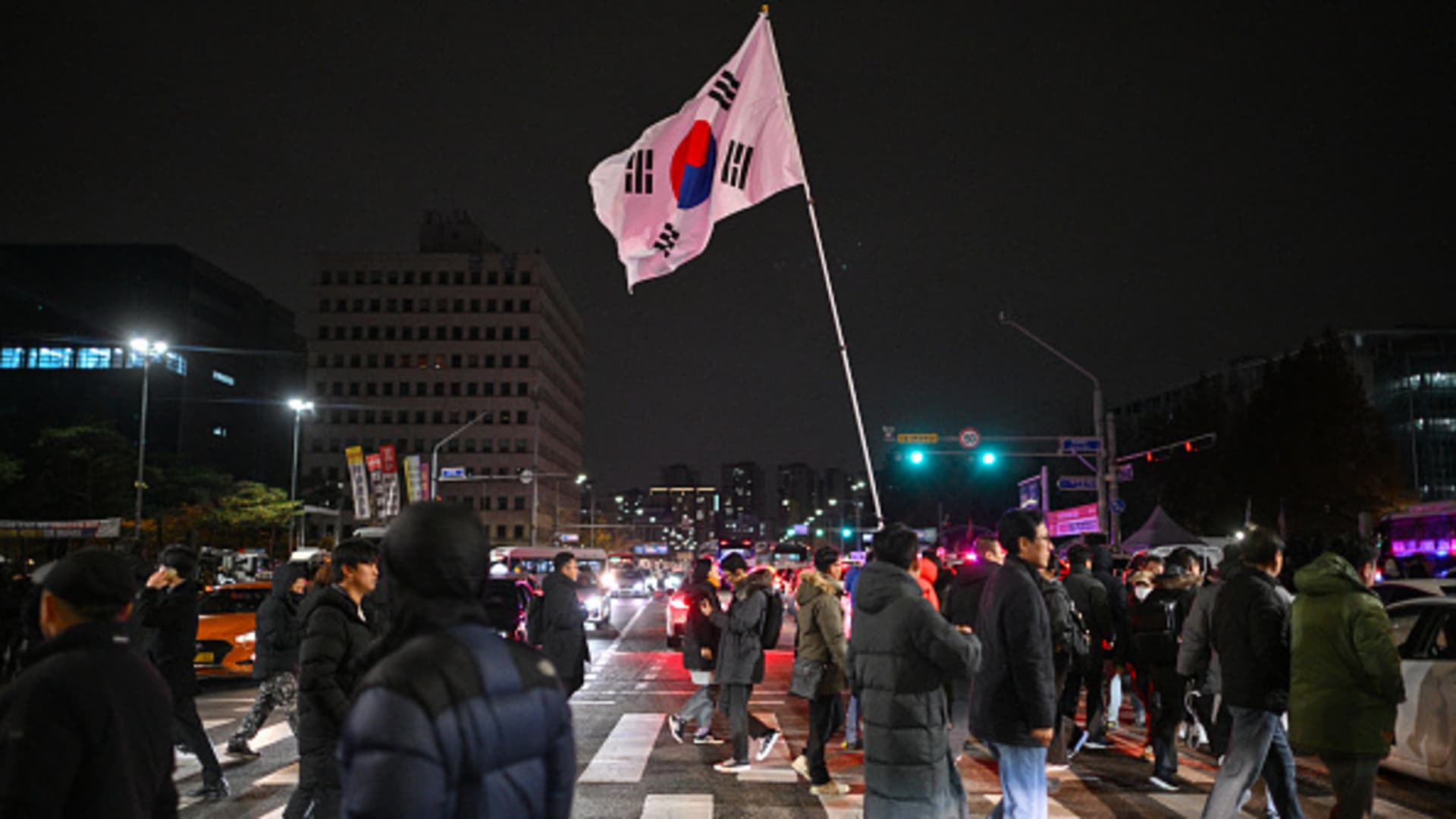
Tuesday night's abrupt declaration of martial law by President Yoon, followed by a swift annulment on Wednesday after antagonistic National Assembly intervention, contributed significantly to the country's financial market instability.
This wave of political uncertainty has intensified fiscal pressures, resulting in capital withdrawal and currency weakening, as noted by Chong Koon Park, who leads economic research for Korea and Japan at Standard Chartered Bank.
Interventions and Market Movements
In reaction to these events, the Bank of Korea remained alert, with plans to provide 'unlimited liquidity' intended to steady the wavering financial markets.
South Korean equity performance aligned with trends seen in the U.S. markets overnight, where an index tracking more than 90 prominent Korean firms took a 7% hit, reaching a low not seen in 52 weeks before paring losses to settle 1.6% down.
Leave a Reply