


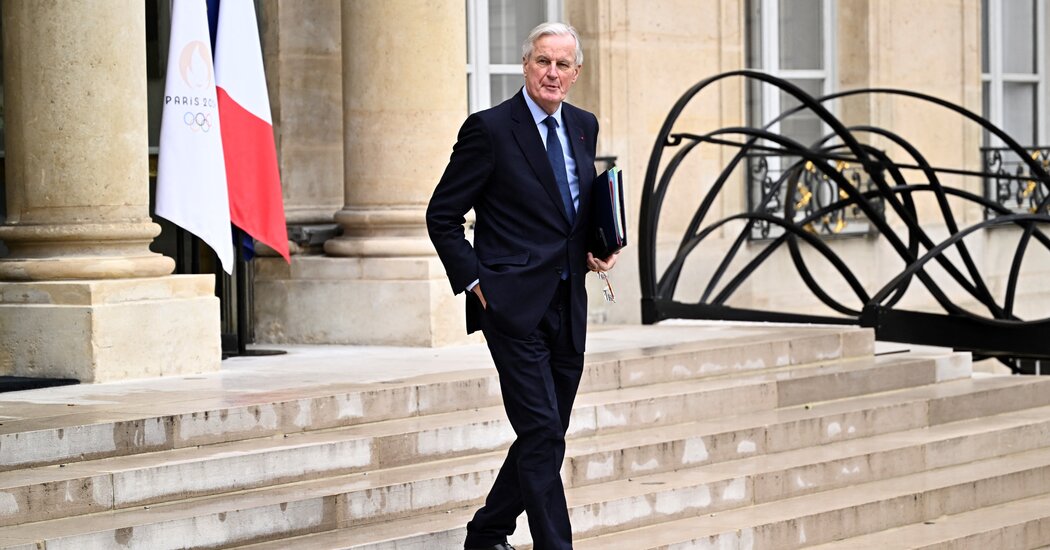
France’s Prime Minister Faces Potential Ouster Amid Political Strife
The tenure of Michel Barnier as France’s prime minister seems destined to end soon, further deepening the nation’s political unease. The pressing question on everyone's mind: How much longer can he hold on?
Report From Paris
France's long-standing obsession with the guillotine metaphorically aligns with the looming termination of Prime Minister Michel Barnier's career. Renowned for his calmness in political upheavals, Barnier now finds his own position under scrutiny.
This week could mark the end of Barnier’s political journey, with possible lights out even before the year ends. Concerns are mounting about potential fiscal disarray reminiscent of U.S. governmental standoffs, threatening the earnings of France's substantial public sector workforce. The notion of a government-less France exacerbates a bleak national sentiment, stirred by mass job cuts and socio-economic strains.
Predictions of a governmental collapse have prompted a spike in France's borrowing rates relative to Germany, nearing figures seen in Greece. The confrontation may come early, with Monday possibly witnessing Barnier’s attempt to push a contentious budget concerning healthcare and social expenditures through legislative processes.
Even Barnier, a skilled political figure who played a crucial role in structuring the Brexit agreement for the EU and held ministerial positions multiple times, admits his current situation is tenuous. Marine Le Pen, the bold leader of the far-right National Rally, holds significant influence over Barnier’s fate, as her party commands considerable power.
Le Pen has criticized Barnier’s fiscal agenda, which advocates $60 billion in fiscal adjustments involving tax hikes and expenditure reductions. She vocally opposes modifications to health reimbursements and elevated electricity fees—denouncing them as harsh and inequitable. Her party might seek to formally censure Barnier if he pushes forward without parliamentary backing. Although Barnier compromised on the issue of electricity fees recently, Le Pen remained unsatisfied with the concessions.
Circumventing the lower chamber in Parliament—an unconventional method often met with accusations of autocratic tendencies—could prompt an angry backlash among legislators. Primarily spearheaded by the left and supported by the far-right, these lawmakers are likely to table a motion expressing no confidence in Barnier’s administration.
Leave a Reply