


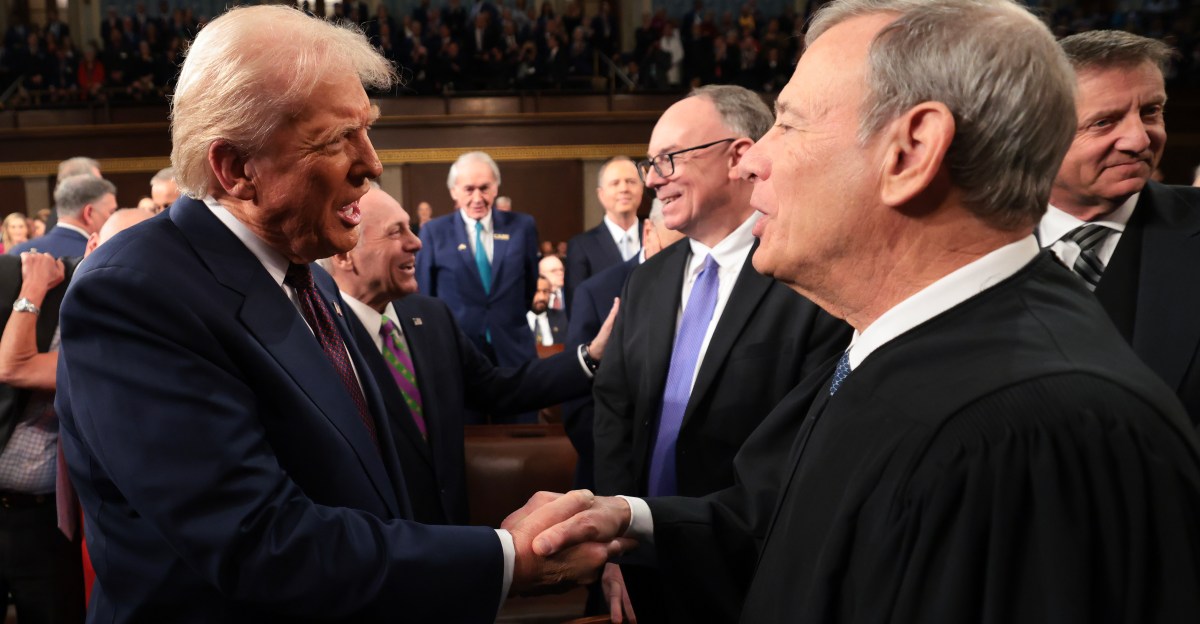
The Supreme Court's Concerns About Trump's Actions
A cryptic Supreme Court order raises questions.
On a recent Thursday, the Supreme Court issued a concise directive allowing President Donald Trump to remove two federal officials, despite their legal protection from abrupt dismissal. This decision merely sustains the status quo since Chief Justice John Roberts had similarly acted independently earlier.
The order contains significant news about the court's stance—while Republican justices have long suggested they support extending presidential powers to remove protected officials, they have drawn a line at the Federal Reserve, barring Trump from dismissing its members.
Understanding the Court's Decision
Legally, the stipulation on the Federal Reserve demands scrutiny, and Justice Elena Kagan's dissent notes a lack of legal foundation for this exception. However, investors may find comfort in knowing that, despite its leaning toward broader presidential power, the Supreme Court aims not to interfere with the Fed's monetary policy decisions.
The case at hand, Wilcox, involves a former National Labor Relations Board (NLRB) member and a dismissed Merit Systems Protection Board (MSPB) member, both removed by Trump soon after his inauguration, despite legal safeguards against dismissal without cause.
Examining the Wider Implications
These boards, alongside agencies like the Federal Trade Commission and Federal Communications Commission, are designed to function independently—with the Supreme Court historically signaling interest in diminishing Congress's power to shield them from presidential influence.
Thursday's decision implies the Court is aware of economic concerns tied to the Federal Reserve's independence. Removing its autonomy could lead to economic instability, a point underscored by many economists cautioning against politicizing its interest rate decisions.
The 'Unitary Executive' Doctrine
Trump v. Wilcox resurfaces the debate regarding Humphrey’s Executor v. United States (1935), a pivotal case affirming Congress's power to create independent bodies whose leaders are shielded from arbitrary dismissal, ensuring decisions are impartial and expertly informed.
Yet, the justices, espousing the 'unitary executive' theory, argue for comprehensive presidential control over executive functions, challenging Humphrey’s Executor's principles. Justice Antonin Scalia once advocated that the entirety of executive power resides with the president, a stance incompatible with independence in entities like the Federal Reserve.
While theoretically, this gives the president power over the Fed, doing so could invite economic disaster. Past interventions, like Nixon's pressure on the Fed leading to long-term economic woes, illustrate potential pitfalls.
Why the Federal Reserve Stands Apart
Notwithstanding the peril of unchecked executive power, it seems the Republican justices have long pursued the 'unitary executive' theory.
Despite their general stance, the current order identifies the Federal Reserve as distinct. It claims that as a 'quasi-private institution,' the Fed follows a historical banking tradition, affording it unique protections.
Critically analyzing this reasoning reveals inconsistencies, as the distinction's historical parallels do not directly relate to constitutional presidential powers. The justification seems more rhetorical than substantive.
Future Legal Challenges
As dissenting opinions observe, the order’s logic relies on precedent lacking robust support for the Federal Reserve's exceptional status. Yet, should the Court formally repeal Humphrey’s Executor, the majority may further justify why this does not impact the Fed.
This process invites further legal arguments from notable attorneys to solidify this reasoning. The transparency in this backward reasoning, where outcomes precede justification, marks a departure from conventional legal standards.
Leave a Reply