


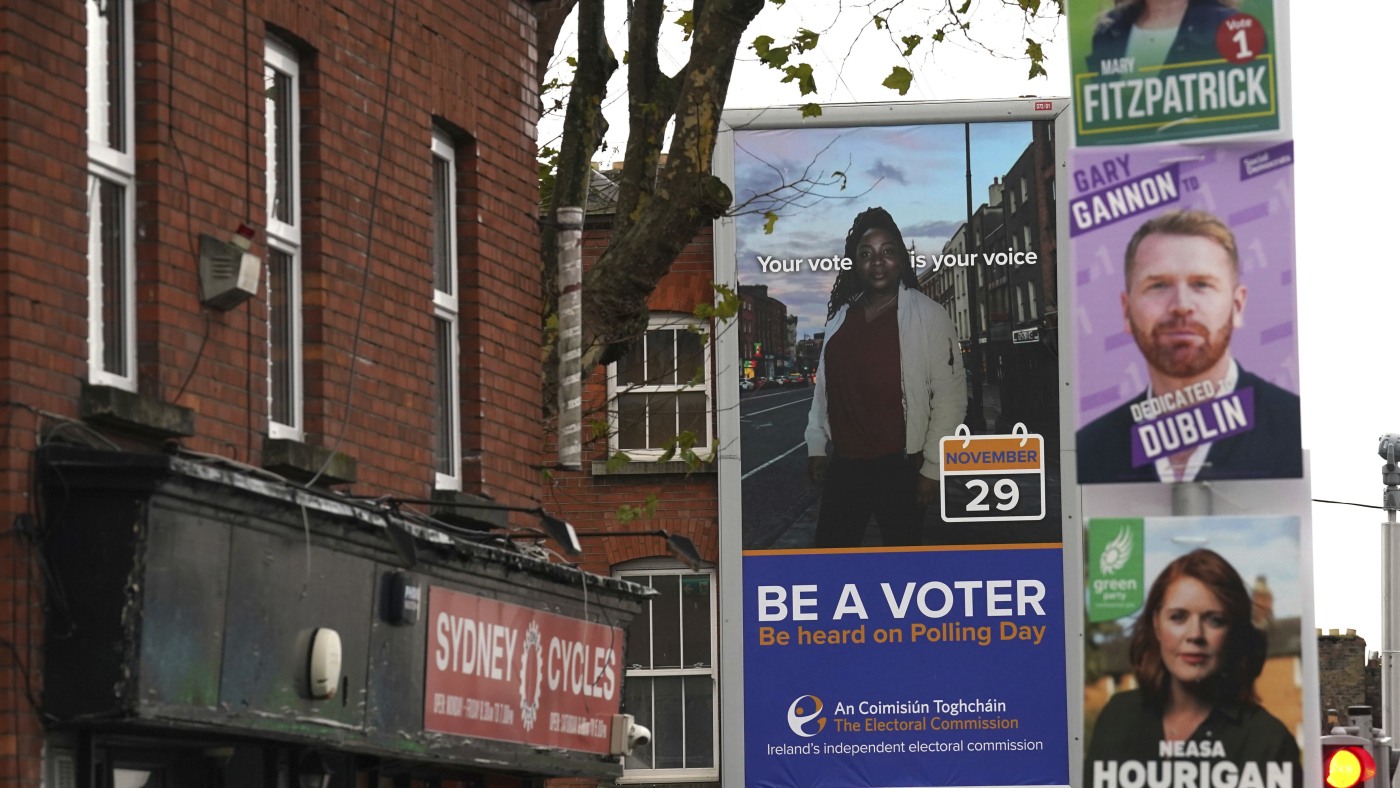
Coalition Government Beckons in Ireland, Exit Poll Indicates
The latest analysis from exit polls after Ireland’s parliamentary elections indicates a nearly equal split in support among the top three political parties. This suggests that the nation is moving towards another coalition government.
Based on the findings when voting concluded, the center-right Fine Gael emerged as the preferred choice for 21% of the voters, while its coalition ally, Fianna Fail, received backing from 19.5%. Meanwhile, Sinn Fein, positioned on the left of the political spectrum, attracted 21.1% of the vote according to the poll results.
Polling firm Ipsos B&A conducted the survey across the country, collecting responses from 5,018 voters. The poll carries a margin of error estimated at plus or minus 1.4 percentage points.
These statistics provide an early glimpse but fall short of determining the exact composition of the upcoming government. Ballot counting is set to begin on Saturday morning, and with Ireland's intricate proportional representation system, it could be hours or even days before the final results are announced.
The election outcome will reveal if Ireland follows the global trend where incumbents are frequently voted out amid dissatisfaction from the public due to challenges like the pandemic, global instability, and escalating living costs.
Sinn Fein, advocating for reform, has expressed optimism about the results.
Sinn Fein's director of elections, Matt Carthy, shared with RTE that it's highly possible Sinn Fein could become the largest party from these elections.
Although Sinn Fein might secure the majority in the Dail, the 174-seat lower house, forging a coalition remains challenging. Historically, both Fine Gael and Fianna Fail have been reluctant to collaborate with Sinn Fein.
The Political Landscape
For decades, Fine Gael and Fianna Fail have been dominant forces in Irish political arenas, stemming from their deep-rooted rivalry and historical division dating back to the Irish Civil War in the 1920s. In the wake of the 2020 elections, they formed a coalition, agreeing on shared governance roles with a rotating prime ministerial post.
Sinn Fein made significant strides in 2020 by gaining the popular vote but was sidelined from governance due to objections from both Fianna Fail and Fine Gael, chiefly over its past connections to the Irish Republican Army.
Ireland’s electoral system of proportional representation allows voters in 43 constituencies to elect multiple representatives, facilitating the success of smaller parties and independents.
Election Issues
The campaign has prominently featured the pressing issue of living costs, particularly housing. A deficit in housing construction post-economic crisis and during the boom years has led to increased property prices, rental costs, and homelessness.
John-Mark McCafferty, CEO of the housing charity Threshold, noted, "While economic growth has equipped Ireland with resources, historical infrastructural deficiencies remain a challenge."
Immigration too is a recent challenge for Ireland, a nation long marked by emigration. The country must now accommodate over 100,000 Ukrainian refugees among other displaced individuals, which has resulted in temporary housing solutions sparking unrest.
Expected Outcomes
Exit polls agree with prior surveys showing a division in voter support for Fine Gael, Fianna Fail, Sinn Fein, and others. Analysts hypothesize another coalition involving Fine Gael and Fianna Fail is probable, with minor parties possibly playing a deciding role.
Leave a Reply