


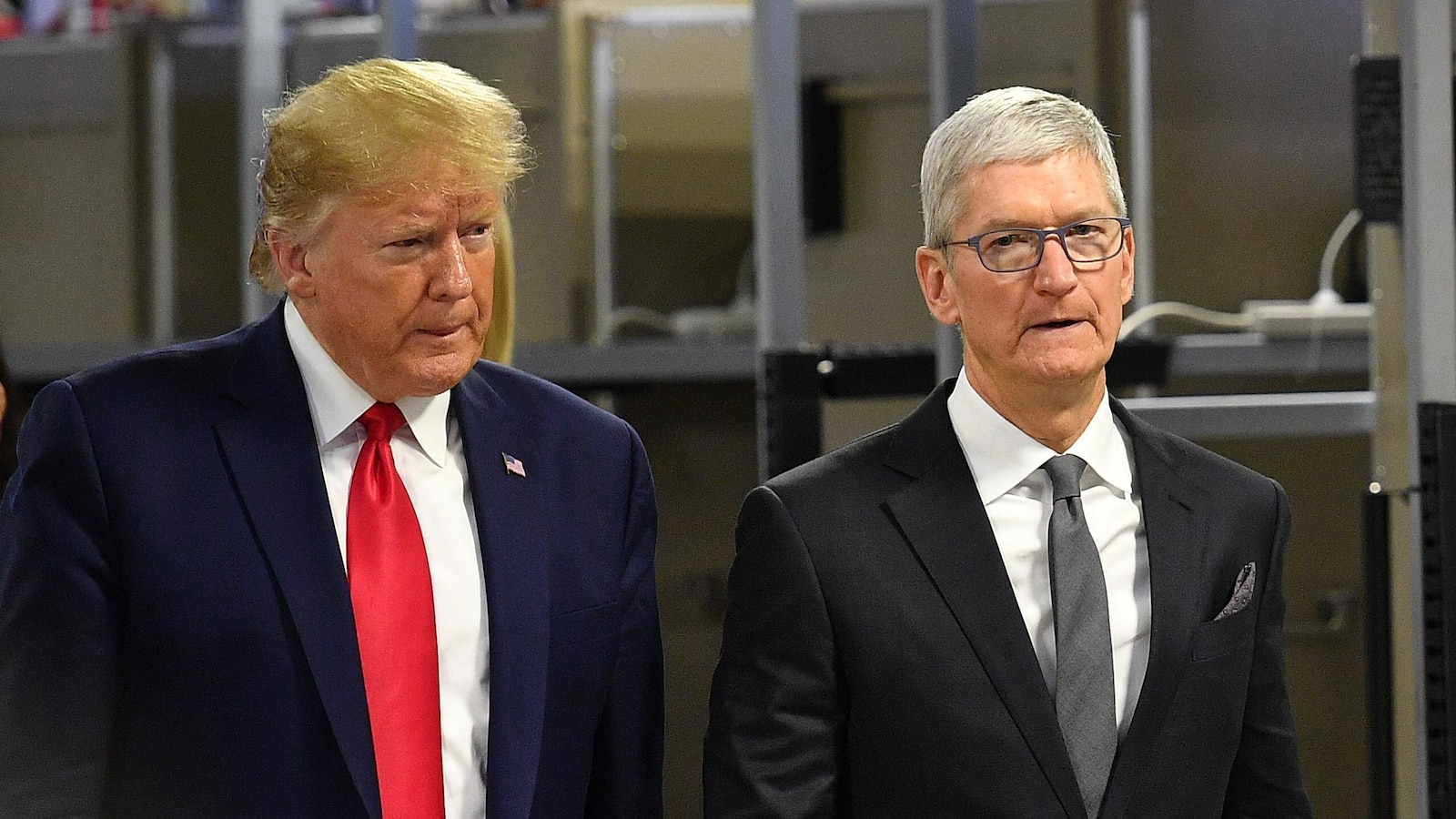
Trump Pressures Apple: Tariffs as Leverage
Former President Donald Trump has issued a warning to Apple, suggesting that he may impose a 25% tariff on the company unless it relocates its iPhone production to the United States. Trump's dissatisfaction stems from Apple's strategy to expand part of its supply chain operations in India.
"I informed Tim Cook, the CEO of Apple, some time ago that I expect iPhones sold in the U.S. to be manufactured domestically, rather than in India or any other foreign country," Trump stated on social media.
While addressing supporters Thursday in Qatar, Trump recounted a conversation with Cook: "I gave you favorable terms in the past. Now, I hear about major expansions in India—I don't want that."
Challenges to U.S. Production
Industry experts consider it highly improbable for Apple's supply chain to significantly shift to the U.S., citing substantial costs and time requirements for such an overhaul. This includes the expenses related to higher wages in the U.S. and the complexity of Apple's existing global operations.
The U.S. could potentially manage the final assembly of some Apple products domestically, yet this process would take years and likely lead to increased prices for consumers, according to some analysts.
Long-Term Implications and Analysis
Should Apple attempt to move its supply chain stateside, the timeframe would extend over multiple years, perhaps decades, noted Avi Greengart, a lead analyst at Techsponential.
Recent adjustments to trade policies by the former administration—specifically lowering tariffs on technology products manufactured in China—had previously benefited Apple by reducing manufacturing costs as most of their smartphones were made there.
Despite current tensions, Apple continues to manufacture certain components in the U.S., including sourcing glass and producing chips in states like Arizona.
Economic and Political Impact
Commerce Secretary Howard Lutnick remarked that Trump's vision encompasses a revival of domestic manufacturing bolstered by encouraging factory construction within the country to bypass tariffs.
Nevertheless, analysts like Dan Ives from Wedbush warn that shifting even a tenth of Apple's supply chain domestically could take years and incur up to $30 billion in costs, potentially pushing iPhone prices significantly higher.
Market Reaction to Proposed Changes
The suggestion of relocating production to the U.S. raises price concerns. According to Wamsi Mohan of Bank of America Securities, the cost of an iPhone 16 Pro could increase by 25% solely due to labor costs. This escalation might compel shoppers to opt for more affordable alternatives.
Despite the strategic push for U.S. manufacturing, consumer reluctance to adopt higher-priced, U.S.-made iPhones remains a challenge, sparking a debate over the feasibility and desirability of such a shift.
Conclusion
As discussions continue, the prospect of Apple fully-fledged manufacturing in the United States remains contentious, fraught with economic, logistical, and political intricacies.
Leave a Reply