


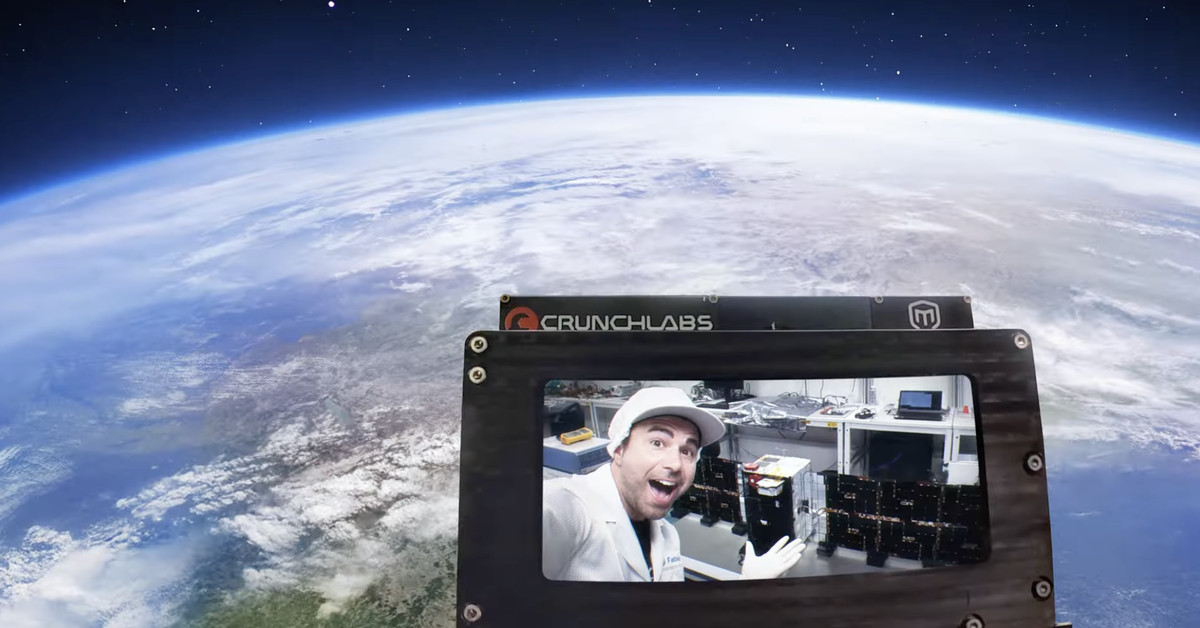
Capture Your Selfie with Planet Earth using Mark Rober’s Satellite
Mark Rober Collaborates with Google and T-Mobile for a Revolutionary Satellite Project
YouTuber adventures on the platform have elevated, thanks to Mark Rober’s intriguing proposal to capture selfies of individuals with Earth as the backdrop, utilizing a satellite being deployed into space with partnerships from Google and T-Mobile.
Rober, a former engineer from NASA, gained fame on YouTube with unique inventions such as thwarting porch bandits with glitter bombs, crafting the biggest Super Soaker, and designing squirrel obstacle courses. Leveraging his expertise, he’s embarking on a satellite launch capable of photographing anyone’s likeness shown on a Google Pixel mobile with our planet — indeed, Earth — prominently displayed behind them.
Provide Rober your location, and he promises to coordinate the exact timing when the satellite hovers over your city for your selfie. This opportunity is expected to commence after SpaceX’s Transporter 12 mission in January 2025, with operational selfie sessions beginning shortly thereafter.
Get Involved with a Selfie from Space
While this initiative is touted as a free chance by Rober and T-Mobile, certain conditions apply. Participating requires enrolling in CrunchLabs, which provides interactive engineering kits for children; only then will you receive a complimentary code for your satellite selfie. Subscription plans for CrunchLabs range from $25 to $80 annually, based on package choices. Current T-Mobile users and Google Pixel owners can access complimentary codes via the T-Mobile T-Life app.
Beginning December 3rd, you can redeem your codes at the designated website. Upload your selfie and track the date when your image will be photographed.
How the Selfie Satellite Works
In a dedicated YouTube video, Rober demystifies the selfie-satellite mechanism. Equipped with dual cameras and two Google Pixels, the satellite utilizes a comprehensive solar panel system feeding into a 120Wh battery pack.
The satellite encounters a challenge: it must alternate facing directions for collecting solar power, capturing selfies, and transmitting images without relying on propellers or thrusters. To resolve this, Rober’s team has cleverly installed a flywheel, enabling the satellite to reorient itself as needed for each activity.
Leave a Reply