


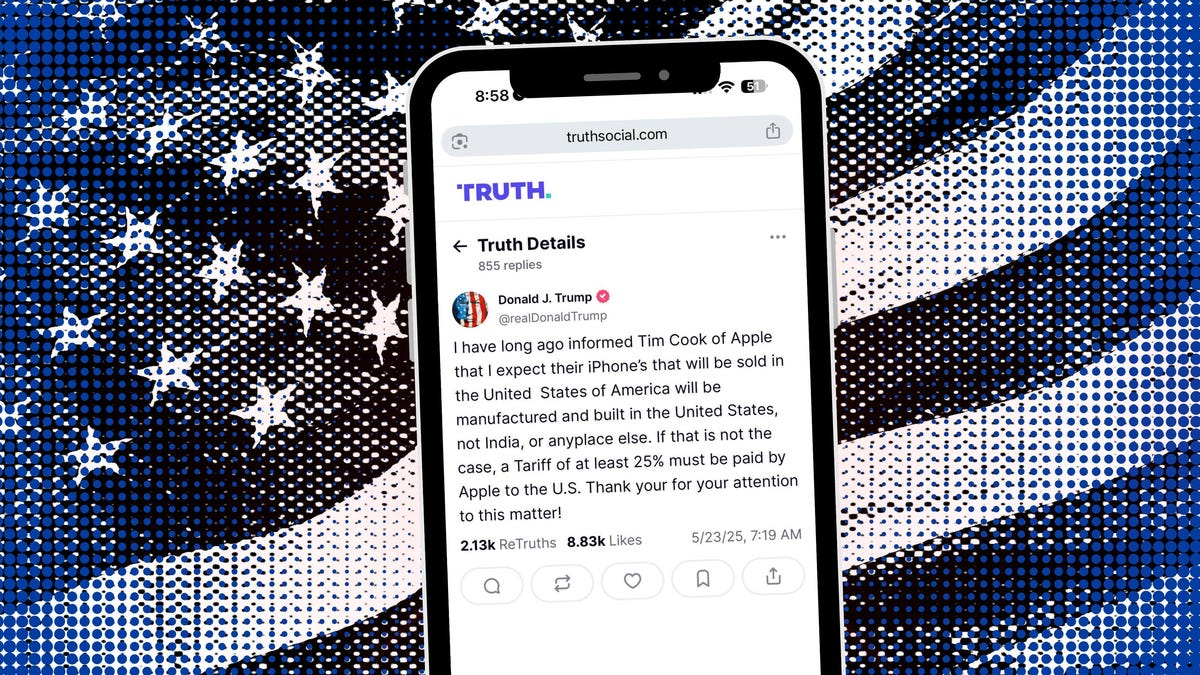
Trump's Ultimatum to Apple: Manufacture iPhones in the U.S. or Face 25% Tariffs
President Donald Trump sent a clear message to Apple through a social media platform on Friday—any iPhones sold in America must be produced within its borders, otherwise, they will be subject to a tariff of a minimum of 25%. This is part of his ongoing efforts to persuade major tech firms to increase domestic production.
"I have previously notified Apple's CEO, Tim Cook, that their iPhones intended for the American market should be assembled in the United States, not in India or elsewhere. Should this not be adhered to, Apple shall incur a tariff not less than 25% payable to the U.S. Thank you for your attention to this issue!" stated Trump.
This announcement caused a notable reaction in the financial markets.
In the premarket session, Apple's stock dropped by more than 2%, indicating market concerns over the ramifications of a potentially more expensive iPhone, a critical product for the company.
Trump's Push for Domestically Produced iPhones
Apple has long relied on Chinese facilities for the final stages of iPhone assembly. However, to mitigate risks associated with Trump's trade conflict with China, the company has started to diversify its manufacturing locations. Recently, Apple facilitated the air transport of 600 tons of iPhones, equivalent to 1.5 million units, from India to the U.S.
Tim Cook informed stakeholders that iPhones sold in the U.S. will largely be sourced from India hereafter. During a quarterly earnings call, he noted that most iPads, Macs, Apple Watches, and AirPods destined for the U.S. would soon originate from Vietnam.
President Trump is dissatisfied with this approach. He mandates that U.S.-sold iPhones be manufactured domestically, implying that outsourcing any part of the process won't protect Apple from tariffs.
Last week while visiting the Middle East, Trump expressed his discontent with Cook regarding the company's strategy to produce iPhones in India. "I had a minor disagreement with Tim Cook," Trump recounted. "I said, 'Tim, you're a friend. I've treated you well. But now you're expanding in India. I prefer you not to build there.'"
This recent threat joins a list of public dissatisfaction he's directed at major U.S. corporations. Earlier in the week, Trump criticized a retailer for attributing price hikes to his tariffs and issued a caution to avoid such justifications.
Potential Consequences of a 25% iPhone Tariff
An analysis by ZDNET's Adrian Kingsley Hughes calculated the increased costs that would result from domestic iPhone manufacturing.
The projection suggests that relocating iPhone assembly to the U.S. would be prohibitively costly, leading to a possible retail price increase to about $3,500—a significant jump from the current $1,000 model.
Even if Apple absorbed some of the additional costs, consumers would likely face higher prices.
What Lies Ahead?
It's relevant to note that Cook was present at Trump's inauguration and made donations to the inaugural committee. Moreover, recent meetings at the White House have involved discussions about manufacturing and technology policies.
Despite these interactions, their relationship seems increasingly strained over supply chain issues and possible tariffs. It remains uncertain whether Apple's executives can negotiate a resolution or contest the tariff legally.
ZDNET reached out for Apple's comment regarding the situation, but there has been no response from the company so far.
Leave a Reply