


Prepare for an Unprecedented Memorial Day Travel Surge
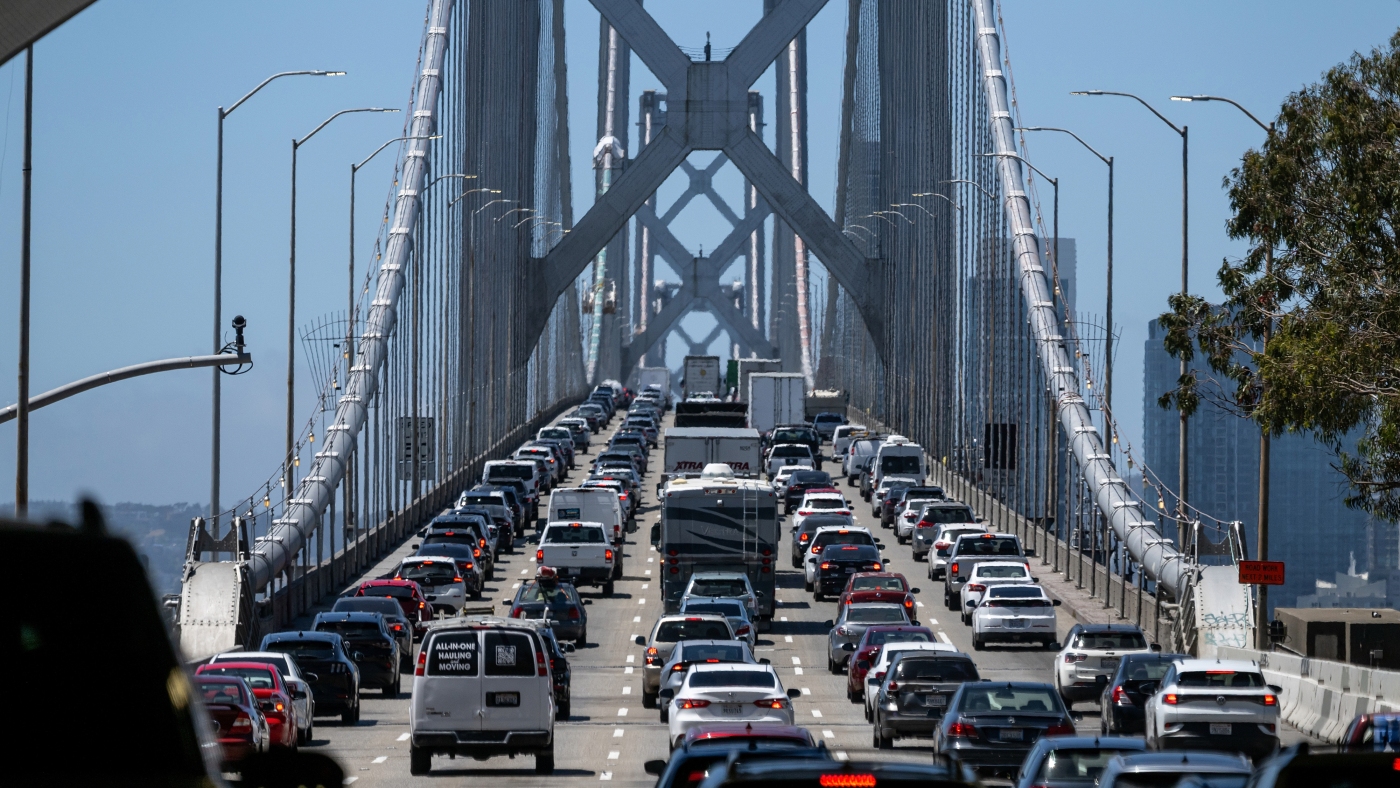
Motorists are seen lining up to cross the Oakland San Francisco Bay Bridge, marking the start of what is expected to be a packed travel weekend.
Memorial Day consistently ranks as a peak travel weekend in the United States, and this year promises to surpass all previous records.
According to AAA, an estimated 45.1 million individuals will journey at least 50 miles from their homes between Thursday and Monday, eclipsing the domestic travel record that was set in 2005. The majority of travelers will be hitting the road or taking to the skies, though some will choose trains, buses, or cruises.
AAA Travel's Vice President Stacey Barber highlights that while some are venturing on extensive vacations by air, numerous families are simply packing their cars for trips to the beach or to visit acquaintances.
Out of the expected travelers, 39.4 million are predicted to drive, showing an increase of one million compared to last year. While roadways will be busy, there's a bit of good news regarding gas prices; they are at the lowest levels observed during Memorial Day since 2021.
Air travel will see about 3.61 million people flying, marking a 2% rise from last year. The TSA is bracing to handle approximately 18 million passengers and crew between Thursday and Wednesday.
TSA's acting Administrator, Ha McNeill, reassures that they are ready for the influx and remind travelers to bring appropriate IDs, like a REAL ID, to ensure seamless airport security experiences.
Following policy changes effective from May 7, standard driver's licenses and state-issued IDs will no longer suffice at airport checks. Travelers without a REAL ID must present an alternative form of identification such as a passport, passport card, Global Entry, NEXUS, or green card.
It's noteworthy that TSA reports 93% of travelers since May 7 have adhered to the REAL ID or its alternatives.
Concerns over lengthy airport queuing and overloaded flights might add to traveler stress, especially in light of high-profile airline and air traffic control mishaps. Uncertainty lingers regarding how full these flights will actually be, according to transportation analyst Seth Kaplan.
Advice for Air Travelers
To facilitate a hassle-free trip, the TSA suggests organizing carry-on baggage and reviewing the latest guidelines, particularly those concerning liquids and restricted items.
Recent changes from the FAA now mandate that spare lithium batteries must be stored in carry-on luggage and should a bag be gate-checked, passengers must take these batteries with them aboard.
Airlines like Southwest have gone further, requiring passengers to keep these items visible during flights starting next Wednesday.
Additional TSA suggestions include enrolling in TSA PreCheck, contacting ahead for passenger support, and arriving early at the airport, with recommendations of two-hour lead times for domestic flights and three for international flights.
Guidance for Road Trippers
For those opting to travel by car, consider scheduling your departure wisely by consulting travel data. Hertz highlights that Friday is likely to be the busiest for car rentals.
Data from INRIX suggests that late afternoons will face more congestion than mornings, and they identify optimal times for travel as before 11 a.m. on Friday, noon on Saturday, 1 p.m. on Sunday, and 2 p.m. on Monday.
No matter when you choose to drive, proper preparation is key. AAA advises planning your route in advance, including breaks for rest and meals, packing your vehicle, and ensuring your gas tank is filled the day before setting off.
It's also wise to have an emergency kit on hand packed with essentials like vital documents, blankets, water, chargers, jumper cables, a first aid kit, flashlights, a tire repair kit, and non-perishable snacks.
AAA emphasizes setting realistic driving goals, suggesting limiting driving to five hours per day if feasible, rotating drivers every three hours, and planning regular breaks to stretch and refresh.
Leave a Reply