


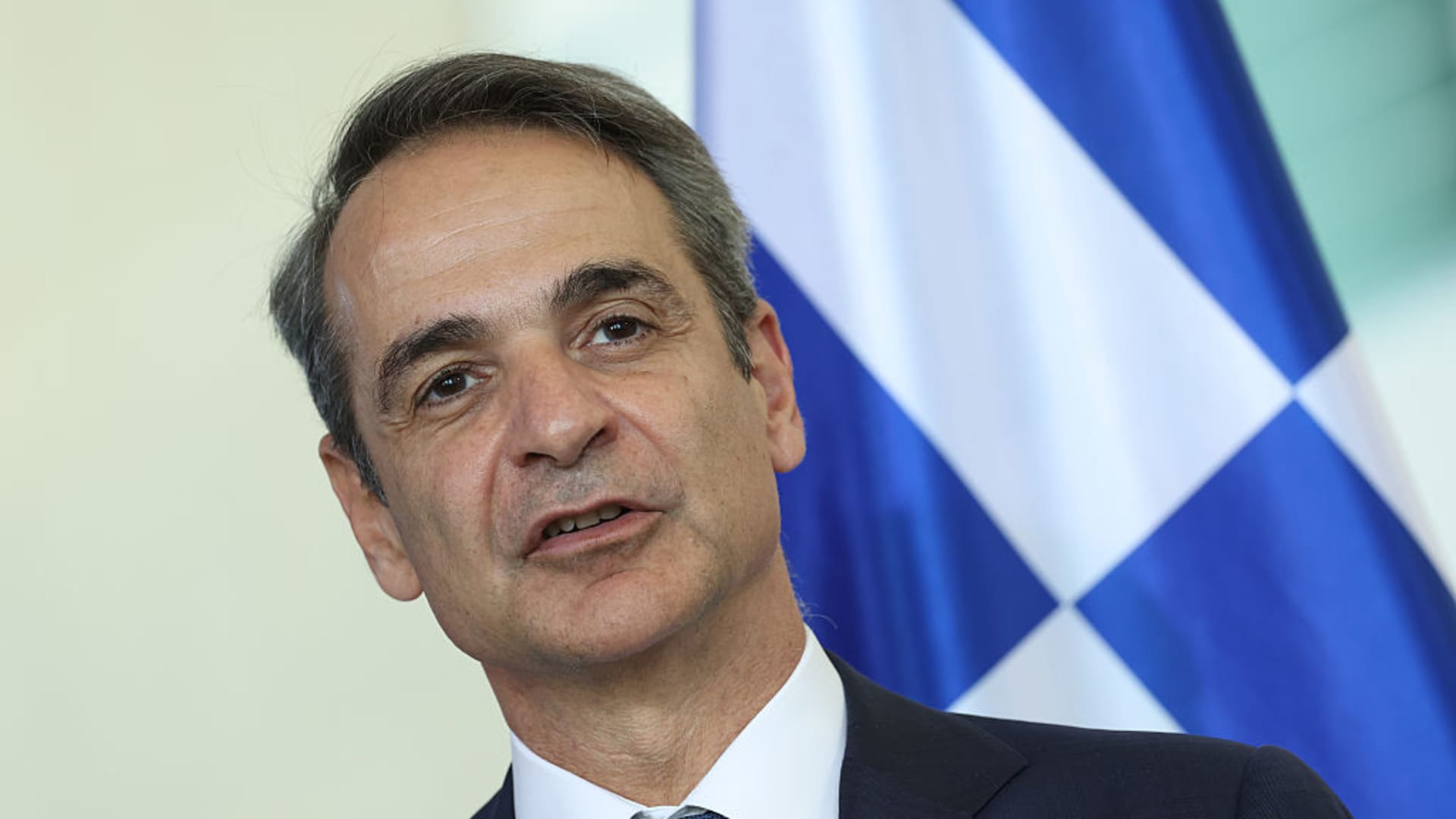
Greek PM Says Achieving Trump's 5% NATO Spending Goal is Challenging
Greece's Prime Minister has expressed doubts about the feasibility of fulfilling U.S. President Donald Trump's demand for NATO countries to boost defense outlays.
President Trump has consistently urged NATO members to increase their defense budget to 5% of GDP—a target that seems ambitious to Greece's leader, Kyriakos Mitsotakis.
In a CNBC interview with Silvia Amaro aired on Friday, Mitsotakis remarked, "Achieving a 5% target is extremely tough."
He mentioned that defense spending of around 3.5% might be more realistic for heavy defense investments, should broader infrastructure investments be included.
Defense Spending Goals and Challenges
NATO Secretary-General Mark Rutte reportedly proposed that NATO countries spend 3.5% of their GDP on defense with an additional 1.5% on related security affairs.
Historically, numerous NATO members have struggled to meet even the lower benchmark of 2%, causing dissatisfaction for Trump.
Recent data suggests the U.S. allocated approximately 3.4% of its GDP to defense in 2024. Only Poland and Estonia surpassed this proportion regarding their economic output dedicated to security.
Poland is on the path to increasing its defense budget to 5%, though many nations remain cautious, suggesting these costs may be difficult to bear.
Potential Policy Shifts
Germany's Foreign Minister, Johann Wadephul, acknowledged the practicalities of Trump's proposal, indicating a desire to follow this vision.
The upcoming NATO summit in June could determine new targets for defense expenditures.
Greece's Defense Strategy
In his CNBC conversation, Mitsotakis admitted that Trump's insistence in 2017 about NATO countries not doing enough was valid.
"We weren't contributing fairly then, and we've recognized there's no free lunch," said Mitsotakis about Greece's spending, which surpassed the 3% mark last year.
Greece has historically invested more than 2% in its defense budget, primarily due to long-standing disputes with Turkey.
"We've consistently spent more than 3% for specific reasons, and have pushed for changes to European rules to facilitate higher spending," said the Greek leader.
The European Union has been gradually relaxing fiscal rules, allowing member states some relief from stringent debt and deficit constraints to accommodate security needs.
Mitsotakis expressed hope that discussions about a European defense spending facility will continue, seeing it as essential for future developments.
Leave a Reply