


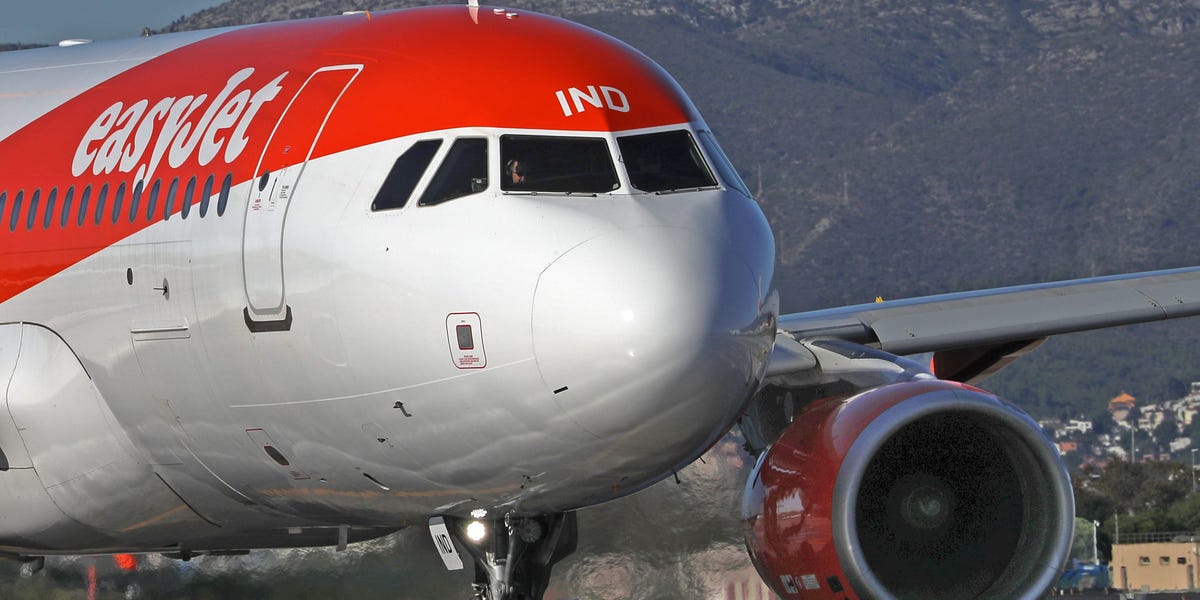
EasyJet's Airbus Fleet a Strategic Advantage Amid Boeing and Engine Challenges
EasyJet's CEO argues that circumventing Boeing and engine challenges has led to unprecedented earnings, distinguishing it from other European low-cost airlines.
Johan Lundgren, the CEO of EasyJet, shared insights with Bloomberg on Wednesday about the airline’s substantial financial success.
This European budget carrier experienced an unprecedented summer, increasing its pre-tax earnings by 33% compared to the previous year, reaching £610 million ($768.35 million).
Conversely, major competitors such as Ryanair and Wizz Air saw their profits decline.
Lundgren mentioned on Bloomberg TV, "Admittedly, all aircraft manufacturers, whether it's Airbus or Boeing, are experiencing supply chain difficulties."
He continued by stating, "Our decision to choose certain engines and align with Airbus has proven to be a more effective strategy compared to others in our industry."
Ryanair, the preeminent airline in Europe which operates solely with Boeing 737s, saw an 18% drop in its third-quarter earnings compared to the previous year.
In its financial review, Ryanair pointed fingers at Boeing, noting that protracted delays in receiving new aircraft forced it to depend on cost reductions from fuel hedging.
Boeing has curtailed the production of its 737 Max models, facing interruptions from extended strikes and heightened regulatory reviews following the January Alaska Airlines incident.
While both EasyJet and Wizz Air operate fleets composed entirely of Airbus aircraft, they employ different engine manufacturers.
This month, Wizz Air disclosed a 21.3% drop in its semi-annual net profits, totaling 315.2 million euros ($331.4 million).
The Hungarian low-cost carrier reported grounding 41 aircraft to undergo necessary engine inspections.
Wizz Air’s aircraft are equipped with Pratt & Whitney engines, known for requiring frequent inspections due to a "rare condition" affecting the metal powder, potentially leading to critical part failures.
This engine type is regularly used in Airbus A320 series, though EasyJet opts for different engines from CFM.
Nevertheless, EasyJet wasn't entirely immune to global supply chain setbacks, as shortages in essential materials and skilled personnel have impacted the aviation sector this year.
Lundgren noted that due to these challenges, EasyJet accepted only 16 of the 19 aircraft deliveries it had anticipated for the current financial cycle.
He assured, "Despite these hurdles, we're navigating our growth path and can strategically position our fleet to meet demand effectively."
Leave a Reply