


Discovery of a 500-Million-Year-Old Predator with Three Eyes
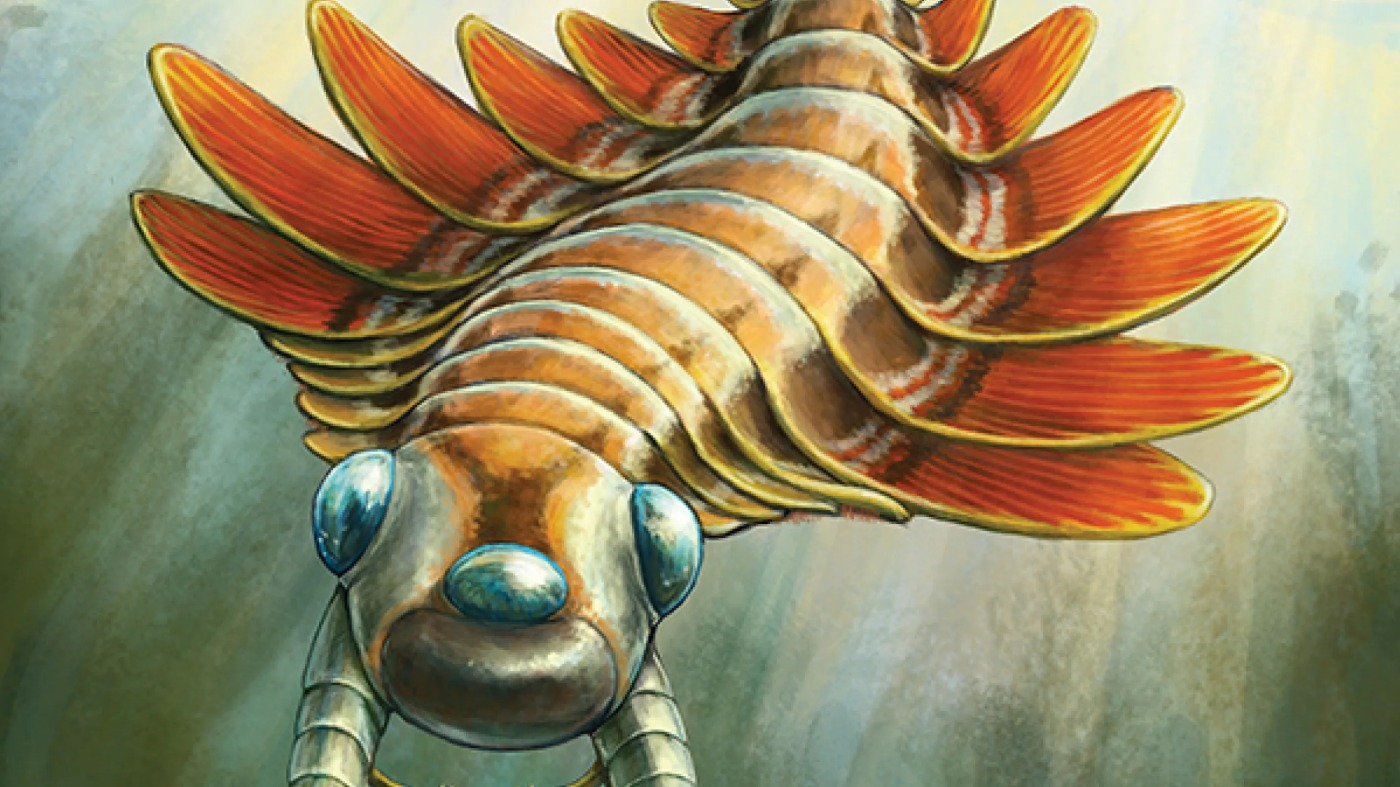
A depiction of the ancient marine creature Mosura fentoni from half a billion years ago.
Researchers have unearthed a fascinating marine predator equipped with three eyes and a mouth resembling a pencil sharpener, active in seeking prey over 500 million years ago.
Remnants of the organism Mosura fentoni, dubbed the 'sea moth,' were unearthed in the Burgess Shale located in the Canadian Rockies. These findings have provided scientists with a fresh perspective on the diversity of life during the Cambrian era, according to recent findings in a scientific journal.
The formidable predator was roughly as long as a finger and featured three eyes upon its head. It possessed a rounded, tooth-filled mouth, as detailed by scientists at the Manitoba Museum and Royal Ontario Museum. Additionally, it sported lateral flaps for swimming and menacing claws from its head.
Lead researcher Joe Moysiuk, serving as curator of paleontology and geology at the Manitoba Museum, explained, 'These jointed frontal claws, adorned with long spines, are quite striking.'
This discovery positions Mosura within the extinct radiodont group, yet it suggests the creature was more intricate than previously noted radiodont fossils suggested.
Unlike the simpler body observed in other radiodonts, this specimen exhibited 16 segments at its posterior, each lined with gills akin to those found in current arthropods.
Joe Moysiuk elaborated, 'What's remarkable is this organism's body showcased a multi-segmented design, not seen in its close relatives before. It highlights these animals' capabilities to adapt body regions for specialized functions, paralleling traits observed in living species.'
The well-preserved specimen also revealed an open circulatory system where a heart pumped blood throughout sizable body cavities known as lacunae.
The sea moth likely propelled itself through water using its body flaps in a manner similar to today's stingrays, cohabiting with other radiodont species like the top predator of that era.
Stewart Edie, a scholar in paleobiology at the Smithsonian Museum of Natural History, noted that Mosura's discovery contributes to understanding how varied life on Earth was even before the Cambrian explosion—a time known for the emergence of complex life forms.
Edie stated, 'The Cambrian Explosion is renowned for establishing the primary body designs of major animal groups known today, yet less understood is the speed and extent of evolution within these groups.'
He further remarked, 'This discovery of Mosura indicates even this group of arthropods, once considered evolutionarily unremarkable compared to their relatives, was part of this evolutionary burst.'
Leave a Reply