


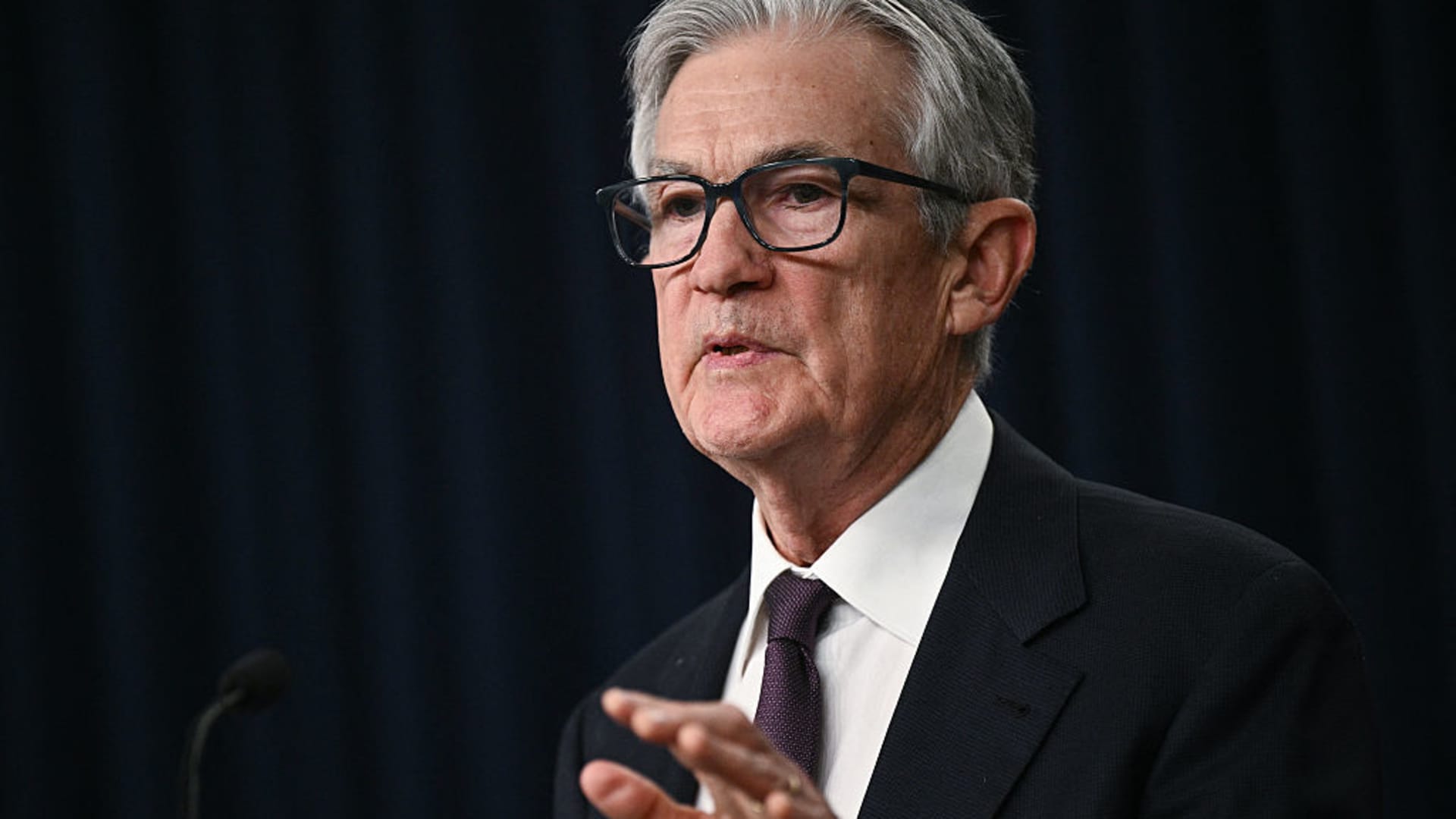
Higher Long-Term Rates Loom Amid Supply Challenges, Warns Fed's Powell
Jerome Powell, Chair of the Federal Reserve, highlighted on Thursday the likelihood of increased long-term interest rates due to evolving economic conditions and shifting policy dynamics.
While discussing the review of the Federal Reserve's policy framework, Powell emphasized that the landscape has transformed significantly in the last five years.
During this period, soaring inflation prompted the Fed to take unusually forceful steps regarding interest rates. Even as longer-term inflation projections mostly align with the Fed's goal of 2%, the days of ruling out extremely low rates appear over, according to Powell.
"Elevated real rates may indicate future inflation volatility exceeding that seen during the 2010s," Powell stated during his prepared remarks for the Thomas Laubach Research Conference in Washington, D.C. He warned of a new phase characterized by frequent and potentially enduring supply disruptions—a substantial hurdle for the economy and central banks alike.
Following the 2008 financial crisis, the Fed maintained its key borrowing rate at near-zero for seven years. From December 2024, this rate has fluctuated between 4.25% and 4.5%, most recently settling around 4.33%.
Discussions around 'supply shocks' reflect Powell’s recent indications that impending policy alterations could position the Fed between the dual aims of fostering job growth and curbing inflation.
Past Lessons and Future Directions
As part of the ongoing policy review, the Federal Reserve aims to outline a strategic plan for the next five years, focusing on decision-making processes and effectively communicating these strategies to the public.
Powell explained that this review would assess various factors, particularly how the Fed projects future expectations and revises past assessments.
In the summer of 2020, amidst significant upheaval, the Fed embraced a flexible average inflation targeting, seeking to allow inflation to rise slightly above normal levels to promote widespread employment. However, the constraints of inflation targeting became less relevant as prices surged due to the Covid-19 pandemic, necessitating some of the most aggressive interest rate increases in recent history.
This current examination will scrutinize the Fed's approach to handling 'shortfalls' in meeting inflation and employment targets.
Initially, Powell and other Fed members downplayed pandemic-specific influences when adopting the 2020 framework. Yet, some officials indicate the framework's adoption did not justify holding rates low in the face of rising inflation.
"Discussions suggest a review of the language surrounding shortfalls is fitting," Powell noted. "Our recent meeting also revisited average inflation targeting. We aim for our revised consensus to withstand diverse economic conditions."
On the subject of supply disruptions and policy impact, Powell emphasized the need for clear communication.
"While experts regard our communication as effective, we can improve, particularly when larger or more frequent shocks occur," he stated. "Therefore, we must express the uncertainty in our economic outlook clearly. This will be a focal point as we advance."
Although Powell did not specify when this review process would conclude, he anticipated completion within the upcoming months. In the previous review cycle, he utilized his annual speech at the Fed's Jackson Hole retreat to elaborate on the updated policy.
Leave a Reply