


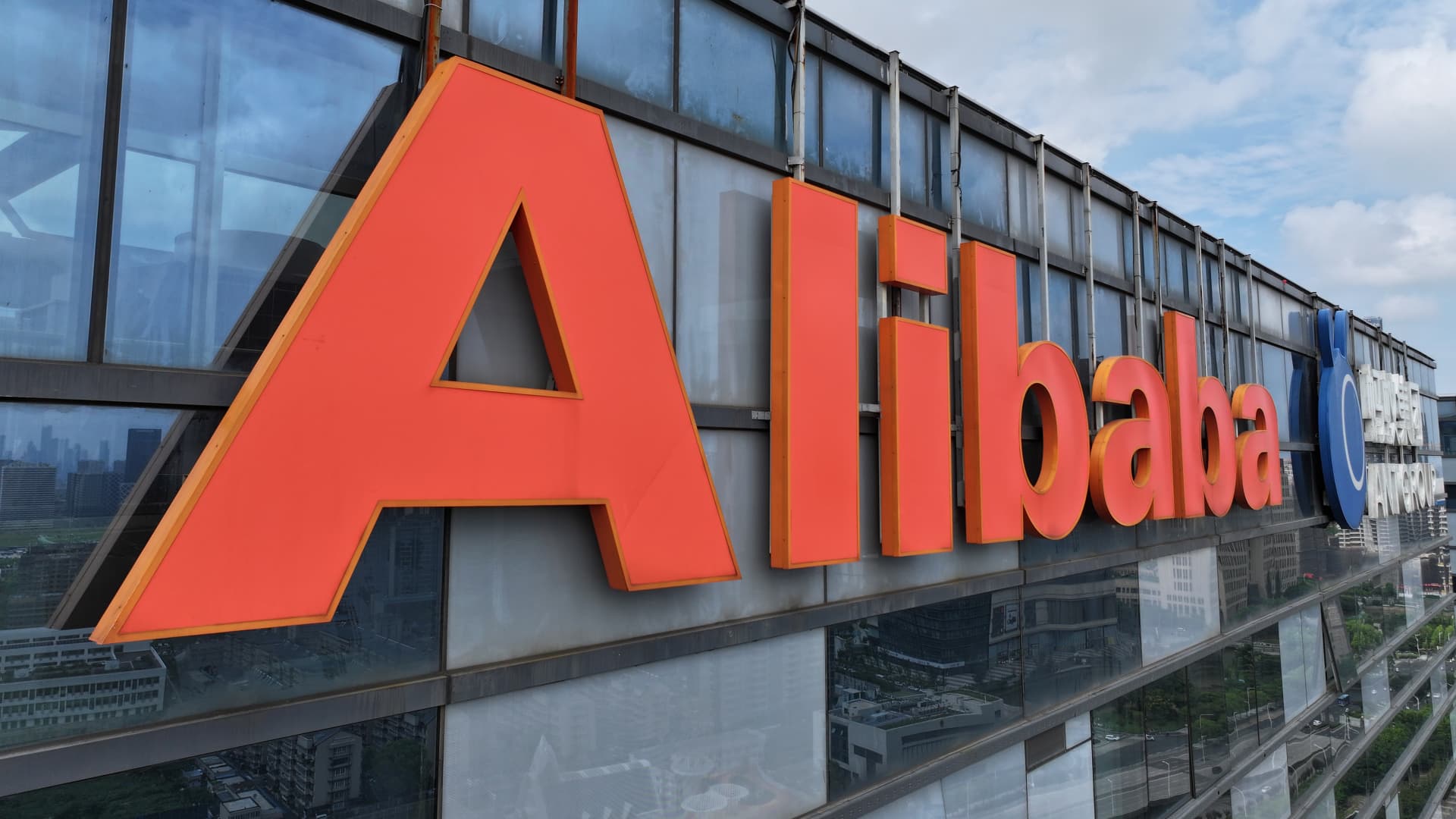
Alibaba's Stock Takes a Hit Following Disappointing Earnings
On Thursday, Alibaba's stock dropped noticeably after the company failed to meet the expected earnings for its fiscal fourth quarter.
In the early hours of U.S. trading, specifically at 6:02 a.m. Eastern Time, the company's shares had decreased by an approximate 5%.
Examining Alibaba’s performance in its fourth fiscal quarter, which concluded in March, against the projections made by LSEG analysts reveals that although the company did not meet expectations, its revenue still grew annually by 7%.
Financial Results and Challenges
Despite falling short in some areas, Alibaba's net income saw a significant year-on-year increase of 279%, largely due to a previously low point. The company noted certain losses linked to selling portions of its business but these were, to some extent, balanced out by increased operational income and adjustments in the valuation of its equity holdings.
Analysts had hoped investments in artificial intelligence and e-commerce would push the company beyond these lackluster expectations.
Broader Economic Headwinds
Alibaba is facing broader economic difficulties, including fluctuating global markets affecting consumer confidence in China. The ongoing trade tensions between the U.S. and China add another layer of complexity, with both nations having imposed significant tariffs affecting economic outlooks in the recent quarter.
There has been some reprieve as Beijing and Washington have come to an agreement to hold back most of the tariffs on each other’s goods this month.
Growth Areas and Initiatives
In its primary China-based e-commerce operations, specifically within the Taobao and Tmall groups, Alibaba experienced a 9% revenue hike to 101.4 billion yuan. This growth accelerated from the previous quarter. Customer management fees from merchants, a significant revenue source, increased by 12% from the prior year.
China has rolled out policies recently aimed at boosting consumer spending, aiding companies like Alibaba.
To enhance its Taobao and Tmall platforms, Alibaba has also extended its collaboration with Rednote (known locally as Xiaohongshu), allowing users to access shopping links directly from posts, integrating e-commerce with social media.
Competitive Market and Technology Developments
Despite these strategies, Alibaba faces fierce competition domestically, with companies like PDD and JD.com engaging in intense pricing battles.
Investors are keeping a close watch on Alibaba's advancements in artificial intelligence, as it positions itself as a leader both in China and internationally.
In April, the company, based in Hangzhou, unveiled the newest iteration of its open-source large language model, which fuels its AI assistant, Quark, demonstrating its competitiveness in tech innovation.
The AI playing field is heating up, amplified by DeepSeek's pioneering model presented earlier this year. Meanwhile, another major Chinese tech player, Tencent, reported a substantial 91% hike in its first-quarter investments spurred by AI focus.
Expansion in Cloud Services
In the cloud services sector, Alibaba reported 30.1 billion yuan in revenue for the March quarter, marking an 18% year-on-year growth, a faster pace compared to the previous three months.
This expansion was attributed to heightened revenues from public cloud offerings and the rising use of AI-powered products.
Alibaba's efforts in AI continue to be a focus, with the company being a formidable contender on both a national and global scale.
CEO Eddie Wu highlighted that revenues from AI-related products achieved three-digit growth for the seventh straight quarter, although specific financial figures were not disclosed.
Leave a Reply