


Changi Airport Expands to Harness Asian Travel Surge
The Asian continent is on the brink of an unprecedented increase in travel, and numerous countries are strategizing to capitalize on this swell in interest.
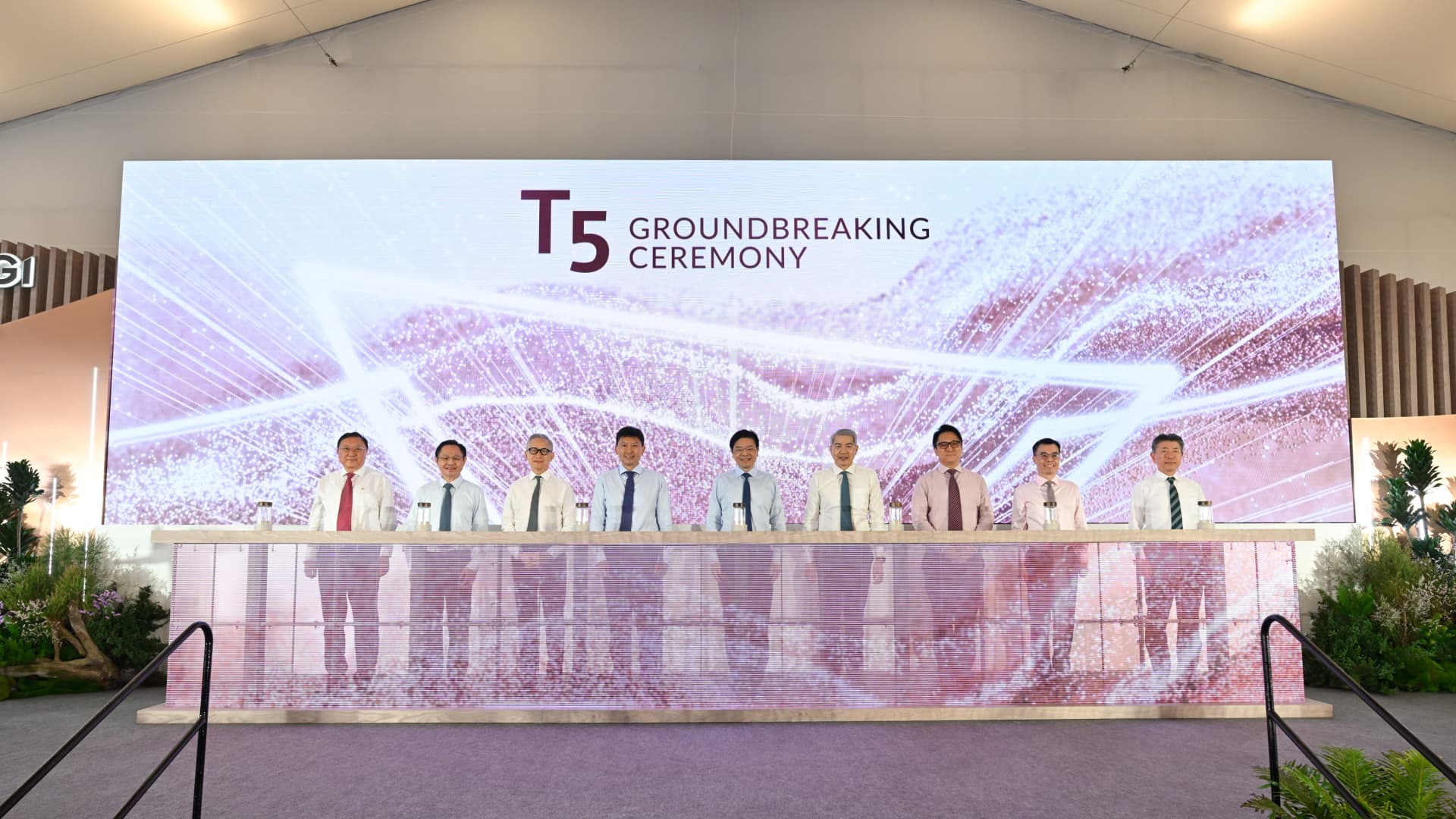
On a pivotal day, Singapore's Changi Airport commenced construction of its much-anticipated fifth terminal, which is slated to become operational in the mid-2030s.
Mega Terminal Development
Situated on a vast expanse of 1,080 hectares, the new terminal is designed to nearly double Changi Airport's footprint.
This expansion will boost the airport's capacity to 140 million passengers yearly, a significant increase from the current threshold of 90 million. In 2024, the airport, recipient of the Skytrax title for 'World's Best Airport' in 2025 for the thirteenth year, hosted 67.7 million travelers.
Asia's Aviation Race
Recognized as mega airports when they cater to over 100 million passengers yearly, only three of the ten such facilities worldwide are based in Asia, specifically in Beijing, Tokyo, and Shanghai.
Projections from Airport Council International suggest that aviation traffic will grow at a rate of nearly 7% over the upcoming 25 years. To meet this demand, the Asia-Pacific and Middle East regions plan significant infrastructure developments, with investments of around $240 billion between 2025 and 2035.
During the ceremonial groundbreaking, Singapore's Prime Minister Lawrence Wong remarked that Terminal 5 underscores the expectation that air travel will continue its upward trajectory, particularly in the vibrant Asia-Pacific region.
Boosting Connectivity and Economy
Wong announced that Terminal 5 will elevate Changi’s connectivity, expanding its network from 170 to 200 cities globally.
"[Changi] has seamlessly integrated our island nation with the global landscape, fueling growth in tourism, aerospace, and logistics," Wong stated, emphasizing aviation's contribution of 5% to Singapore’s GDP.
Modernization Wave Across Asian Airports
Increased competition is igniting transformative investments in modern infrastructure and enhanced travel amenities across Asian airports.
Hong Kong International Airport recently inaugurated a third runway and is on the path to expanding Terminal 2, targeting 120 million passengers and 10 million tonnes of cargo by 2035.
Bangkok's Suvarnabhumi Airport bolstered its flight capacity upon the unveiling of a new terminal in September 2024, with forthcoming expansions anticipated by 2027.
In South Korea, a major extension completed in December has elevated the airport’s capacity to handle up to 106 million passengers annually.
The Asian Travel Epicenter
Thomas Pellegrin of Deloitte Southeast Asia highlighted Asia as the emerging focal point of global air travel post-pandemic, driven by a surging middle class and swift urbanization, both intensifying the demand for air transport connections.
Passenger demand in this region is anticipated to grow at a near-term rate of 7.9% and a longer-term rate of 5.1%, outpacing global averages and mature markets.
Singapore’s Tourism Aspirations
The creation of Terminal 5 aligns with Singapore’s objectives to increase tourism revenue from a remarkable $29.8 billion in 2024 to between $47 billion and $50 billion over the next 15 years.
This strategy focuses on fostering interest from business and transit travelers, as explained by Grace Fu, Singapore’s Minister for Sustainability and the Environment.
Part of this initiative involves tripling income from business tourists who are venturing for meetings, incentives, conventions, and exhibitions, Grace Fu elaborated.
According to Singapore Tourism Board’s CEO, Melissa Ow, transfer and transit travelers constitute one-third of Changi's traffic, presenting significant growth potential.
Changi East development, including Terminal 5, a third runway, and an industrial sector, positions Singapore to defend and expand its role as an aviation powerhouse.
Pellegrin of Deloitte concludes, "These expansions will bestow Singapore with considerable international influence and prestige."
Leave a Reply