


Controversial Copper Mine Proposal Puts Apache Sacred Land at Risk
Amid rising tensions, members of the Western Apache community embarked on an 80-mile spiritual journey, carrying sacred items and chanting prayers, to protect their revered land from being converted into a copper mine under a plan accelerated by former President Trump. This significant conflict, rooted in the right to religious freedom, is waiting for a decision from the U.S. Supreme Court.
Their pilgrimage sought to shield Oak Flat in rural Arizona, a ceremonial ground for many tribes over the ages. The government-managed site is poised to be exchanged for mining by Resolution Copper, part of an agreement for other lands with ecological significance.
The clash over Oak Flat stretches back decades, linked to the discovery of vast copper resources underground. A land swap was initially approved by Congress in 2014, although it faced delays due to legal battles.
On April 17, the Trump administration attempted to advance the mine's development, bypassing judicial processes. An environmental review, slated for completion by June 16, was a pivotal step for proceeding with the land transfer, under orders from Trump to fast-track such projects as part of broader land use policies.
The potential mine would be paramount in North America, potentially fulfilling a significant portion of American copper needs, but would also devastate Oak Flat with a colossal crater.
In a brief respite, Apache Stronghold secured a court ruling halting the land swap on May 9, pending the Supreme Court's decision on whether to consider their case, anticipated in early July.
Wendsler Nosie Sr., founder of Apache Stronghold, emphasized the existential threat posed to their spiritual heritage, expressing gratitude for the temporary judicial relief.
Cultural and Environmental Battle Lines
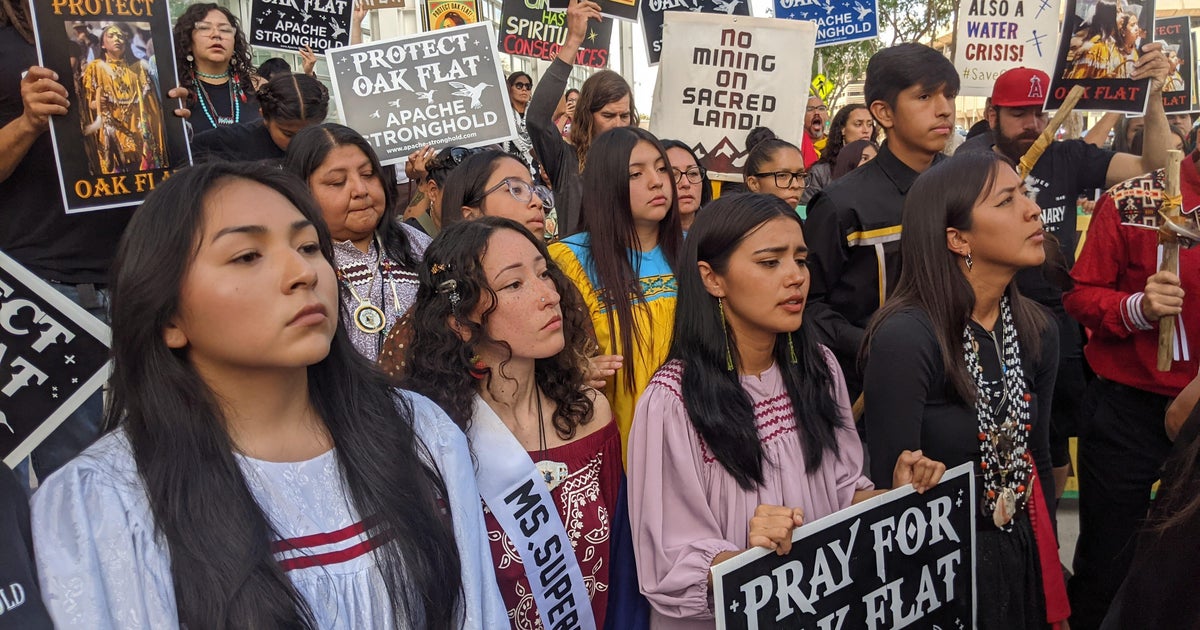
The journey to protect their sacred site culminated in Phoenix, with dozens participating in segments. Multiple organizations are backing the tribe's Supreme Court effort.
This case reflects broader clashes over indigenous rights, environmental preservation, and public health, especially as mining interests advance under policies prioritizing domestic mineral production. It could also set significant legal precedents for tribal prayer rights on federal lands.
Health concerns from previous mining on Native American lands raise alarms, including contamination of air and water, alongside profound cultural and spiritual impacts.
Throughout their run, members shared stories of cultural assaults and environmental degradation from extraction activities, describing them as acts of cultural genocide.
Personal Stories of Connection and Loss
Before setting off, the community gathered for a blessing at Oak Flat, where the tradition is deeply ingrained for families like Nizhoni Pike's, who recalls her coming-of-age ceremony there.
Expressing her acute distress, Pike narrates the cultural and spiritual threads binding her to the land and fears the damaging impact of severing these ties.
Physical changes at Oak Flat have already taken a toll, with drying springs and decaying trees attributed to preemptive mining activities nearby.
Resolution Copper refutes claims of surface water impacts and stresses efforts to mitigate community concerns, though opposition remains.
Their symbolic journey included stops for ceremonial blessings and engagements with local communities affected by similar histories.
Economic and Environmental Concerns
While economic interests in nearby regions support the mine for the promise of jobs, opponents highlight historical scars left by mining, including environmental and health afflictions.
The demands on water resources are particularly troubling amid persistent droughts, with projections of irreversible changes from the mining operations.
Retired miners and local activists underscore that foreign ownership of mining companies could siphon profits away from domestic communities.
As regulations falter, fears grow that unchecked resource exploitation will exacerbate environmental degradation with little recourse for affected populations.
A Call for Lasting Stewardship
The movement concluded with a collaborative show of support marching to a courthouse, highlighting the widespread communal commitment to preserve ancestral lands.
Like many young indigenous activists, Cadence Hardy is galvanized by familial histories of mining's harsh legacies, standing in solidarity with Apache Stronghold to prevent similar futures.
During recent hearings, corporate testimonies suggest prolonged timelines, yet community voices emphasize the immediacy of potential losses, underscoring a generational plea for preservation.
Leave a Reply