


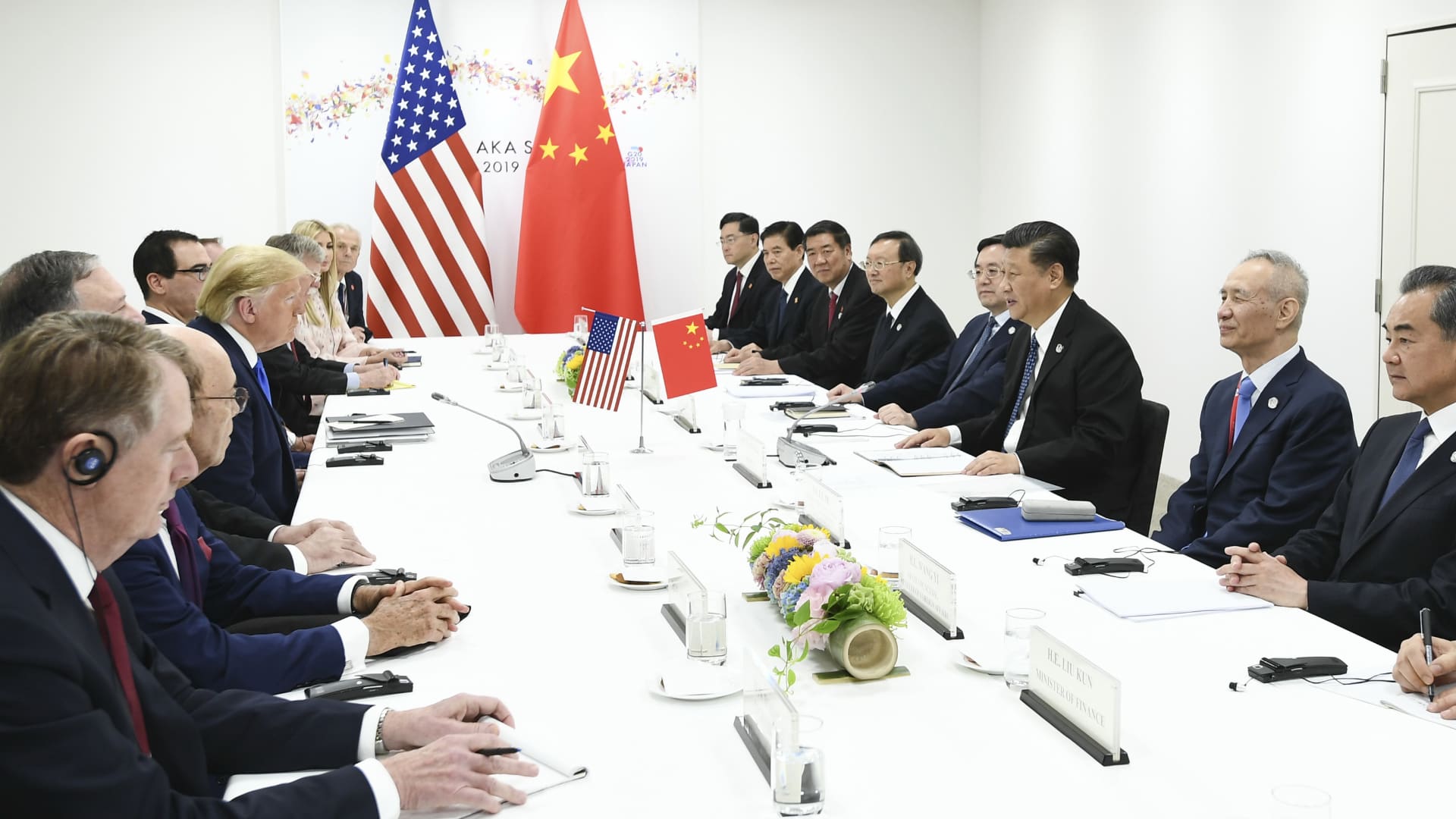
Op-ed: The Future of U.S.-China Trade Discussions and its Implications
The recently established trade truce between the U.S. and China in Geneva has been met with moderate relief and even some celebration in certain circles. Financial markets briefly rallied, and experts lauded the achievement. Yet, it is crucial to remain cautious. This moment might not represent the cessation of conflict; rather, it could be a deceptive calm. Much like the eye of a storm, the calm could be misleading, with more challenges potentially lurking ahead.
At the start of this year and through aggressive tariff impositions in early April, U.S. trade decisions have significantly impacted global markets. Tariffs on Chinese goods surged dramatically, which sparked strong retaliation from China. Now, the administration is seeking recognition for working to ease these tensions.
The 90-day pause in hostilities, agreed upon this week, represents a temporary relief with tariffs rolled back and some export restrictions eased. However, the foundational issues in the trade relationship are still frail and vulnerable to further escalation. Without substantial progress by the summer deadline, heightened tariffs remain a looming threat.
In a rare moment of transparency, Treasury Secretary Scott Bessent admitted that past policy actions were akin to an embargo. A sustained mechanism for dialogue, now termed the "Geneva Mechanism," should have been in place sooner. This approach depends heavily on consistent follow-through and on the disposition of the nations' leaders, which should command our attention and caution.
The Complexity of Strategic Decoupling
Bessent expressed that while neither country desires full economic separation, strategic decoupling in key sectors remains under consideration. Critical industries such as semiconductors and medical supplies are considered vital for national security and are thus risky to depend on China for, or to supply China with. Companies like Nvidia reflect this cautious approach, as their future remains uncertain despite recent gains, due to ongoing strategic and security concerns.
China is not seeking to increase its dependency on American markets and has been focusing on reducing it. Policymakers and state media emphasize the strategy of 'dual circulation' and internal strengthening during this pause, signaling future intentions.
Chinese officials are using this period to bolster domestic supply chains and innovation capacity, and American companies should heed these signals and prepare appropriately.
Part of the Geneva discussions involves addressing non-tariff barriers, a tactic China has used effectively. These include complex licensing, local content mandates, and stringent data requirements. Solving these issues within the 90-day window appears highly ambitious.
Fentanyl control is another critical point. China's inclusion of its Public Security Minister in the talks was a sign of commitment. However, past promises on controlling fentanyl exports were not sustained. Without concrete verification measures, new assurances risk becoming symbolic.
Rethinking Market Opportunities in China
U.S. companies need to reassess the notion that accessing Chinese markets remains as advantageous as it once was. China's domestic market is robust, highly competitive, and shows increasing nationalistic tendencies.
American businesses face fierce competition from local brands and must navigate complexities associated with being a foreign entity, intensified by nationalistic sentiments that have risen in part due to geopolitical rhetoric.
The current truce should not be seen as a long-term solution but as an opportunity for businesses. The lessons of past trade disputes should serve as a warning: continued high exposure to China without diversifying is a precarious strategy.
In the coming months, companies should focus on two priorities: fortifying their operations and supply chains against future disruptions and actively pursuing diversification strategies. This might involve shifting focus to emerging regions like Southeast Asia or reshoring operations back to the U.S., turning structural dependency on China into a more balanced global approach.
While current conditions may seem favorable, they could change rapidly. Therefore, taking proactive steps now to prepare for possible future volatility is crucial.
Leave a Reply