


New Zealand's Political Shift and Its Impact on Māori
Introduction to New Zealand's Political Changes
In a significant shift from its recent political past, New Zealand sees a move towards the right, attributed primarily to the influence of two emerging populist parties. This change has had a profound effect on New Zealand’s Indigenous Māori community.
From Ardern's Progressive Leadership to Conservatism
The New Zealand political landscape, once characterized by the compassionate and progressive leadership of Jacinda Ardern, has transformed into a markedly different entity. Her era, which symbolized a global counter to conservative leaderships like that of Donald Trump, has been succeeded by a coalition government steering towards conservatism.
Policy Reversals and Māori Rights
The current administration, formed by the main center-right party in partnership with two smaller populist parties, has overturned many initiatives introduced during Ardern's time. This includes abolishing internationally praised regulations and has controversially begun to erode the rights and visibility of the Māori culture, impacting the societal fabric of the nation.
Public Demonstrations and Traditional Māori Response
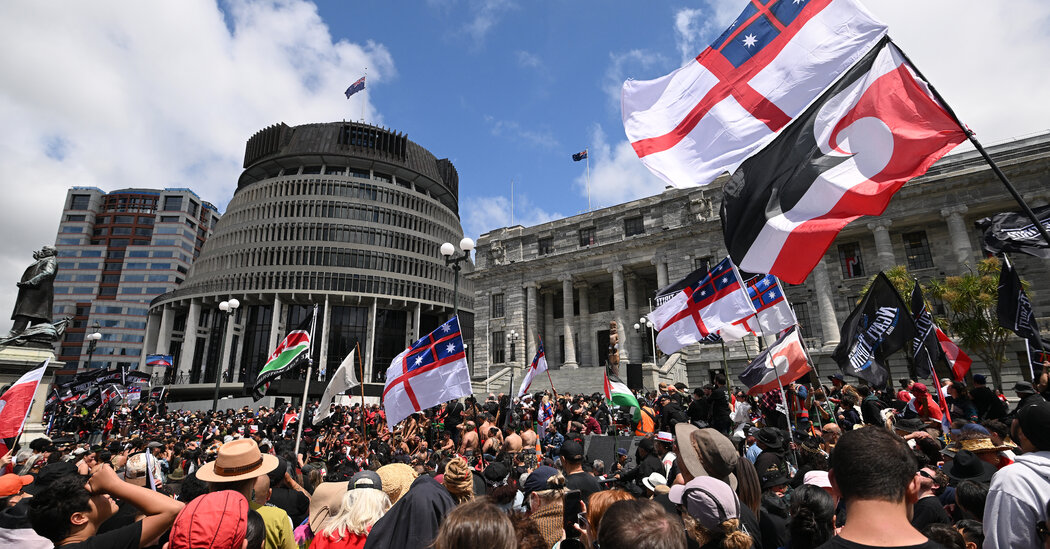
The discord over these policy changes culminated in large-scale protests. Earlier this week, thousands, including demonstrators in traditional Māori garb performing cultural expressions, gathered at the Parliament. Co-leader of a prominent Māori political party, Debbie Ngarewa-Packer, voiced that these protests are about asserting Māori existence and rights.
Complex Legacy of Jacinda Ardern
The shift towards the right highlights the complicated legacy left by Ardern. Her approach to managing the pandemic, initially praised, later led to division and economic strain with inflation at 7% as she stepped down before completing her second term.
Leave a Reply