


US-China Trade Talks: A 90-Day Reprieve
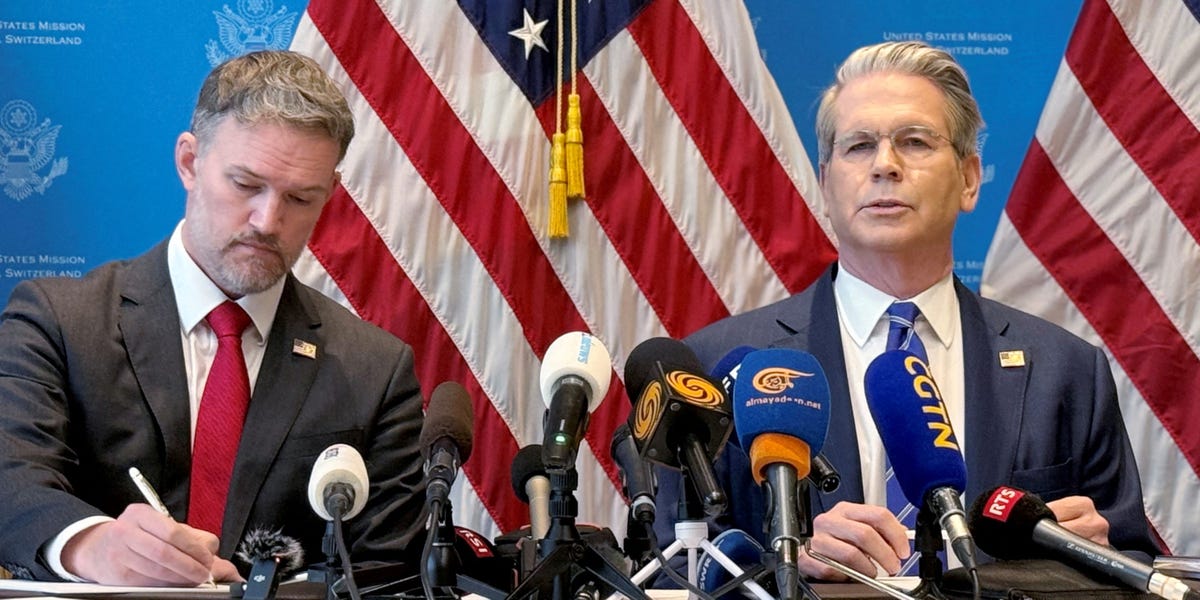
Following intense weekend negotiations in Geneva, the United States and China have agreed to put a temporary hold on the majority of tariffs for a period of 90 days.
As the temporary halt takes effect this Wednesday, analysts predict a surge in trade activity between the two nations. Companies are expected to maximize this window to stock up on inventory as diplomatic efforts continue.
Andrew Collier from Harvard's Mossavar-Rahmani Center points out that this negotiation phase highlights the interdependence of the two economic giants.
Under this provisional arrangement, China's tariffs on American goods have been reduced substantially from 125% to 10%, while U.S. tariffs on Chinese imports have decreased from 145% to 30%. However, tariffs associated with fentanyl remain unchanged, and the e-commerce tariff exemption, which benefited platforms like Temu and Shein, has not been reinstated.
In response to the agreement, the stock market showed significant growth on Monday, particularly within the technology sector. The Nasdaq and S&P 500 both saw increases of nearly 3%, and the Dow rose over 2.4%, gaining more than 1,000 points.
Trade Surge Predicted
Businesses are rapidly moving goods across the Pacific to capitalize on the reduced tariffs. Scott Kennedy, an expert in Chinese business at the Center for Strategic and International Studies, anticipates a swift upswing in trade during this 90-day period.
According to Kennedy, there is likely to be a noticeable increase in shipments as companies seek to capitalize on this temporary reprieve to boost their trade volumes.
For instance, in December 2024, Chinese exports to the U.S. saw a 15.6% rise compared to the previous year, as companies were anticipating high tariffs with the new U.S. administration.
Flexport's CEO Ryan Petersen noted on social media that bookings for ocean freight from China to the U.S. skyrocketed by 35% immediately after the trade deal was struck, suggesting potential future capacity issues as demand escalates.
However, smaller enterprises have indicated to Business Insider that they face financial constraints when it comes to purchasing and storing large quantities of inventory. The anticipated surge in cargo demand could further drive up transportation costs.
Concluding the 90-day negotiation period, experts foresee a broad and significant outcome, yet some deeply rooted issues may remain unresolved.
Scott Kennedy expects the U.S. will focus on industrial policies, fentanyl concerns, and intellectual property issues. Concurrently, China is likely to address export controls and investment restrictions imposed by the U.S., as well as impending fees on Chinese shipping, scheduled for October.
However, narrowing such a wide-ranging agenda to potential mutual concessions remains a complex task, according to Kennedy.
Andrew Collier remarked that while leaders face varied pressures to finalize a deal, certain contentious matters such as state subsidies and China's assertive trade stance will remain unresolved for future discussions.
Measured Optimism in the Market
Even though the stock market responded enthusiastically to the pause in tariffs, Federal Reserve Governor Adriana Kugler warned that the new tariff rates are still at historically high levels, which may lead to adverse economic impacts.
Kugler emphasized that the uncertain nature of tariffs has already influenced economic decision-making through early purchasing, altering business sentiment, and shaping future expectations.
Despite a decrease in recession predictions as tensions ease, Kugler forecasted slower economic expansion compared to last year's 2.5% growth. She also noted the continued above-target inflation levels, despite slower progress in curbing it.
Kugler concluded that trade policies remain in flux and are likely to continue evolving, with recent adjustments indicating ongoing changes.
Leave a Reply