


China's Strategic Push in Latin America to Expand Influence and Commerce
Analysts reveal that Beijing is intensifying its economic engagement in Latin America with an eye on expanding its trade links and boosting its influence within the resource-rich area.
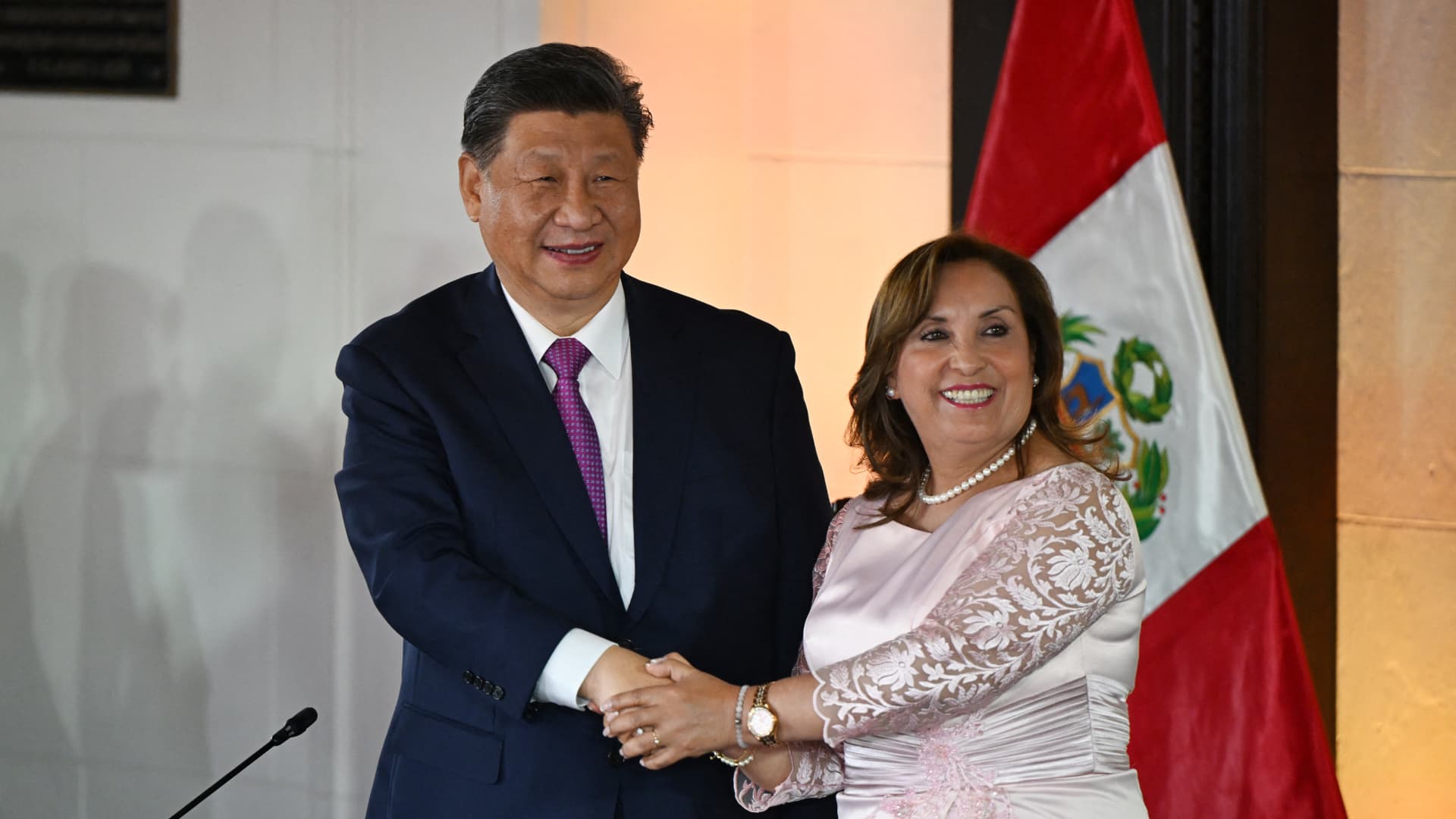
Last week, President Xi Jinping of China officiated the opening of a colossal $3.5 billion port, mainly owned by China's state shipping giant Cosco, during his visit to Peru. This development establishes a direct maritime route connecting Shanghai with the Peruvian city of Chancay.
According to William Reinsch, an expert from the Center for Strategic and International Studies, China is attempting to counter its economic deceleration by venturing into Latin America for untapped markets rich in vital commodities, agriculture, and minerals.
China's Belt and Road initiative has incorporated the new Peruvian port, drastically cutting down shipping duration from Peru to China by nearly a month, resulting in significantly lower logistics costs as stated by China's Foreign Ministry Spokesperson, Lin Jian.
The completion of Chancay Port strengthens Peru's strategic position as a crucial hub connecting marine and terrestrial trade routes between Asia and Latin America.
Expanding Trade Networks
The Chancay Port is considered pivotal in reshaping the logistics landscape of Latin America, as highlighted by Juan Carlos Ladines Azalia, an international trade expert at Universidad del Pacífico.
It is anticipated that this infrastructure can pave the way for increased Chinese investments across South America, especially as traditional partners from the U.S. and Europe face dwindling influence.
Among the countries benefiting from this development is Brazil, a significant partner in terms of export and import, especially in agricultural products and iron.
Carlos Cardenas from S&P Global Market Intelligence noted the renewed interest across the continent in leveraging this new port to galvanize trade.
Geopolitical Ramifications
President Xi's journey to Peru, marking his second official visit to the country, was coordinated with his participation in the APEC Economic Leaders' summit followed by the G20 summit in Brazil.
As China fortifies its economic relationship with Latin America, data indicates a concurrent rise in bilateral trade activities.
While Brazil has yet to align itself with the Belt and Road initiative formally, its economic rapport as China's largest trade partner in Latin America remains steadfast.
American Perspectives
In the U.S., concerns are mounting over China's expanding presence in Peru's infrastructure, specifically through the Chancay Port.
Proposals, such as imposition of heavy tariffs on goods through the Chinese-controlled ports by former president Trump’s advisors, reflect the geopolitical tensions.
Experts imply that the United States has been complacent, allowing China to increase its influence with minimal resistance in the region, a notion underscored by CSIS's Ryan Berg.
Despite criticism, Reinsch from CSIS believes this oversight might be less about national security, rather than flawed economic and geopolitical strategies.
Leave a Reply