


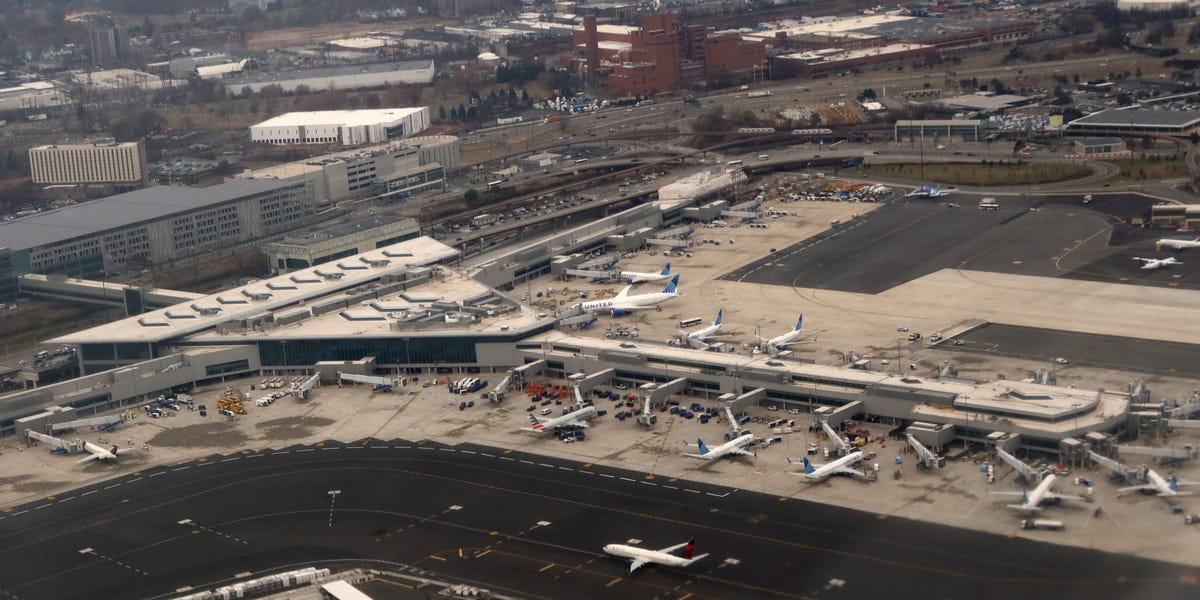
Plans to Cut Back Flights at Newark Due to Air Traffic Control Issues
US Secretary of Transportation, Sean Duffy, has announced plans to scale down the number of flights operating at Newark Liberty International Airport over the upcoming weeks.
In a conversation on NBC's 'Meet the Press' last Sunday, Duffy discussed this move following yet another air traffic control malfunction that temporarily halted flights at Newark. The Federal Aviation Administration has since confirmed that service has resumed as usual.
"I detest both flight delays and cancellations," he remarked. "Yet, ensuring passengers reach their destinations safely is my priority. If this requires reducing the number of flights coming into Newark, then we must proceed accordingly," Duffy stated.
Recurring Equipment Failings at Newark
Over recent months, Newark Airport has been plagued by multiple air traffic control equipment failures, causing unease among passengers.
An FAA representative mentioned that a telecommunications glitch at Philadelphia TRACON’s Area C, which directs planes in the Newark airspace, had briefly impeded operations while contingency systems were verified. By the end of this procedure, normal functions had been restored.
A separate 90-second communication and radar failure occurred last Friday, further exemplifying the system's vulnerabilities.
Aging Infrastructure and Shortage of Workforce
During his Sunday interview, Duffy expressed unease regarding the outdated air traffic technology used throughout the United States. Many systems still rely on antiquated copper wiring and components so scarce that replacements are often sourced through platforms like eBay.
Such outdated infrastructure is only part of the problem. The industry is also grappling with a shortage of air traffic controllers. A 2023 report from the Department of Transportation found that the FAA continues to struggle with staffing after training programs were disrupted by the pandemic. The report also criticized the FAA for lacking a clear strategy to fix these staffing problems, which threatens the stability of operations.
Adding to these challenges are rigid age requirements for air traffic controllers, who must retire by age 56. Presently, only applicants younger than 31 are considered for these positions.
Proposals to Address Workforce Shortfalls
To mitigate this staffing shortfall, Duffy proposed extending the retirement age for controllers to 61 and introducing a 20% bonus as an incentive for potential retirees to remain in their roles.
"To those nearing retirement, don’t rush to leave; continue serving your nation," he urged, adding that financial incentives would be offered to encourage retention.
Leave a Reply