


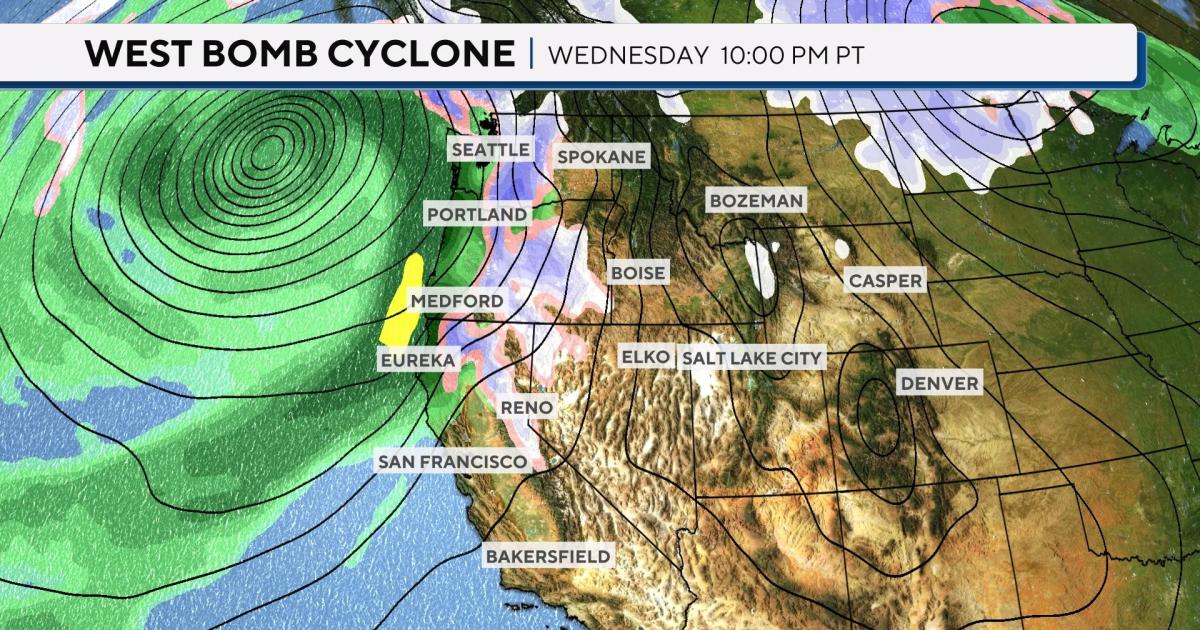
Understanding the Impact of Bomb Cyclones and Atmospheric Rivers on the Pacific Northwest
A potent weather phenomenon is approaching the Northwest, ready to unleash robust winds, torrential rains, and significant snowfall in mountainous regions. The National Weather Service classifies this as the season's inaugural major storm. Integral to its strength are a bomb cyclone and an atmospheric river, but what exactly are these meteorological terms?
Defining an Atmospheric River
Atmospheric rivers are familiar occurrences in the western United States, particularly during autumn and winter. These are narrow corridors saturated with atmospheric moisture that travel beyond tropical zones.
When they converge with mountain ranges such as the Cascades or Sierra Nevada, they can trigger intense precipitation and snowfall. One distinguished variant of atmospheric river is dubbed the "Pineapple Express," drawing moisture from Hawaii.
These rivers can transport moisture equivalent to 7.5 to 15 times the average flow of the Mississippi River. Remarkably, just a handful of such events account for 30% to 50% of annual precipitation on the West Coast.
Exploring Bomb Cyclones
Bomb cyclones are characterized by rapidly deepening low-pressure systems, undergoing what meteorologists describe as "bombogenesis." This transformation occurs when a midlatitude cyclone, which forms between the tropics and polar areas, experiences rapid intensification within a day.
In order for a drop in atmospheric pressure to classify as a bomb cyclone, it must decrease by at least 24 millibars in 24 hours.
These phenomena can develop when a cold air mass meets a warm air mass, leading to significant winter storms.
When bomb cyclones align with atmospheric rivers, expect a substantial weather anomaly. The atmospheric river contributes moisture, while the bomb cyclone brings intensity and stronger winds.
The Upcoming Weather Event
This week, the weather system could drop rain accumulations of 10-20 inches in certain areas, with snow in mountainous regions exceeding a foot, and over 2 to 3 feet at higher elevations.
Leave a Reply