


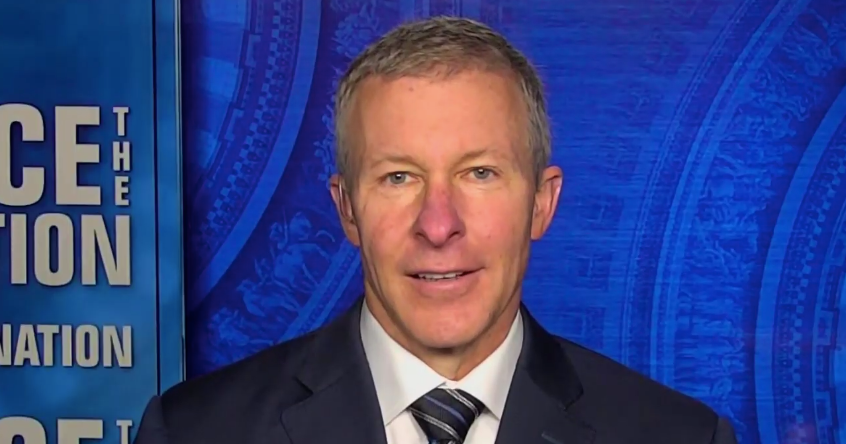
Conversation with United CEO Scott Kirby on 'Face the Nation'
ED O'KEEFE: Welcome back, Scott Kirby, CEO of United Airlines, joining us for the second time in two weeks.
SCOTT KIRBY: Thank you for having me again, Ed.
ED O'KEEFE: We've experienced two incidents at Newark International where air traffic controllers lost radar communication. It's led to several controllers being placed on leave due to the stress. Is Newark International still safe for travelers?
SCOTT KIRBY: Yes, absolutely. Safety at Newark and nationwide is assured. We are well-prepared for such occurrences, implementing alternative measures to safeguard the skies, which is our utmost priority. Pilots can access different frequencies, utilize alternative control centers, and rely on onboard systems to track their position and nearby aircraft. Although these outages slow our operations and may inconvenience passengers, safety remains uncompromised. Recently, when 82 planes were put on hold and 42 were redirected, we effectively managed the situation by cutting the airport's arrival rate in half until normal operations could resume. The disruption is regrettable, but the FAA's proactive approach contributes to both short-term relief and long-term enhancement of our air traffic control systems.
ED O'KEEFE: Newark is a significant hub for United. With the need to decelerate operations, how is this reflected in your strategies, especially with upcoming travel peaks?
SCOTT KIRBY: Our foremost focus is safety, closely followed by customer service. We’ve intentionally cut flights to manage the volume Newark can handle, an initiative echoed by the FAA with other airlines. This scaling back led to a remarkable 83% on-time arrival with only one cancellation the next day. Although we dislike reducing flights, enhancing space to ensure efficiency at the airport is our priority. Moreover, runway repairs expected to conclude by mid-June will eventually double the airport's capacity.
ED O'KEEFE: Less supply amidst rising summer demand could inflate ticket prices. Is that happening?
SCOTT KIRBY: Surprisingly not. Concerns about safety have kept demand down, which stabilizes prices. We've deployed larger aircraft with fewer flights to maintain seat availability. Air travel remains economical, and we anticipate robust demand through summer, transporting hundreds of thousands of passengers daily.
ED O'KEEFE: How does this adjustment affect United financially?
SCOTT KIRBY: While there are financial considerations, safeguarding our passengers and seamless operations are our primary concerns now. We're more focused on collaborating with the FAA to attain exemplary air control systems rather than immediate fiscal impacts.
ED O'KEEFE: There's concern about declining air travel demand due to multiple factors, including safety worries and economic uncertainty. What impact do you foresee on the industry this year?
SCOTT KIRBY: Despite a slowdown earlier this year, demand is stabilizing, showing signs of improvement. United Airlines closely reflects economic indicators, and the outlook suggests caution but resilience among consumers.
ED O'KEEFE: The management of air traffic control and staffing issues rests predominantly with the FAA. How can passengers trust the system's integrity amid these challenges?
SCOTT KIRBY: We're committed to achieving a top-tier control system. Controllers are unparalleled professionals, adept at maintaining safety even when issues arise. Implementing wider separations between flights ensures safety, albeit causing delays. Nevertheless, safety remains non-negotiable, supported by extensive training for pilots and coordinated fallback procedures.
ED O'KEEFE: Despite robust safety measures, fears linger owing to recent incidents. What do you respond to those apprehensive about flying?
SCOTT KIRBY: Concerns are understandable, yet aviation is the safest transportation mode globally, notably led by the U.S. Our industry prioritizes safety profoundly, evident in every facet—from United to the FAA—reassuring confidence in flying.
ED O'KEEFE: Reports suggest collaboration with airlines to cut flights voluntarily at Newark. What’s the status?
SCOTT KIRBY: It’s underway. The Transportation Secretary and FAA deserve accolades for implementing necessary reductions, creating smoother airport operations and reducing delays.
ED O'KEEFE: How long will these flight reductions last?
SCOTT KIRBY: During the runway's reconstruction until mid-June, we'll limit percentages, potentially extending into summer to accommodate operational evaluations and ensure the FAA's capacity aligns with scheduled flights.
ED O'KEEFE: United's presence extends to numerous airports. Do similar issues at Newark pose broader risks at other hubs?
SCOTT KIRBY: While technology and staffing strains exist, impacting service rather than safety, comprehensive processes uphold safety consistently across our network.
ED O'KEEFE: A proposed investment to modernize the FAA faces financial and practical challenges. How critical is immediate support?
SCOTT KIRBY: There's significant momentum towards reforming the FAA with enhanced focus on full-fledged, sustained funding and skilled leadership, optimistic signs for future operational efficiency and better managed airspace.
ED O'KEEFE: Historically, reform efforts have struggled. Why are you more hopeful now?
SCOTT KIRBY: Continuous funding and dedicated personnel mark a strategic shift. Comprehensive allocation enables planned, sustained enhancements, projecting confidence in successful execution.
Challenges and Outlook for Air Travel Security and Operations
ED O'KEEFE: How do current recruiting and training practices impact staffing at air traffic control?
SCOTT KIRBY: The bottleneck lies in training facilities’ capacity and high standards, essential for operational credibility but extending timelines to address staffing shortages. Further entry avenues, not curtailed training, are crucial.
ED O'KEEFE: What is your long-term outlook for United amidst the industry's uncertainties?
SCOTT KIRBY: United remains resilient, emphasizing safety and customer-first principles, creating strong financial ground and customer reliability despite immediate hurdles.
Leave a Reply