


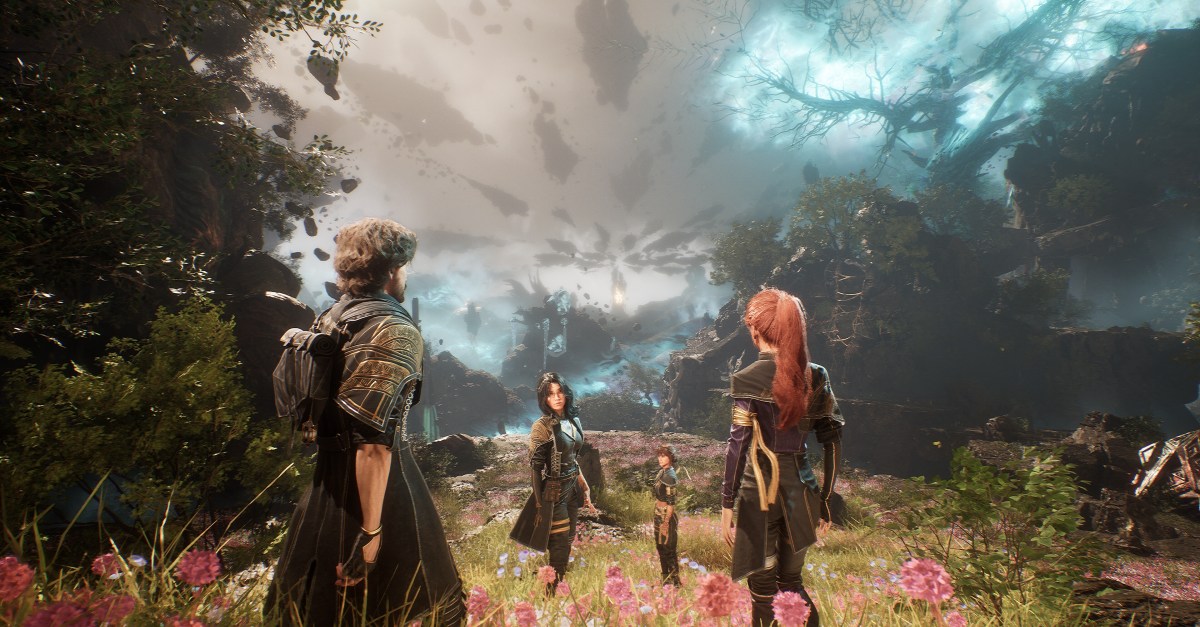
The Purposeful Agony in Expedition 33
Caution: significant spoilers forthcoming.
A Year’s Standout Game Experience
Clair Obscur: Expedition 33 has quickly become my top gaming pick this year, thanks to its thrilling combat, captivating exploration, and eerie musical score. I am clearly not alone in this admiration—over two million copies were snapped up within just 12 days of its release in late April. Sandfall Interactive’s CEO and creative lead, Guillaume Broche, remarks, “It still feels unreal to us.”
Broche confides that the game's success has surpassed even their loftiest expectations, catching the team off-guard with its rapid rise in popularity. “It’s like we’re living in a dream,” he admits, while lead writer Jennifer Svedberg-Yen jokingly wonders if she’ll awaken one day to find it all a prank.
An Engrossing Narrative Hook
The magnetic storyline is a cornerstone of Expedition 33’s triumph. It ensnared me, compelling me to return again and again, driven by anticipation to unravel its next twist. The narrative doesn’t pull punches from the outset. As players step into the shoes of Gustave—voiced by Charlie Cox of Daredevil fame—the grim realities of this universe unfold: a world where individuals of a certain age vanish in a cascade of petals during the annual “Gommage.” This ritual is orchestrated by the Paintress, a gigantic entity, as she marks lower numbers on an imposing monolith.
Gustave embarks on a perilous mission as part of a new group of Expeditioners, among whom is Maelle, a young teen under his care. Heartbreakingly, he also witnesses Sophie, an old flame, succumb to the Gommage upon the Paintress's inscription of number 33.
A Defining Plot Shift
This immersive opening effectively pulled me into the game, but a crucial scene that unfolds later propelled the narrative from merely engaging to exceptional. I had the privilege of discussing this pivotal moment with Broche and Svedberg-Yen.
For those daring enough to venture further, this impactful moment unfolds at the closure of Act 1.
The enigmatic, white-haired antagonist, previously responsible for much of Expedition 33’s earlier demise, returns after an intense battle. Without preamble, this figure skewers Gustave with an enormous blade, and after a brief confrontation, delivers a second, fatal blow—all witnessed by Maelle, who is encased in a magical barrier, powerless to intervene.
Breaking the Norm with a Shocking Turn
This unexpected turn left me astounded. Given how Gustave was portrayed as the narrative lead, I assumed a safe journey to complete his arc of avenging Sophie. Casting a Marvel hero's actor only reinforced this belief. But his swift departure shattered this expectation just hours into the gameplay.
Svedberg-Yen reflects that it was the necessary direction for the narrative. Integrating elements of grief, they wanted the players to acutely feel the same heartache the characters endure. As Broche puts it, “We sought to translate the characters' anguish into a palpable experience for the player.”
Engagement with the character deepens via active involvement, creating an emotional bond. Gustave’s loss mirrors the recurring void experienced by the characters each year with the Gommage. This connection itself felt intrinsic to the story and theme.
Crafting an Unforgettable Scene
That scene excels in leaving an indelible impact. Post-battle, as tensions eased, the abrupt shift from tranquility to tragedy heightened the blow. Commendable voice and motion capture performances amplified the emotional punch.
Particularly poignant was the fatal strike: as the white-haired assailant delivers the blow, time seems to decelerate, freezing the horror on Maelle’s face and focusing on Gustave’s armband, a keepsake from Sophie shortly before her transformation.
While reminiscent of iconic moments like Aerith’s demise in another revered game, this parallel was not a conscious tribute. Broche acknowledges any likeness to be unintentional—a serendipitous echo rather than a deliberate homage.
Gustave’s final words resonate with raw impact: “For those who follow, right?” This ethos symbolizes the Expeditioners' acceptance of their mission’s hopeful yet futile nature, becoming a touchstone for Gustave throughout Act 1. In his final moments, he conveys this belief to Maelle, who must now face the future’s uncertainties alone.
The phrase holds a wider significance as well. “We emphasized their role in a continuum, one link in a greater chain of endeavors,” elaborates Svedberg-Yen. “We diligently crafted a motto to encapsulate this continuity.”
In blending skilled writing, compelling performances, stirring music, and more, these integrated elements created scenes that continue to linger with me, showcasing storytelling’s collaborative magic. “It’s the collective effort across teams that brought these narratively profound sequences to life,” Svedberg-Yen concludes.
Leave a Reply