


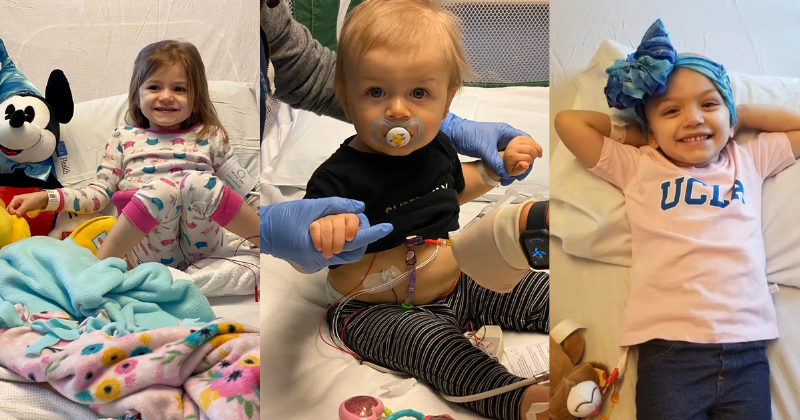
A New Gene Therapy Brings Hope to the Langenhop Family
The Langenhop family faced uncertainty as their children frequently fell ill, each showing signs of a rare ailment.
Alicia and Jon Langenhop's eldest daughter, Ava, constantly battled health issues from infancy. Despite attempts to pinpoint the cause, frequent illnesses persisted, taking the young family on an arduous journey through doctor visits and hospital stays.
When their second child, Olivia, exhibited the same symptoms, the parents thought exposure to daycare germs might be to blame. However, as illnesses mounted, the family's concern grew.
At three years old, Ava developed severe gum inflammation, prompting a healthcare professional to recommend testing for autoimmune disorders—a move that led to a diagnosis unknown to them.
Understanding the Diagnosis: LAD-1
LAD-1, a genetic disorder, makes the body struggle to battle infections due to white blood cells' inability to target bacteria effectively. Ava's diagnosis explained her ongoing health battles.
As the Langenhops absorbed this challenging news, Olivia was diagnosed with the same condition, deepening their concerns.
The typical treatment, a stem cell transplant, wasn't feasible for their daughters due to lack of a compatible familial donor. Hopes were briefly kindled with the birth of their son, Landon. However, tests revealed he too had LAD-1.
Navigating Treatment Options
The bone marrow registry offered limited hope, given the unpredictable success rates associated with non-familial matches. The Langenhops were left seeking a low-risk alternative.
A novel opportunity arose when they were introduced to a doctor leading a clinical trial in Los Angeles. This innovative trial presented an opportunity they felt necessary to pursue.
A New Approach to Treatment
Enrolling in a clinical trial, the family explored an experimental therapy engineered by Rocket Pharmaceuticals, focusing on stem cells as a solution.
At UCLA, Dr. Donald Kohn initiated the trial, wherein each participant served as their own stem cell donor, minimizing risks associated with traditional transplant methods.
The procedure involved extracting stem cells post-chemotherapy induction, genetically modifying them to combat LAD-1, and reintroducing them into the body. The Langenhop children were treated sequentially while the family adapted to a temporary life in Los Angeles.
Life After the Trial
All participating individuals showed promising outcomes with no significant infections post-treatment. The therapy has since been recommended for further validation with the FDA.
Five years on, the Langenhop children lead active lives, free from the relentless medical visits that once dominated their existence. Ava participates in sports, Olivia engages in dance, and Landon takes part in T-ball—a testament to the therapy's effectiveness.
Reflecting on their journey, Alicia Langenhop expresses gratitude for the chance to contribute to medical advancements that could help others globally. Their story remains a beacon of hope in the exploration of genetic therapies.
Leave a Reply