


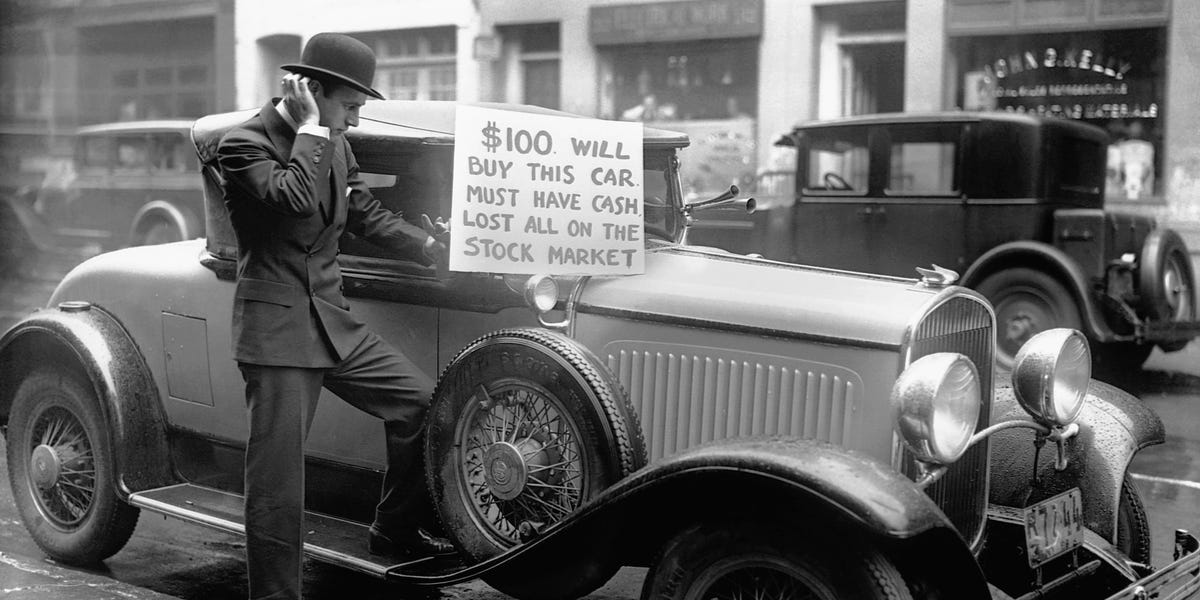
20 Classic Photos Depict the 1929 Stock Market Crash Triggering the Great Depression
The exuberant Roaring Twenties came to a screeching halt on October 24, 1929, when stock prices collapsed.
A confluence of speculative financial behavior and shifting monetary policies culminated in a market catastrophe that ushered in the Great Depression, altering American livelihoods for an entire decade.
With parallels being drawn to contemporary market behavior influenced by recent political policies, historical patterns reveal the impact of financial collapses on American society.
These 20 vintage snapshots capture the 1929 stock market crash, showcasing the dramatic plummeting of stock prices during Black Thursday, Black Monday, and Black Tuesday on Wall Street and beyond.
A Decade of Prosperity Ends Abruptly
The 1920s were marked by significant economic expansion. The industrial boom inspired widespread optimism, leading many citizens to invest heavily in stocks, facilitated by banks offering loans.
Between 1922 and 1929, the Dow Jones Industrial Average surged by a staggering 218.7%, as documented by economic historians.
Widespread Stock Investments Through Margin Buying
Individuals could acquire stocks by paying a mere fraction of their cost upfront, borrowing the remainder from brokers through margin buying, according to financial records. This system made stock trading accessible to those with limited initial capital.
By 1929, a significant share of bank loans was directed towards stock purchases, according to reports.
The Market Begins Its Descent
The initial crash happened on October 24, 1929, deemed Black Thursday. The stock market opened 11% below the previous day's figures, a shocking start that heightened investor anxiety.
Unprecedented Speculation Preceding the Collapse
Intense market speculation elevated stock valuations to unforeseen levels. In response, the Federal Reserve moved to curtail speculative lending practices, seeking to stabilize the overextended market,
Peak Prices Prior to the Downfall
On September 3, 1929, stock values reached historical highs, with the Dow Jones peaking at 381.17, which was an impressive 27% more than the previous year.
As most investments were fueled by borrowed money, skepticism around unsustainable stock prices began to sow doubts about market stability.
Black Monday: A Rush to Liquidate Assets
When trading resumed on October 28, 1929, stock prices nosedived as frantic selling ensued, a panic echoed from the prior week's events.
Panic-Stricken Selling Floods the Market
By the close of Black Monday, the Dow Jones plummeted by almost 13%, showing no signs of slowing, a stark reminder of the disorder gripping financial markets.
Confusion and Disarray Outside the Exchange
People hastily congregated near the Stock Exchange to stay informed about stock status and secure their investments.
An article from that period noted how people, eager to own a piece of burgeoning industries, now sought to divest more fervently than they had invested.
Newspapers Act as the Primary Information Source
With immediate data unavailable, the streets thronged with individuals queuing for newspapers, the lifeline for the latest financial developments.
Overwhelming Demand at Brokerages
The surge in sell orders on consecutive Black Monday and Tuesday took brokers by surprise, a level of activity they anticipated would not be seen again.
Descriptions from the era depict Wall Street as a place of lost aspirations and eerie anticipation as traders and clients alike watched financial tickers anxiously.
Technological Constraints in Information Dissemination
During the turmoil, communications relied heavily on telegram systems and ticker tapes, which struggled to manage the immense volume of simultaneous transactions taking place. Many investors knew they faced significant losses but were uncertain of the full impact.
Exhaustive Efforts by Brokers Amid Crisis
As transactions mounted, some brokers resorted to working overnight, transforming local spaces into temporary resting areas to prepare for the following day's expected tumult.
Global Fallout from the Crash
Capital outflows from American markets quickly spread fear and instability internationally, with countries scrambling to adjust domestic financial policies to mitigate extensive repercussions.
Escalating Fear Leading to Black Tuesday's Apex
Three years post-crash, stock values declined by nearly 90%, illustrating the broader economic damage.
Mass Withdrawals and Bank Failures
As panic intensified further on Black Tuesday, banks faced massive withdrawal demands that depleted funds rapidly, triggering widespread bank failures.
Financial Institutions Undermine Public Trust
The fragility of financial systems became apparent as banks failed, unable to satisfy withdrawal requests, evaporating billions in customer savings.
Reports highlighted how approximately 9,000 banks closed, erasing $7 billion of assets.
A Surge in Mistrust Towards Financial Entities
Consequently, people became wary of banks, leading to alternative practices like hoarding cash or investing in precious metals as security measures.
Reduced Credit and Economic Impacts on Business
In response to the crisis, banks curtailed lending drastically, affecting businesses, which in turn affected labor and production.
Economic Hardships Emerge Across the US
The resultant economic distress was palpable, forcing businesses to reduce operations and lay off staff, pushing unemployment rates to nearly 25% within a few short years.
Prolonged Economic Downturn
Though not the sole catalyst, the stock market crash was indicative of deep economic fractures, resulting in a lengthy period of economic struggle and hardship for many.
Leave a Reply