


Afrikaner Refugees Mark a New Chapter in U.S. Migration
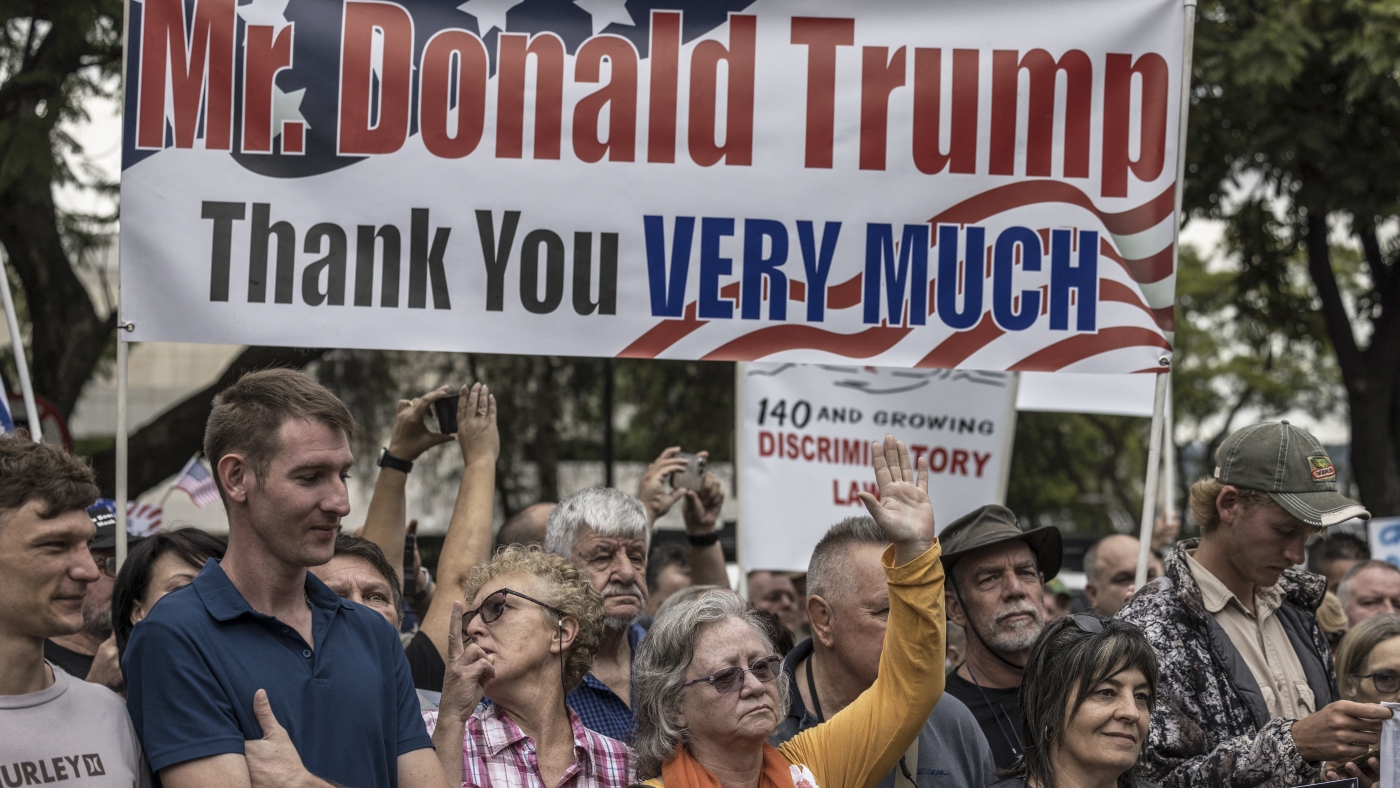
Supporters of both U.S. President Donald Trump and Elon Musk, a prominent South African and American tech magnate, gathered outside the U.S. Embassy in Pretoria for a demonstration on February 15, 2025.
In a significant move, the United States has approved refugee status for 54 individuals of Afrikaner descent, who are primarily descendants of Dutch colonists. They are expected to arrive in the country on Monday, according to three confidential sources familiar with the development.
Efforts are underway to organize a chartered flight that would bring these refugees to Dulles International Airport in Washington, D.C., by Monday morning. If this proves unfeasible, they might be rerouted on commercial flights, the sources implied.
An email obtained by NPR has detailed the plan, stating that upon landing, the newcomers will proceed to different states across the nation.
Executive Order and Initial Arrivals
This group is the pioneering wave of Afrikaners to be accepted under an initiative launched by President Trump which was formalized in February, aiming to potentially resettle them in the United States.
An executive order directed the Secretary of State and the Secretary of Homeland Security to prioritize relief rooted in humanitarian grounds for Afrikaners in South Africa, subject to racial inequity, within the framework of the U.S. Refugee Admissions Program.
There are plans for a press conference upon their arrival at Dulles Airport, with high-level representatives from both the State Department and Homeland Security expected to be present.
Settling Across America
The states volunteering to integrate these refugees include Colorado, Massachusetts, Michigan, Minnesota, Washington, West Virginia, California, Idaho, Montana, North Carolina, Nevada, and New York. Some members of this group have familial connections already residing in the U.S.
Welcoming refugees with the attendance of U.S. dignitaries is unprecedented, as is the expedited manner in which refugee status interviews were conducted in South Africa.
These Afrikaners have secured P-1 refugee status, a designation for cases referred by certain entities based on unique circumstances and the urgent need for relocation.
With this status, the arriving Afrikaners will find themselves on a path towards American citizenship and the eligibility to receive assistance from government programs.
International Observations and Political Dimensions
The International Organization for Migration, part of the UN framework, has opted not to engage in this particular refugee process, declining immediate comment when contacted.
President Trump, alongside adviser Elon Musk and Secretary of State Marco Rubio, have vocally criticized the unfavorable conditions they argue Afrikaner communities, especially farm owners, endure in South Africa.
Controversy surrounds accusations against the South African authorities, with allegations of land seizures that surpass simple expropriation.
Recently, the South African government enacted a new legislative measure allowing for land acquisition without compensation under specific conditions, though no property has been claimed thus far.
South Africa's International Relations Department has rebuffed Trump's critique, considering it paradoxical to facilitate refugee status for a relatively affluent demographic while others face deportation or asylum denial.
Leave a Reply