


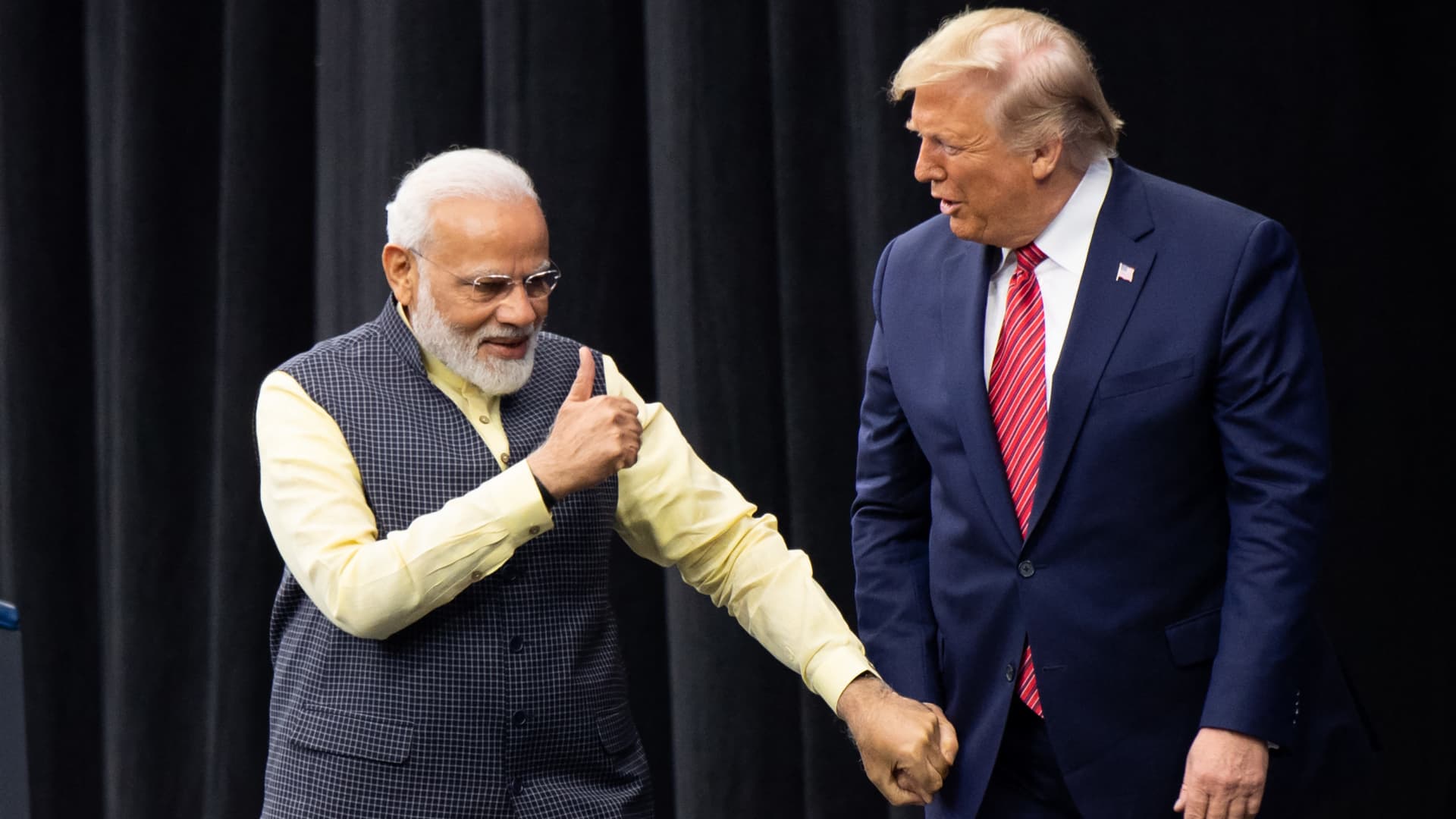
India and the U.S.: Heading Toward a Trade Agreement
The Central Issue
Previously described by U.S. President Donald Trump as the "tariff king," India is now poised to relinquish its title by coming to a potential trade agreement with the United States.
Reports suggest India is considering allowing specific imports from the U.S., such as steel, auto components, and pharmaceuticals, within certain volume limits.
This marks a considerable change for India, which has long used protective tariffs on a range of items, including agricultural and tech products, to support its industries.
According to the World Trade Organization, India maintains tariffs that are significantly higher than elsewhere as of 2023.
After the U.S. had initially introduced a 26% tariff on Indian goods—currently on hold—India appears driven to reassess its economic strategies.
There's been significant progress on trade discussions with Trump recently stating that talks are progressing well and a deal looks promising.
Impact on Local Industries
Indian economist Shumita Deveshwar notes that India's future economic expansion depends heavily on reducing trade barriers and securing foreign investments.
Although the United States remains India's top global trade partner, there’s skepticism. Experts like Deveshwar doubt that India will entirely eliminate tariffs on American products, highlighting the need to protect domestic businesses.
Even if India cuts tariffs in some sectors, the overall effect might not be detrimental to every sector involved.
Sector-Specific Insights
According to Peeyush Mittal, importing steel from the U.S. remains nonviable due to transportation costs, while high prices of patented U.S medications aren't expected to significantly disrupt India's pharmaceutical landscape.
India's automotive sector, once a host to big international players, might remain unchanged largely due to a preference for domestic brands and select foreign models.
Winners, Losers, and Market Dynamics
Trade analyst Malcolm Dorson predicts opportunities and challenges on both sides should a trade deal materialize.
In the best-case scenario, sectors like financials and healthcare could flourish, whereas failure to strike a deal may disadvantage these areas.
As a representation of the national economy, financial institutions may see elevated business activity. Dorson is optimistic about India's private banking sector and anticipates improved performance.
If a trade agreement is achieved, India's steel and pharmaceutical companies are likely to gain greater access to the U.S. markets, experiencing both benefits and challenges.
Regardless of the deal's outcome, sectors like consultancy and consumer staples are expected to continue growing, steadily supported by underlying demand trends.
Leave a Reply