


Indian and Pakistani Forces Clash with Diverse Fighter Jet Fleet
Once again, tension escalates between nuclear-armed India and Pakistan, with one side already asserting aerial victories in skirmishes involving varied foreign-manufactured fighter jets.
Pakistan's authorities announced on Thursday that they had downed five Indian jets in addition to several drones, catalyzed by India's recent cross-border military operations—thereby spurring fresh hostilities between these two adversaries.
According to Ishaq Dar, Pakistan's Foreign Minister, the country's air force, acting in self-defense, engaged Indian aircraft, successfully disabling five jets and capturing numerous drones.
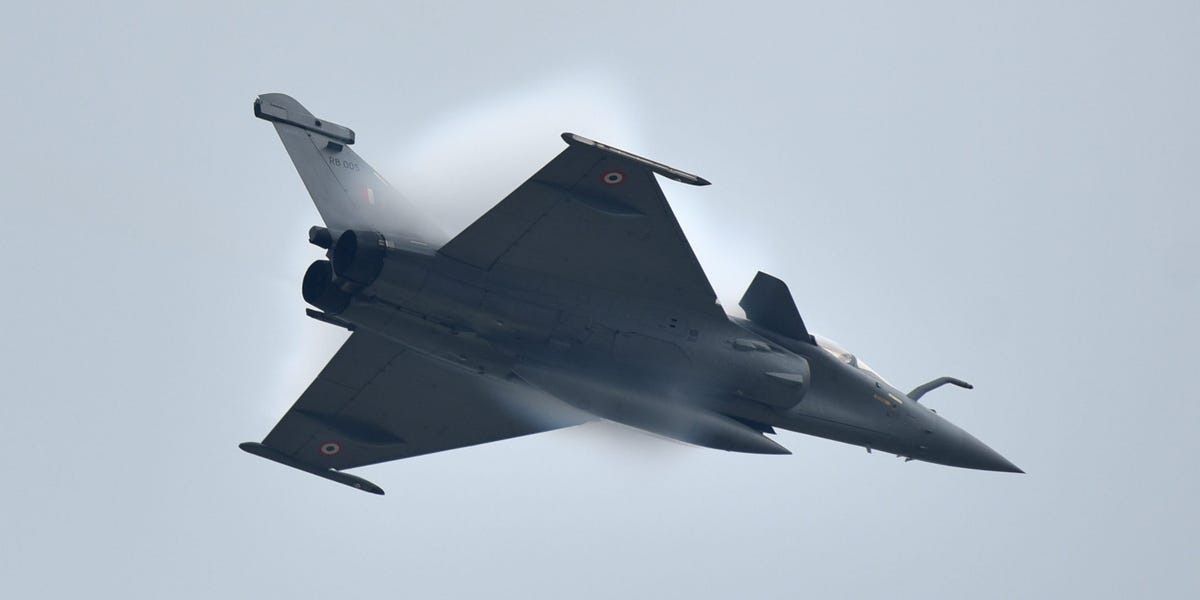
Using Chinese-manufactured J-10C jets, Pakistan retaliated against India's strikes. They noted some of the Indian downed jets included the revered French Rafale models, as per reports from Pakistan's national media.
Reports surfaced that those aircraft destroyed included three Rafales along with Soviet-designed MiG-29 and Su-30 models, according to Pakistani military releases.
It's indeed a varied assortment of aviation prowess. Both countries pilot a global array of jet designs, leading to potential head-to-head battles in the skies.
Pakistan's current arsenal features Chinese-built J-10s, jointly developed J-17 fighters, American F-16s, and French Mirages. Meanwhile, India's fleet includes French Rafales and Mirages, Russian-origin Su-30s, MiG-29s, and MiG-21s, as well as British Jaguars and the domestically produced Tejas.
The J-10C, highlighted by Pakistan for its successful engagements against Indian forces, is a single-engine, multi-role fighter crafted by China’s Chengdu Aircraft Industry Group. These are recent acquisitions, updated from their predecessors to carry a range of missiles and bombs.
India boasts the Rafale—a twin-engine jet by France's Dassault Aviation, operating 36 with plans to expand this fleet for naval use.
Rounding out India's capabilities are the MiG-29 and larger Su-30, both engineered in the Soviet Union, renowned for their versatility and wide international adoption.
Introduced in the 1980s, the MiG-29 was Russia's answer to American jets like the F-15 and F-16, whereas the Su-30 found its wings in the following decade. Together, they form a core segment of India’s aerial might.
Unverifiable Claims and Aerial Engagements
While Pakistan's claims of shooting down Indian jets find limelight, independent verification remains elusive. India's defense representatives have chosen silence, not addressing queries regarding these aerial confrontations.
Such information, echoing past incidents, often remains contested. For instance, in 2019, India's assertion of a MiG-21 triumph over a Pakistani F-16 drew skepticism from US observations.
Recent accounts disclosed by US sources indicate Chinese J-10s being actively involved in downing multiple Indian aircraft.
Expansion to Drone Warfare
The conflict extends beyond jets, with Pakistani Lieutenant General Ahmed Sharif Chaudhry stating that Pakistan neutralized a number of Indian Harop drones—explosive munitions awaiting target acquisition, produced by Israel.
Substantiating his statements, Chaudhry unveiled photos of debris from these drones, emphasizing the force's vigilant status.
In contrast, India declared its own offensive, targeting terror-linked sites within contested regions, branding its operation as a new military maneuver, which Pakistan decries as an overt act of war.
The renewed violence traces back to recent events in Indian-controlled Kashmir's tumultuous regions, epitomized by significant civilian casualties—all contributing to heightened discord. Historical grievances persist, with India accusing its neighbor of sheltering terrorists, while Pakistan denies participation.
In clarifying its stance, India initially suggested strikes avoided Pakistani military facilities, signaling restraint. Yet, subsequent admissions outline attacks on air defenses and radar setups beyond its borders.
Countermeasures from Pakistan followed suit, marked by mortar, artillery, drone, and missile exchanges, with both nations reporting fatalities amidst this rise in hostilities.
Leave a Reply