


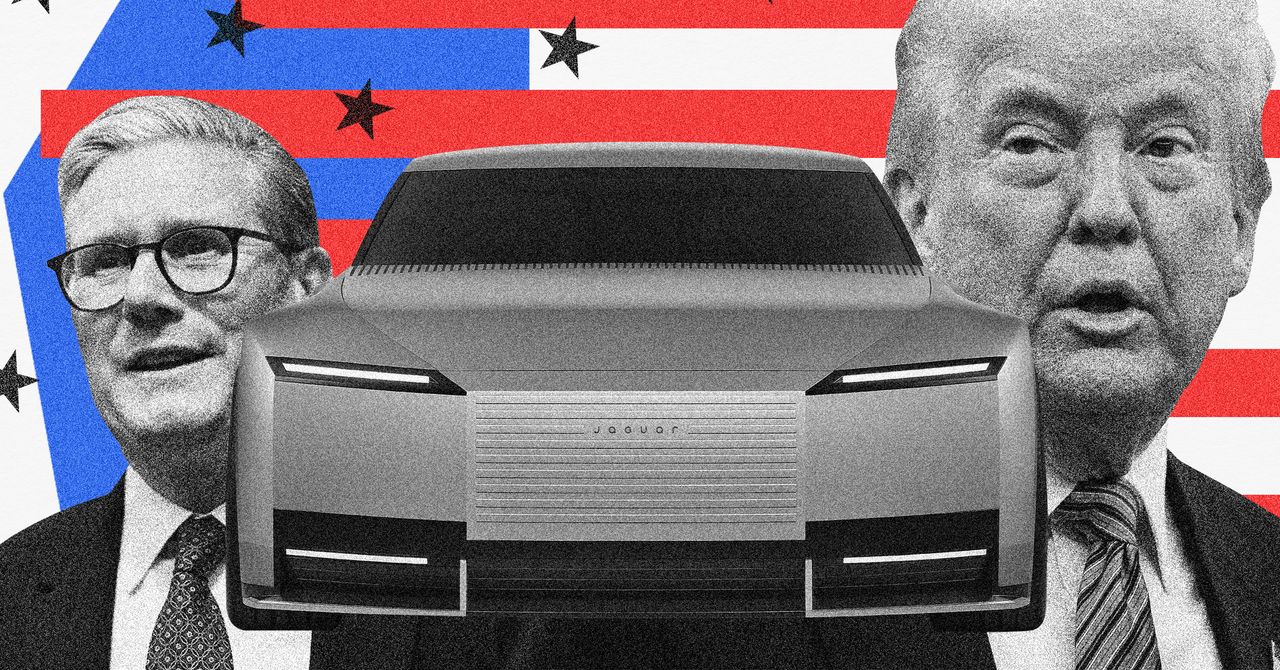
Donald Trump’s Trade Strategy May Reinvigorate Jaguar
In a strategic shift, Trump has reduced the hefty 25 percent tariff on British car imports to 10 percent, a move poised to significantly benefit high-end car manufacturers.
This tariff reduction is especially crucial for Jaguar Land Rover as the company faced potential price rises of $27,000 on certain luxury models due to previous tariffs. The United States remains a primary market target for Jaguar's upcoming electric vehicle launch.
The relief, however, is bounded to the first 100,000 cars imported from the UK. Such a limitation could still encompass a majority of the UK's vehicle exports to the US, which last year totaled about 101,000 units, as reported by the UK Society of Motor Manufacturers and Traders.
A Strategic Limitation
In the fiscal year 2023/24, Jaguar Land Rover reported selling nearly 95,000 vehicles in North America. Of these, some vehicles were likely produced outside the UK.
The imposition of the 25 percent tariff was a significant deterrent, having extended to automobile parts as well, which impacted the UK car exports valued at approximately $12 billion.
The Importance of the US Market
Under ownership by India’s Tata Motors since 2008, Jaguar Land Rover heavily depends on US exports, contributing $8.6 billion of its annual $35 billion revenue.
Previously halted shipments to the US have now resumed, free from the impeding tariff hikes.
Jaguar Land Rover, as the largest carmaker in the UK, provides employment to 38,000 individuals, with plants heavily concentrated in the West Midlands, illustrating its economic significance.
Broader Industry Implications
Jaguar Land Rover's models, notably the Land Rover Defender, have been popular in the US. Other luxury manufacturers like Rolls-Royce and McLaren were similarly affected, though their elite price points render them somewhat immune to immediate price fluctuations.
Alternatively, Aston Martin, another upscale brand, has curtailed its US shipments, preferring to utilize existing inventory from US dealers.
Unlike firms like Mercedes-Benz that produce US-destined cars domestically, Jaguar Land Rover has traditionally manufactured its cars in Europe, which exposed it to greater tariff vulnerabilities.
Industry Relief and Reaction
William Bain from a trade policy organization mentioned the newfound relief British businesses, especially in the automotive sector, will feel due to the trade agreement that counters Trump's prior protectionist measures.
Beyond automotive, issues such as agricultural imports remain contentious, with the UK's hesitance towards products like US hormone-treated beef.
President Trump’s social media remarks preceding the deal assert a promising bilateral relationship with the UK.
The agreement entails reciprocal tariff reductions below recent normatives and could phase out digital taxes affecting large US tech firms.
Challenges for Other Automakers
While the UK celebrates, European carmakers perceive an unequal scenario, with Trump maintaining his stance on higher tariffs for EU imports.
Stellantis, Volvo, and Mercedes have expressed unease, withdrawing their financial forecasts due to the opaque trade landscape.
Leave a Reply