


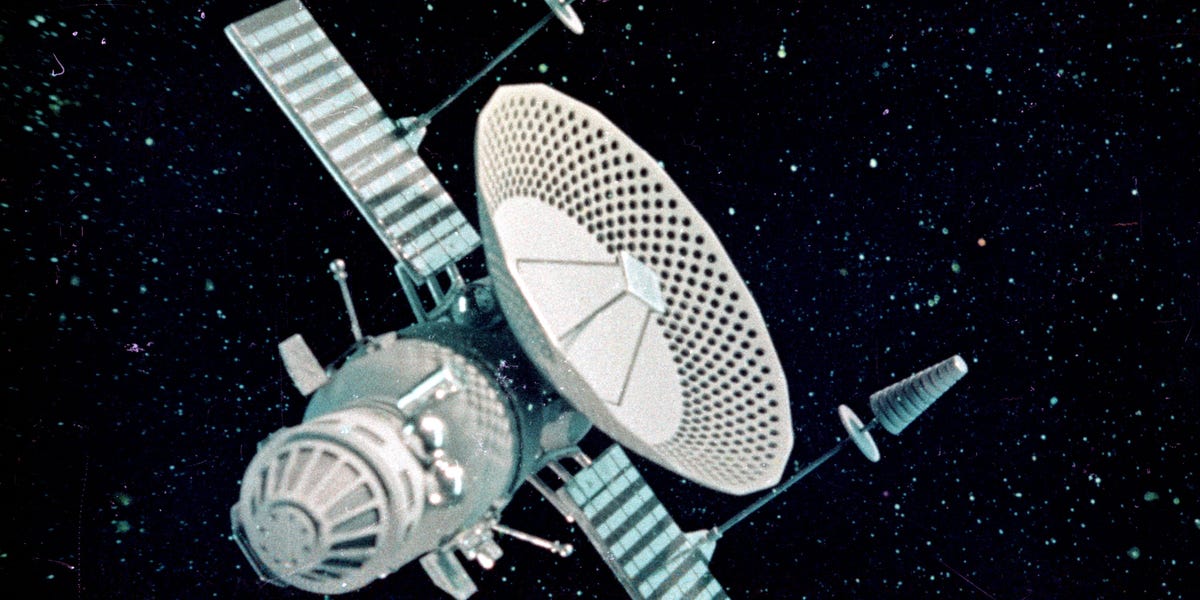
Imminent Return of Soviet Spacecraft: Mystery Surrounds Landing Location
An old Soviet spacecraft that was initially bound for Venus is rapidly approaching Earth, and experts have yet to pinpoint its landing site.
Observers monitoring the situation suspect that the object currently losing altitude is the Venus entry capsule from the Soviet Union’s Kosmos 482 mission. This capsule is a robust titanium-encased sphere, three feet in diameter and weighing half a ton, designed to endure the harsh conditions of Venus's atmosphere.
With Venus's atmospheric pressure nearly 100 times greater than Earth’s and surface temperatures nearing 900 degrees Fahrenheit, the capsule was crafted for resilience.
Patricia Reiff, a physics and astronomy professor at Rice University, believes that the capsule is sufficiently durable to withstand re-entry through Earth’s atmosphere without disintegrating.
"Its heat shield and greater density compared to typical space debris enhance its chances of an intact descent," Reiff commented. "While the probability of it causing harm is minimal, vigilance is warranted."
Anticipation of a Fiery Display
Kosmos 482 represents the final attempt from a series of Soviet probes aimed at exploring Venus throughout the 1960s and 70s. An engine failure, however, stranded this probe in Earth's orbit.
The Venus entry capsule is the last segment of the Kosmos 482 project still orbiting Earth. Other components, including a sizable module and the rocket's upper stage, re-entered the atmosphere without incident during the 1980s.
Projections based on current data suggest that the capsule will soon lose sufficient altitude to be tugged by Earth's atmosphere, leading to a fall sometime between May 7 and 13.
The exact re-entry coordinates remain uncertain, as does the precise impact point on Earth's surface.
Considering that most of Earth's surface is water, the chances of the capsule striking land or causing damage are very slim.
"There is typically a one-in-several-thousand chance of an object hitting someone," explained Jonathan McDowell from Harvard, who monitors space objects, in an April blog post. He noted that the capsule, while dense, carries no nuclear materials.
"No cause for alarm, but you certainly wouldn't want it landing on your head," he expressed.
As the spacecraft approaches lower orbits, NASA's debris trackers will be able to determine its final orbits and potential landing zone.
Observers will witness a significant and brilliant fireball as the capsule makes its descent, Reiff anticipates.
"A typical meteor is barely larger than a sand grain. In contrast, a common fireball may be marble-sized, but this object is a meter in breadth, promising a spectacular visual for any nearby witnesses," she elaborated.
Leave a Reply