


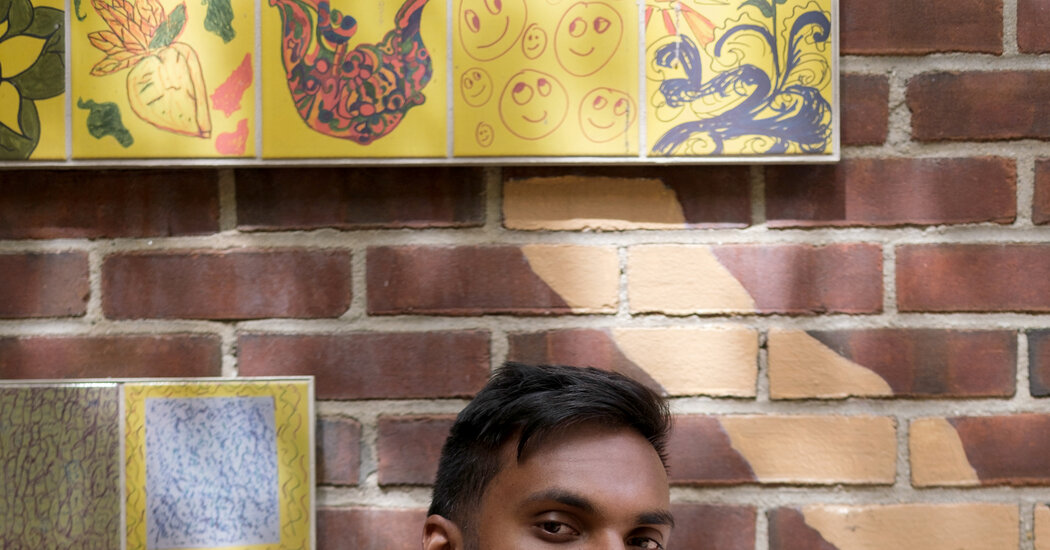
Voices in His Mind and a Political Triumph
Amidst both challenging environments—sometimes within the walls of a psychiatric hospital, at other times while living without a permanent home—he orchestrated a victorious political campaign. He has discovered a way to flourish.
Crafting a New Path from a Challenging Beginning
Within a psychiatric facility located in Upper Manhattan, Arvind Sooknanan laid out a roadmap for his future. It involved leaving high school early, successfully completing the G.E.D. exam, and pursuing higher education, aspiring to be the first in his family to earn a degree.
At the tender age of 18, Sooknanan was battling schizoaffective disorder. His journey to the hospital began when a passerby witnessed him on the brink of jumping off the George Washington Bridge. Reflecting on his experiences in various psychiatric wards, he mentioned that the Columbia-Presbyterian Hospital stood out as the most agreeable.
Rising Through Challenges
During our conversation in a quiet office at Fountain House, a supportive community for those facing severe mental health challenges, Sooknanan, now 26, recounted his journey since that pivotal moment on the bridge. He conquered the G.E.D., graduated from college, and achieved the remarkable feat of running a campaign for the first South Asian woman elected to the New York State Legislature at just 21.
Through Fountain House, Sooknanan has emerged as a testament to the potential of individuals dealing with profound mental health issues. He also engages with policymakers influencing mental health care provisions. His story offers a window into the reality of those perceived as unstable, like someone talking to themselves on the subway, oftentimes frightening other passengers. He candidly admits he has been that person more times than he would like.
Confronting Personal and Systemic Obstacles
In a recent discussion at the organization's main clubhouse in Midtown Manhattan, he shared harrowing details of his past: over 20 hospitalizations before reaching adulthood, the belief by his family that he was under a spiritual affliction, and periods of homelessness spent in subways and parks. Compounding these struggles were recurrent episodes of being forcibly restrained by law enforcement, involuntarily hospitalized, and held until deemed stable.
He confided with a wry humor, "I suppose it's evident that the responses I've encountered from the mental health system haven't exactly been favorable."
Leave a Reply