


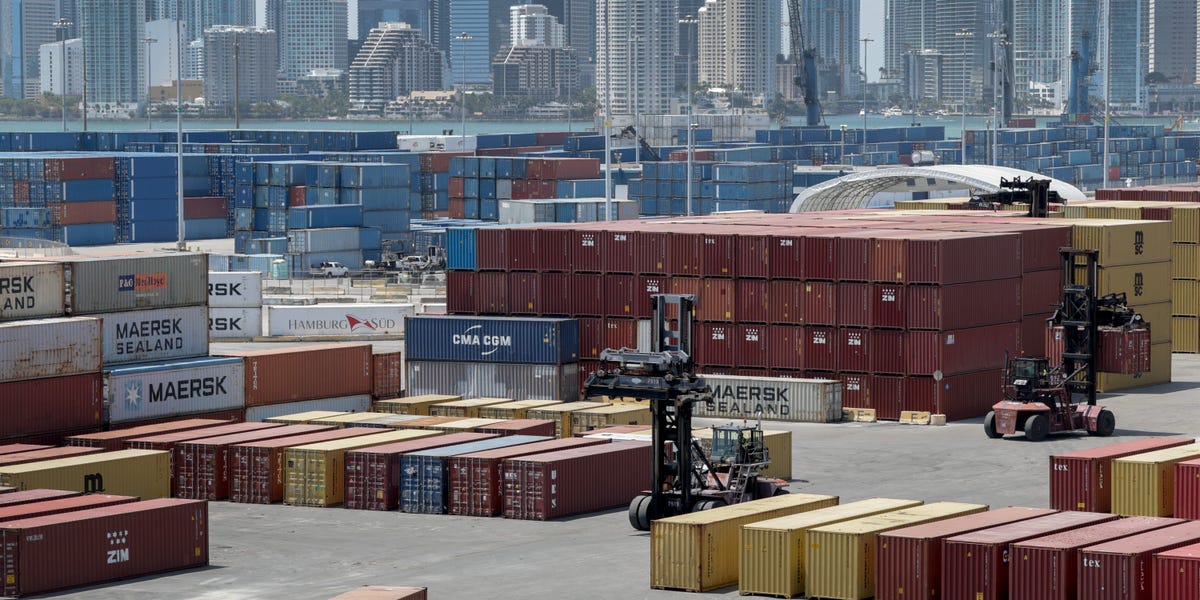
Importers Seek Storage Solutions Amid Uncertainty Over Tariffs
Picture it like putting a hold on a shipment.
As President Donald Trump’s trade conflict gained momentum last month, importers are actively searching for methods to postpone the landing of their cargo, hoping to capitalize on more advantageous tariff agreements.
Rising Appeal of Bonded Warehousing
A notable increase in interest has been seen in bonded warehousing, a practice established a century ago. According to Flexe, a company coordinating storage facilities, this trend has resulted in a surge in pricing and inquiries.
These bonded facilities offer a storage space where imported goods can sit without incurring tariffs for up to five years, as if the items have not yet officially arrived in the country.
Deferred Duties in Bonded Facilities
“These facilities in the US are part of a system that delays duty payment for businesses importing goods, particularly when the goods are not needed for immediate use,” stated Ben Dean, Flexe's network chief, in a conversation with Business Insider.
Normally, this tactic is used to align import costs more closely with sales timelines, which can appease company accountants.
However, in times of high tariffs, the benefit of deferring these costs increases, which has led to a sharp rise in demand, Dean explained.
Increase in Demand for Bonded Storage
Flexe reportedly received 19 inquiries for bonded warehouse spaces within the first four months of this year, most occurring in April, drastically higher than the two requests from the same timeframe in the previous two years. By May, four more requests had already been logged.
One of Flexe’s associates in Los Angeles had 60 requests for bonded space by late April, illustrating the climbing demand.
Tariff Strategies and Risks
Some shippers are skeptical that the 145% tariff will be maintained past the next month or quarter, so they are leveraging bonded storage as a hedge, hoping for lower tariff rates later.
However, Dean warns this is a precarious gamble, as predicting future tariff conditions is highly uncertain.
Costs of Bonded Warehousing
Beyond strategic risks, bonded warehouses inherently cost more than standard facilities. Recently, these costs have soared. Earlier this year, storing items by pallet in a regular warehouse was priced at $17.50 monthly.
Now, bonded warehouse daily rates have escalated to $5, translating to about $150 per month, though some contracts are available for around $52 a month.
According to Flexe's metrics, bonded warehousing is currently three to nine times pricier than ordinary storage.
“We're witnessing an unprecedented premium in this sector,” Dean commented.
Alternative Storage Options
Due to rising costs and limited bonded space, importers are exploring alternatives, including utilizing ports in neighboring Mexico and Canada.
For retailers, positioning inventory close to the border can forestall duty payments until the market stabilizes concerning consumer pricing and demand.
Future Trade Considerations
Despite these challenges, companies find it advantageous to have inventory ready on short notice by truck or train, instead of enduring lengthy ship transit times. They might invest in tariffs on a product like a Chinese air fryer if they believe increased prices won't deter consumer interest.
Ultimately, the trade tensions introduce new, unforeseen costs that importers must manage.
“Many view bonded warehousing as a silver bullet for tariff issues, but it is not,” Dean concluded.
Leave a Reply