


Pakistan's Leader Threatens Retaliation Over Indian Strikes, Labels Them 'War Actions'
In an early morning assault, missiles launched by India hit several areas under Pakistani control, resulting in the deaths of 26 individuals, including children, an action which Pakistan's leader denounced as warlike aggression.
The Indian government justified its actions as targeting facilities used by militants linked to terrorist activities.
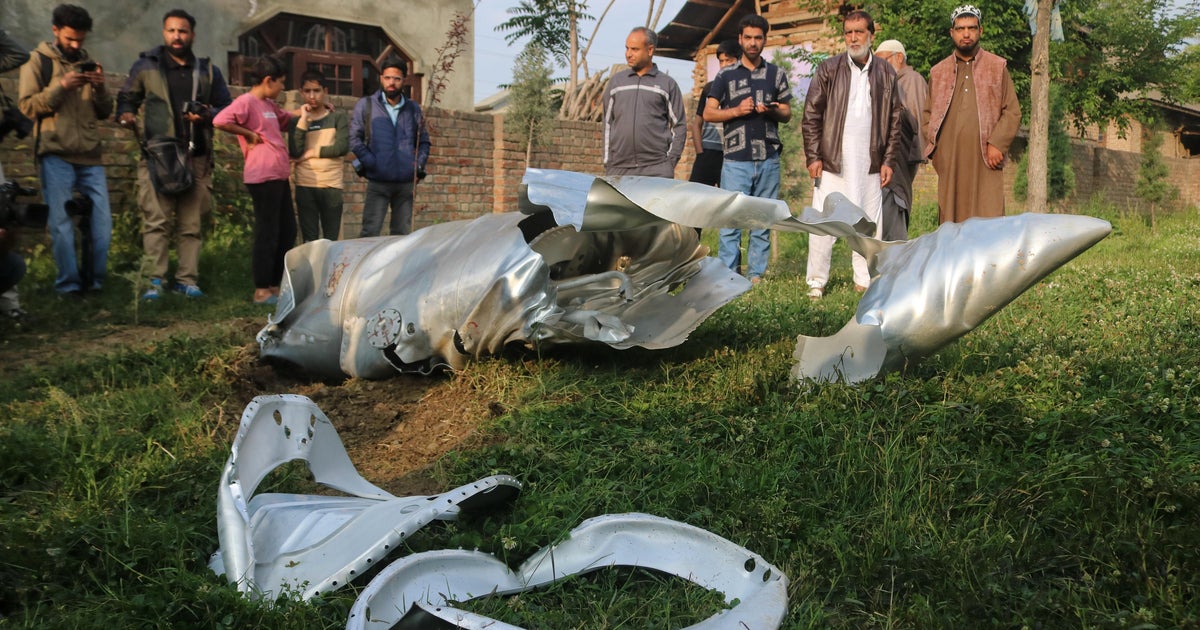
As a countermeasure, Pakistan claims to have shot down multiple Indian fighter aircraft, with debris from three jets reportedly falling in Indian-administered Kashmir, leading to civilian casualties.
The atmosphere between the two nuclear-capable countries has been tense following a recent attack by gunmen that resulted in the deaths of 26 individuals, mainly involving Indian Hindu tourists, in the disputed Kashmir area.
India has held Pakistan accountable for supporting this attack, a charge that Pakistan firmly denies.
The long-standing territorial dispute over Kashmir has been a flashpoint in Indo-Pak relations for decades, leading to multiple wars.
Pakistan's Response
Prime Minister Shehbaz Sharif of Pakistan strongly condemned the airstrikes by India and announced that Pakistan has begun its own military response.
Sharif insisted Pakistan was justified in delivering a powerful answer to India's provocative actions.
In response to the situation, a meeting of Pakistan's National Security Committee was convened, and India’s diplomatic representative was summoned to receive a protest.
International Concerns
Michael Kugelman, a South Asia expert, noted the intensity of the Indian strikes was unmatched in recent years and warned that Pakistan's retaliation could be highly forceful, raising the risk of heightened conflict.
The United Nations, via its spokesperson, emphasized the urgency of restraint, highlighting that a military standoff between these two nations would be globally destabilizing.
India carried out defense preparations through drills across several states to prepare civilians and military personnel for potential threats.
Indian political figures from various parties praised the military actions, with calls for national unity and admiration for the army's steadfastness.
Details of Military Engagement
The mission, termed 'Sindoor' by India, symbolized the martyrdom of those who lost spouses to violence, targeting sites tied to past militant activities.
Rockets hit six locales in Pakistan-controlled regions with significant casualties, inflicting damage on civilian structures including religious sites.
Indian official statements stressed the focus on specific terrorist bases, with no intent to escalate further, acknowledging the targeted precision.
Pakistan, however, criticized the targeting of erstwhile militant sites now defunct since bans implemented post-violence.
Amid local resident accounts of widespread panic and chaos, exchanges of fire across the Line of Control resulted in more civilian casualties within disputed territories.
Post-strike, each nation reported different versions of aerial confrontations, with Pakistan asserting downing several Indian jets, a claim uncorroborated by Indian sources.
Global Reactions
In Washington, President Trump expressed disappointment over the conflict while advocating for a rapid de-escalation, reflecting on the prolonged Indo-Pak hostilities.
China urged both India and Pakistan to maintain calm and avert any actions that could further destabilize the region, underscoring its interests in regional stability due to significant economic investments in Pakistan.
Similarly, the United Kingdom expressed willingness to mediate and assist in dialogue to foster peace between the two countries.
Russia also appealed for peace, encouraging both nations to exercise self-restraint amidst rising tensions.
Leave a Reply