


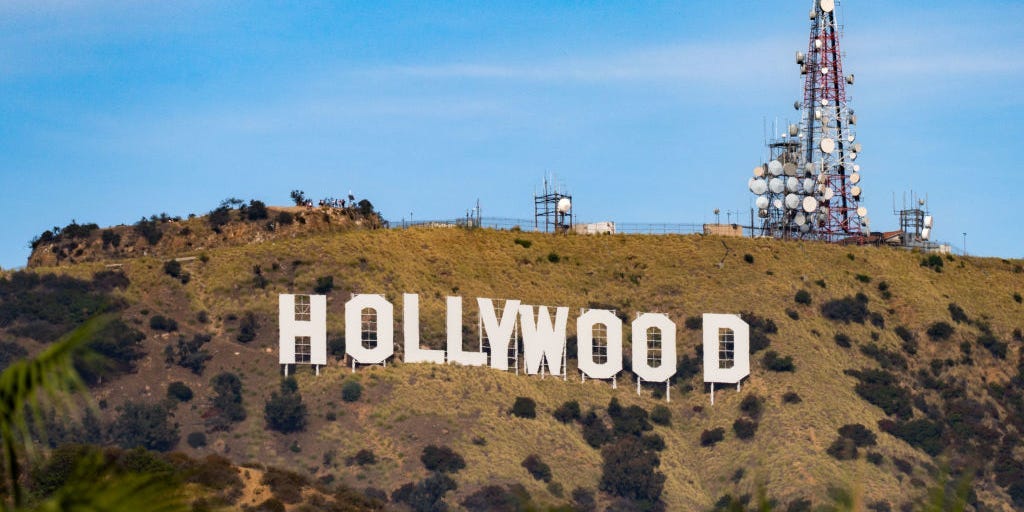
The Fateful Impact of Trump's Proposed Film Tariffs on Hollywood
With Hollywood entangled in President Trump's unfolding trade agenda, the entertainment industry is jittery over the proposed hefty tariffs on films shot abroad.
Trump aims to avert what he describes as Hollywood's impending collapse through a potential 100% tariff on foreign-produced films. The film sector, already grappling with recovery from various economic setbacks, views this as possibly exacerbating their woes.
Paul Hardart from NYU notes that the suggested tariffs could disrupt the entire industry.
Many within the industry fear that these tariffs might inflate expenses and provoke other nations into retaliation, though some could benefit from the policy, depending on its final form.
A representative from the White House, Kush Desai, remarked that the decision on foreign film tariffs is still being deliberated upon, emphasizing the administration's commitment to fortifying national and economic interests under the slogan of Making Hollywood Great Again.
Winners and Losers in the Film Industry
Numerous international filming locations, backed by enticing financial perks, lead the race for film production sites. A survey by ProdPro revealed top filming locales like Vancouver and the UK.
If films are redirected to domestic grounds due to tariffs, emerging film hubs in cities such as Atlanta and New Orleans stand to gain. These cities tout tax incentives and lower costs, with 18 states bolstering tax incentives since 2021.
While Trump's intentions might appear supportive, numerous Hollywood figures remain apprehensive.
Producers United, representing those behind the camera, warns that tariffs could precipitate retaliatory measures, increased costs, and production delays, harming those they intend to help. They advocate for a federal production rebate as a countermeasure.
Producer Randy Greenberg publicly doubted the tariff's efficacy, suggesting it might accelerate the industry's decline rather than stabilize it.
Analyst Ben Swinburne from Morgan Stanley forecasts a decrease in film output, rising costs, and diminished profits if such tariffs are enforced.
Potential Economic Shifts
Those employed in stages of film production in LA, such as pre-production and post-production, may find opportunities increased, as per Schuyler Moore of Greenberg Glusker law firm.
However, if production volumes decrease, the overall gain might be short-lived.
Independent studios like A24 and Neon could face major setbacks due to these tariffs.
The independent film sector relies heavily on global outsourcing for funding, and increased costs may restrict film production, making it harder to import top foreign projects such as Neon's 'Parasite'.
According to former Lionsgate executive Peter Marshall, crippling the indie scene would likely be an inadvertent consequence of these tariffs.
Global Industry Repercussions
Global production firms could suffer if tariffs lead to quotas or restrictions on content, according to analyst Brian Wieser.
Overseas production entities are seeking to diminish dependency on American markets. Should penalties mount, U.S.-based producers might abandon domestic distribution efforts, ushering in a diverse but less U.S.-centric filmmaking landscape.
In Europe, securing U.S. commitments for financial plans is increasingly unreliable, a fact echoed by producer Sean Furst.
Technological Adaptation and Audience Impact
While Hollywood's embrace of AI has been tepid, the necessity to reduce costs might accelerate its application, particularly in post-production and special effects.
AI advancements could make it possible to generate entire scenes from text descriptions, providing a new dimension to cost management.
Netflix, with its extensive reach and content volume, could also feel the pressure from potential tariffs, analyst Jason Bazinet suggests. Increased production costs may lead Netflix to alter its strategy, cut back on foreign content, and escalate subscription fees.
Bazinet anticipates an unfavorable scenario where Netflix's expenses grow by $3 billion each year, significantly impacting profits.
Audience Concerns
Tariffs could inadvertently narrow the spectrum of available content, leading to higher consumer costs, according to Frank Albarella of KPMG.
This restrictive path potentially spells fewer films, higher ticket prices, and steeper streaming fees, causing discomfort among audiences, warns Mike Proulx from Forrester.
Leave a Reply