


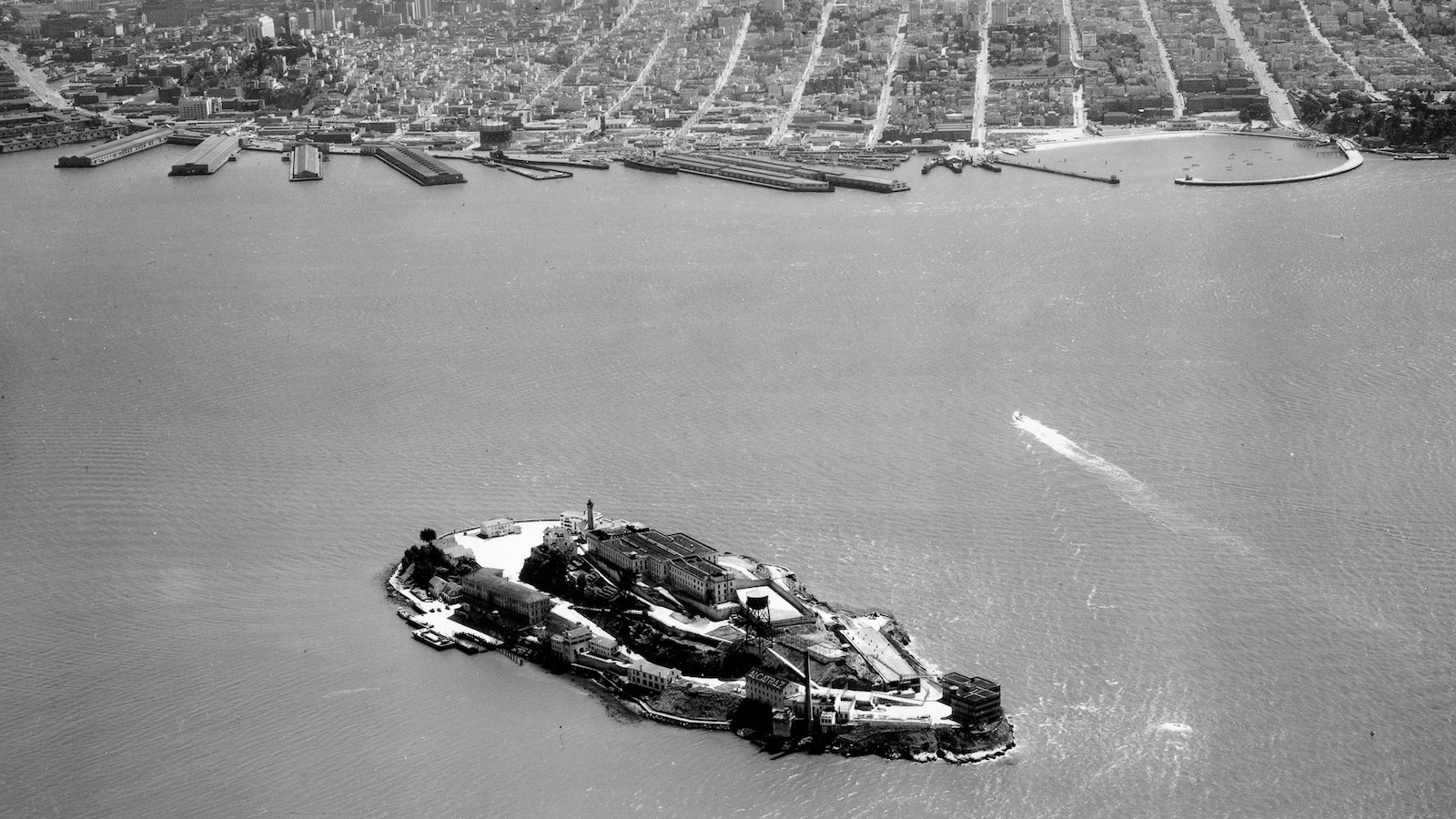
Reviving Alcatraz: Trump's Proposal and Its Storied Past
Recently, former President Trump made a surprising statement proposing the reopening of the famed Alcatraz prison, situated in San Francisco Bay, sparking renewed intrigue about this storied facility.
Alcatraz shut its gates as a federal prison six decades ago but was home to some of America's most notorious offenders, including the likes of Al Capone and George "Machine Gun" Kelly. From 1934 until its closure in 1963, this penitentiary functioned as the last resort for uncontrollable inmates across the nation.
This iconic island has also captivated filmmakers, providing a dramatic backdrop for movies like the classic 1962 "The Birdman of Alcatraz," and the 1996 action-packed "The Rock," featuring stars Sean Connery and Nicolas Cage. Notably, much of "The Rock" was filmed on site at the actual former prison.
Despite Hollywood's portrayal, Alcatraz was not the nightmare prison it was made out to be. With an inmate count of around 260 to 275, it held fewer inmates than 1% of the federal inmate population at that time. Intriguingly, some prisoners requested relocations to Alcatraz, valuing the private cells it offered.
Regimen and Reputation
What set Alcatraz apart was its strict protocol. Prisoners were entitled to only the essentials—food, clothing, accommodation, and medical services—while privileges like visits from family and library visits had to be earned through exemplary behavior.
The regime aimed to instill discipline, typically relocating inmates after a stay of five years to less stringent institutions, according to the Bureau of Prisons (BOP).
Challenging Escape Attempts
Part of Alcatraz's allure has always been its isolation amid the San Francisco Bay, particularly in relation to escape attempts. Over its operational years, there were 14 attempts involving 36 prisoners. The official stance remains that no one successfully escaped, though five men vanished and are assumed drowned.
Contrary to the myth of menacing sharks, the real hurdles for escapees were the cold waters, averaging between 50 and 55 degrees, strong currents, and the over one-mile swim to the nearest shore.
Alcatraz Beyond a Penal Past
Today, around 1.2 million people visit Alcatraz annually as part of a national park, contemplating its impactful narratives on crime and justice—a discussion rekindled by Trump's proposal.
Before its prison days, Alcatraz started as a military fortification in the 1850s, playing a significant role in coastal defense and hosting the West Coast's first operating lighthouse, serving the country long before its infamous penitentiary era.
First called "Alcatraces" by Spanish explorer Juan Manuel de Ayala in 1775, the name references pelicans, a far cry from the hardened reputation as a containment for America's most dangerous—notorious criminals.
Leave a Reply